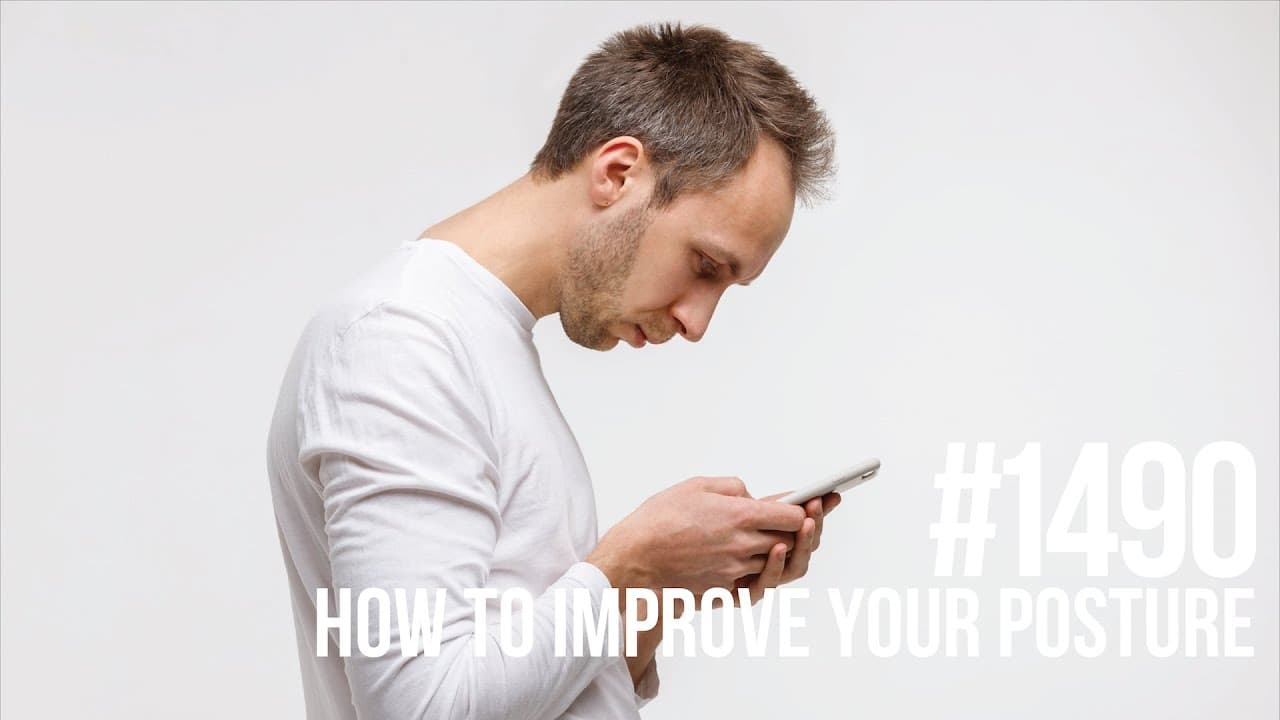
1490: How to Improve Your Posture
TL;DR
Learn exercises to enhance posture for better movement and reduced injury risk.
Transcript
you're tuning in to the fastest growing fitness health and entertainment podcast on youtube in the world this is mind pump look before i tell you about this episode let me tell you about something real cool if you leave a comment under this video and you're one of the first 30 comments and doug our producer picks your comment so he's got to like yo... Read More
Key Insights
- Posture affects not only physical appearance but also emotional well-being, influencing how confident and energetic a person feels.
- Common posture deviations include forward shoulders, forward head, and anterior pelvic tilt, often caused by prolonged sitting and repetitive movements.
- Correcting posture can improve exercise effectiveness, allowing for better muscle activation and reduced injury risk.
- Good posture should be unconscious and natural, not forced by devices or braces that can lead to muscle atrophy.
- Assessment of posture involves observing standing positions and movement patterns to identify deviations and imbalances.
- Practicing specific exercises daily helps correct posture deviations by strengthening weak muscles and improving movement patterns.
- Modifying workouts to focus on posture correction can enhance performance and muscle growth by ensuring optimal movement.
- Frequent, focused practice of posture exercises is key to creating lasting changes in movement patterns and improving overall posture.
Install to Summarize YouTube Videos and Get Transcripts
Explore YouTube Video Summarizer or Get YouTube Transcript Extractor
Questions & Answers
Q: Why is posture important for overall health?
Posture is crucial for overall health as it affects both physical and emotional well-being. Good posture ensures that the body's muscles and joints are aligned, reducing strain and the risk of injury. It also influences emotional states, with studies showing that upright posture can increase confidence and energy levels, while poor posture can lead to discomfort and decreased self-esteem.
Q: What are some common posture deviations?
Common posture deviations include forward shoulders, where the shoulders are rounded forward; forward head, where the head juts out; and anterior pelvic tilt, where the lower back arches excessively. These issues often arise from prolonged sitting, working on computers, and repetitive movements, leading to muscle imbalances and joint strain.
Q: How can posture be assessed?
Posture can be assessed by observing standing positions and movement patterns. Specific exercises, such as the wall test, windmill test, and squat assessment, can help identify deviations and imbalances. These assessments reveal how the body moves and highlight areas that require correction to improve posture and overall movement.
Q: How does correcting posture improve exercise effectiveness?
Correcting posture enhances exercise effectiveness by ensuring optimal muscle activation and movement patterns. With good posture, exercises like squats and bench presses engage the correct muscles, allowing for better performance and reduced injury risk. It also enables individuals to achieve greater ranges of motion and improved stability during workouts.
Q: What role do posture-correcting devices play?
Posture-correcting devices, such as braces or supports, may provide temporary relief but are not recommended for long-term use. These devices can lead to muscle atrophy as they hold the body in position, preventing natural muscle engagement. Instead, individuals should focus on exercises that strengthen weak muscles and promote natural posture correction.
Q: What is the recommended approach to practicing posture exercises?
The recommended approach is to practice posture exercises daily, focusing on the areas with the most significant deviations. The worst posture issues should be addressed with daily exercises, while less severe issues can be practiced every other day or twice a week. This frequent practice helps create lasting changes in movement patterns and improves overall posture.
Q: How can workouts be modified to focus on posture correction?
Workouts can be modified to focus on posture correction by incorporating exercises that target weak muscles and improve movement patterns. It's important to use lighter weights, slow down movements, and concentrate on muscle activation and control. Starting with exercises that address posture issues before moving on to other workouts can enhance overall effectiveness and prevent further deviations.
Q: What benefits can individuals expect from improving their posture?
Improving posture offers numerous benefits, including enhanced exercise performance, reduced risk of injury, and better muscle activation. It also positively affects emotional well-being by boosting confidence and energy levels. With consistent practice and focus on posture correction, individuals can achieve more effective workouts, improved physical appearance, and overall better health outcomes.
Summary & Key Takeaways
-
This episode of Mind Pump discusses the importance of good posture and provides a three-step approach to improving it. Listeners are encouraged to assess their posture through specific exercises and practice them regularly to correct deviations. Correcting posture can lead to better exercise performance and reduced injury risk.
-
The hosts highlight common posture deviations such as forward shoulders and anterior pelvic tilt, often resulting from prolonged sitting and repetitive movements. They emphasize that improving posture not only enhances physical appearance but also boosts emotional well-being by increasing confidence and energy levels.
-
Listeners are advised to modify their workout routines to focus on correcting posture issues, using lighter weights and slower movements to ensure proper muscle activation. This approach can help individuals achieve more effective workouts and prevent injuries, ultimately leading to better fitness outcomes.
Read in Other Languages (beta)
Share This Summary 📚
Summarize YouTube Videos and Get Video Transcripts with 1-Click
Try YouTube Summary with ChatGPT & Claude or YouTube Transcript Generator
Explore More Summaries from Mind Pump Show 📚

Summarize YouTube Videos and Get Video Transcripts with 1-Click
Try YouTube Summary with ChatGPT & Claude or YouTube Transcript Generator