Why College Graduates Are Struggling to Find Jobs
TL;DR
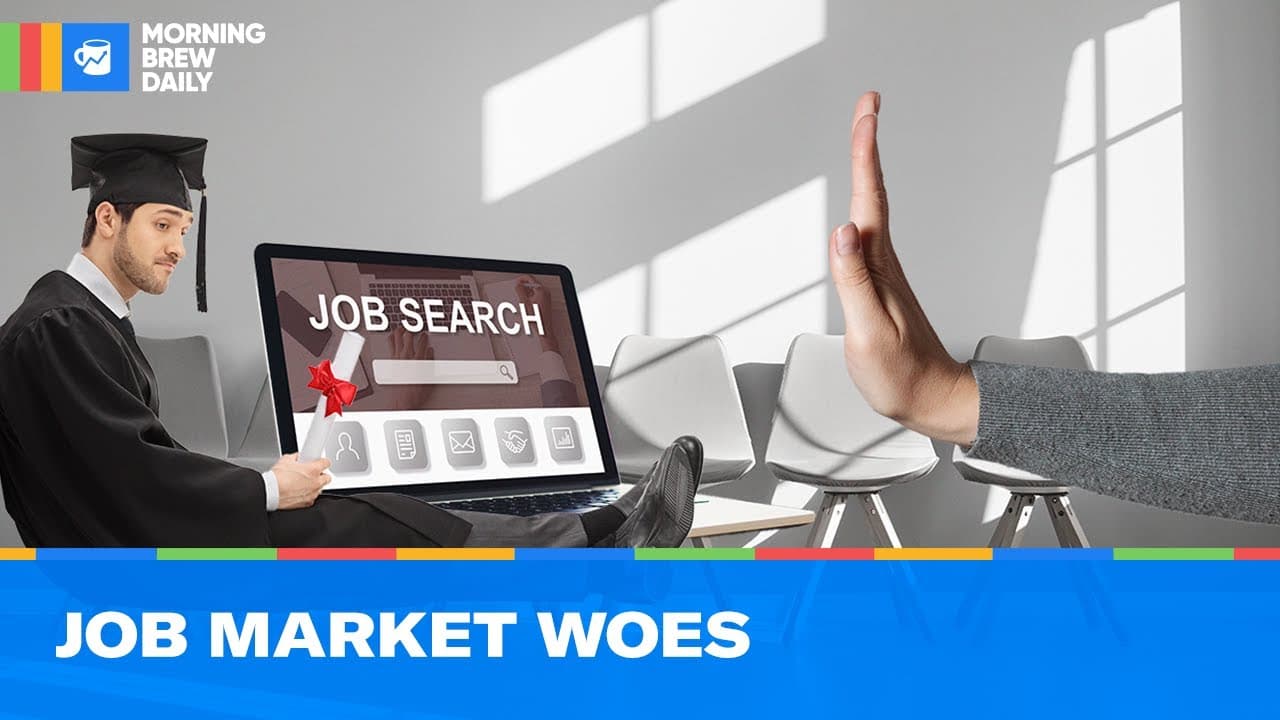
College graduates struggle to find jobs despite low unemployment.
Transcript
Good Morning Brew Daily Show! I'm Neil Freyman and I'm Toby Howell. Today fresh college grads are open to work on LinkedIn. So why can't they find any jobs then? Remember the OpenAI voice that came out sounding a lot like Scarlett Johansson? While the real Scarlett Johansson is none too pleased about it. It's Tuesday, May 21st. Let's ride. Okay. To... Read More
Key Insights
- College graduates are facing a challenging job market despite overall low unemployment rates and job growth in certain sectors like healthcare.
- Entry-level positions in finance, consulting, and tech are scarce, with companies hiring at the slowest pace in a decade, excluding the pandemic dip.
- Big Tech companies are hiring less, with a focus on AI roles that require experience, leaving fewer opportunities for entry-level workers.
- The job market's challenges may lead to long-term effects on the current class of graduates, potentially increasing skepticism about the value of a college degree.
- Gen Z is increasingly turning to trades, which offer lucrative opportunities without the need for a college degree, as a response to the tough job market.
- The OpenAI voice assistant faced backlash for resembling Scarlett Johansson's voice, leading to legal challenges and the removal of the voice.
- Red Lobster filed for bankruptcy, burdened by debt and controversial business decisions, including an alleged shrimp promotion scandal.
- Neuralink's brain chip trials show promise for revolutionizing communication for paralyzed individuals, despite initial technical challenges.
Install to Summarize YouTube Videos and Get Transcripts
Explore YouTube Video Summarizer or Get YouTube Transcript Extractor
Questions & Answers
Q: Why are college graduates struggling to find jobs?
College graduates are facing a tough job market due to a slowdown in hiring for entry-level positions in sectors like finance, consulting, and tech. Despite low overall unemployment rates, these fields are not hiring as actively, partly due to a shift towards more experienced roles in AI and tech, and the lingering effects of the pandemic.
Q: What led to the controversy surrounding OpenAI's voice assistant?
OpenAI's voice assistant faced controversy because one of its voices sounded remarkably similar to Scarlett Johansson's, despite her declining to participate in the project. This led to legal action from Johansson and a public backlash, forcing OpenAI to remove the voice and raising questions about AI's use of intellectual property.
Q: What were the circumstances behind Red Lobster's bankruptcy?
Red Lobster filed for bankruptcy due to significant debt and controversial business practices, including a shrimp promotion that allegedly benefited a major investor, Thai Union, at Red Lobster's expense. This, combined with previous financial burdens from past ownership, led to its financial downfall.
Q: How is Gen Z responding to the challenging job market?
In response to the challenging job market, many Gen Z individuals are turning to trades, which offer high-paying opportunities without requiring a college degree. This shift is driven by the scarcity of traditional white-collar jobs and a desire for more immediate and stable employment options.
Q: What potential does Neuralink's brain implant have?
Neuralink's brain implant has the potential to revolutionize communication for individuals with paralysis by allowing them to control devices through brain activity. Despite initial technical challenges, such as loose threads in the brain, the technology has shown promise in improving the quality of life for users.
Q: What impact does the job market have on perceptions of higher education?
The current job market challenges are leading to increased skepticism about the value of higher education. As graduates struggle to find suitable employment, many are questioning whether the investment in a college degree is worthwhile, potentially leading to a reevaluation of educational priorities.
Q: How does the AI industry handle issues of intellectual property?
The AI industry faces significant challenges regarding intellectual property, as seen in the OpenAI voice assistant case. Companies must navigate legal and ethical considerations when using real-life likenesses and data, ensuring they have proper consent and avoid infringing on personal and intellectual property rights.
Q: What are the broader implications of Red Lobster's financial issues?
Red Lobster's financial issues highlight the impact of mismanagement and controversial business practices on a company's stability. The bankruptcy filing underscores the importance of ethical and strategic decision-making in maintaining a brand's reputation and financial health, especially in the competitive food industry.
Summary & Key Takeaways
-
College graduates are struggling to find jobs in traditional white-collar sectors such as tech and consulting, despite overall positive employment statistics. This mismatch is causing frustration and questioning the value of higher education.
-
OpenAI faced legal issues after Scarlett Johansson alleged her voice was mimicked without consent for an AI voice assistant, leading to the removal of the feature and highlighting concerns over AI and intellectual property.
-
Red Lobster's bankruptcy filing reveals financial mismanagement and questionable promotions, while Neuralink's brain implant shows potential for transforming lives, despite initial setbacks in its trial phase.
Read in Other Languages (beta)
Share This Summary 📚
Summarize YouTube Videos and Get Video Transcripts with 1-Click
Try YouTube Summary with ChatGPT & Claude or YouTube Transcript Generator
Explore More Summaries from Morning Brew Daily 📚



Summarize YouTube Videos and Get Video Transcripts with 1-Click
Try YouTube Summary with ChatGPT & Claude or YouTube Transcript Generator