A Detection of Life on Europa? And an Enceladus Update for 03/20/17
TL;DR
Recent observations suggest the possibility of microbial and potentially more complex life on moons in our solar system, such as Enceladus and Europa.
Transcript
This video is a kind of combination of a news story from a few days ago and a happy addendum to my recent video "Ten Ways We May Have Already Detected Alien Life". As it turns out there is an eleventh possibility, and I was totally unaware of it until a viewer brought it to my attention. It's a detection of potential evidence of microbial life on E... Read More
Key Insights
- 🌊 Enceladus and Europa are prime candidates for potential life in our solar system due to the presence of subsurface oceans and evidence of liquid water interacting with their surfaces.
- 😚 Recent observations suggest that the subsurface ocean of Enceladus may be closer to the surface than previously thought, making it more accessible for future missions.
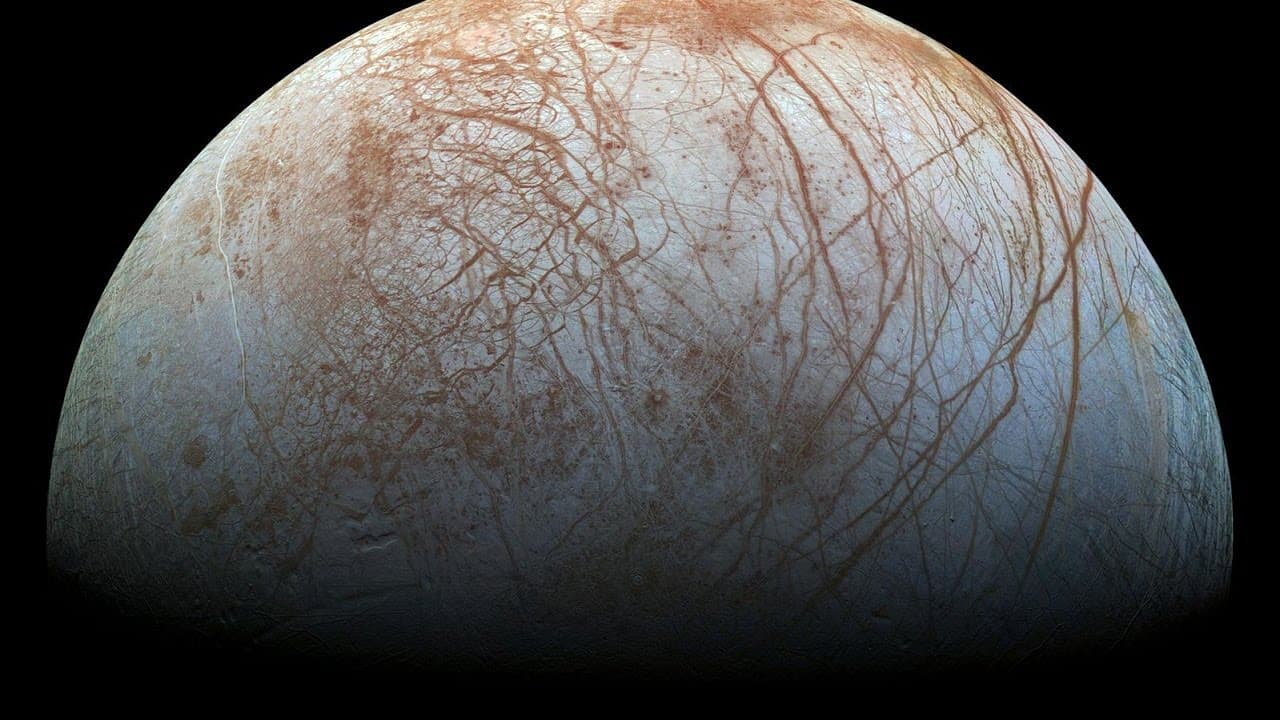
- ❓ Infrared signatures of bacteria subjected to conditions similar to Europa's surface show similarities to the Europan staining, indicating the possible presence of frozen microorganisms.
- 🎟️ Future missions, such as the Europa Clipper, hold the potential to provide more definitive answers about the existence of life on these moons, but budget concerns may impact the scope of the missions.
- 🍘 Different approaches, such as studying the plumes coming from cracks on Europa or analyzing the surface staining, may provide more insights into the potential for life on these moons.
- ❓ The presence of extremophile bacteria with colors similar to the staining suggests the possibility of biological origins for the coloration.
Install to Summarize YouTube Videos and Get Transcripts
Explore YouTube Video Summarizer or Get YouTube Transcript Extractor
Questions & Answers
Q: What are the potential signs of microbial life on Enceladus?
Microwaves observations have shown that the southern pole of Enceladus is warmer than expected, indicating the presence of liquid water closer to the surface. Additionally, plumes of salty water ice have been observed spraying from cracks in Enceladus' ice, suggesting an interaction with a liquid ocean underneath.
Q: How does Titan differ from other moons in terms of its potential for life?
Titan has surface fluids and even a water cycle, but instead of liquid water, these fluids are composed of hydrocarbons. This opens up the possibility of exotic forms of life that use hydrocarbons as a solvent instead of water.
Q: What similarities have been found between the infrared signatures of bacteria and the staining on Europa's surface?
Infrared signatures of bacteria subjected to conditions similar to Europa's surface show similarities to the Europan staining. However, the spectra do not perfectly match the spectra of known bacteria. One interesting difference is the weakness of certain bands in the bacteria's spectra, which could be the result of radiation breaking down the amide bonds in their protein coatings.
Q: How is NASA planning to study Europa and its potential for life?
The Europa Clipper mission, funded by the US Congress and set to launch around 2022, aims to study the geology and subsurface ocean of Europa. However, budget concerns have put the funding for a lander to directly sample material from Europa in jeopardy, though the mission itself remains funded.
Summary & Key Takeaways
-
Enceladus, a moon of Saturn, has a subsurface ocean that may be easier to study due to recent observations of warmer temperatures near its southern pole, suggesting that liquid water may be closer to the surface.
-
Europa, a moon of Jupiter, also shows signs of a subsurface ocean, with cracks in its surface potentially allowing materials from the ocean to reach the surface. Study of Europa's surface staining and infrared signatures suggests the possibility of frozen microorganisms.
-
Proposed missions to Saturn and Jupiter, such as the Europa Clipper, aim to further study these moons and their potential habitability, though budget concerns may impact the plans for a lander to directly sample material.
Read in Other Languages (beta)
Share This Summary 📚
Summarize YouTube Videos and Get Video Transcripts with 1-Click
Try YouTube Summary with ChatGPT & Claude or YouTube Transcript Generator
Explore More Summaries from John Michael Godier 📚

Summarize YouTube Videos and Get Video Transcripts with 1-Click
Try YouTube Summary with ChatGPT & Claude or YouTube Transcript Generator