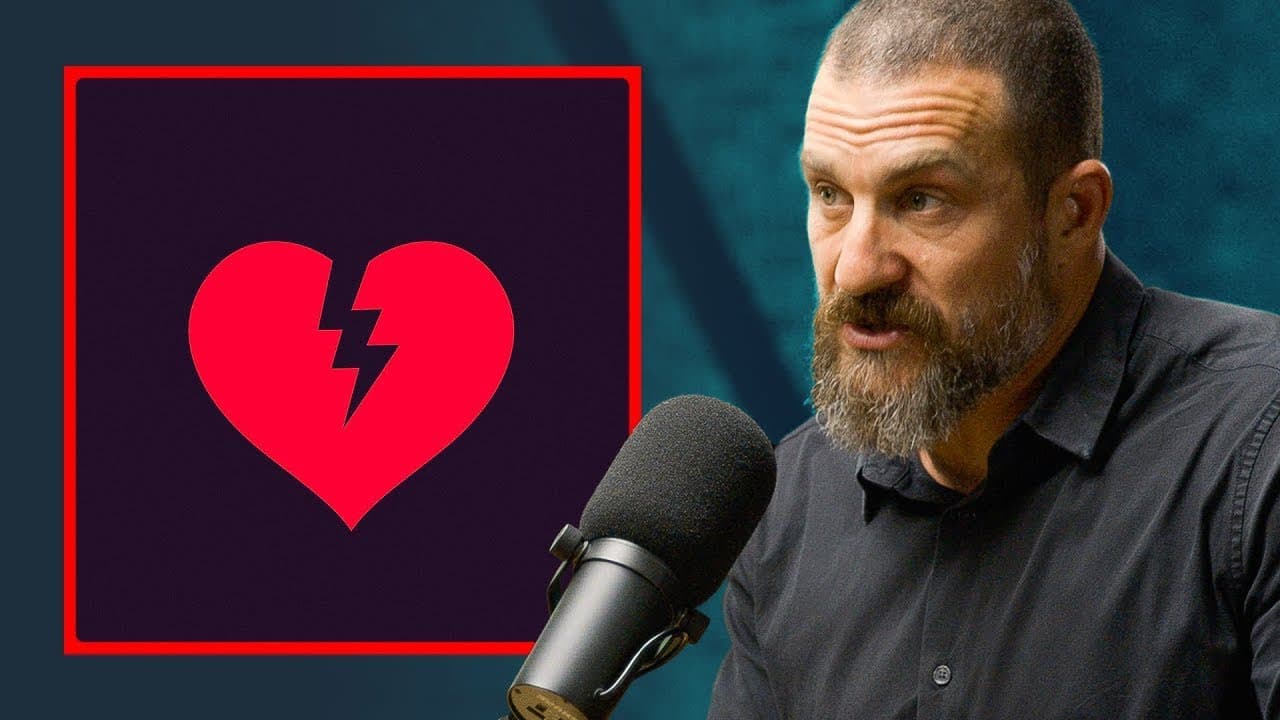
Andrew Huberman Explains The Neuroscience Of Heartbreak
TL;DR
Heartbreak and grief trigger similar neural circuits as attachment styles, leading to a motivated state to bridge the distance caused by loss in time and space.
Transcript
speaking about relationships one of the most uh common traumas probably that people are going to go through is heartbreak right you're going to be in a relationship that you imagine is going to continue forever maybe when you're 18 or sometimes when you're 48 and then it's going to stop have you thought about the neuroscience of what's happening du... Read More
Key Insights
- 💪 Heartbreak and grief activate the same neural circuits associated with attachment styles, highlighting the strong connection between emotional bonds and loss.
- 📁 Attachment styles developed in childhood can influence romantic relationships in adulthood, but the mapping is not always direct and can vary depending on individual experiences.
- 🥺 Grief involves the restructuring of the brain's map of space, time, and closeness, leading to a gradual shift in memory and a decrease in motivational states.
- 👯 Breakups are particularly difficult for young people, as they may perceive the loss as the shutdown of their entire future.
- 🙅 The constant presence of an ex on social media can hinder the brain's ability to perceive the person as gone, making it harder to move on after a breakup.
- ❤️🩹 Understanding the neuroscience behind heartbreak and grief can help individuals navigate and cope with the emotional challenges of ending relationships.
- 😀 The brain's ability to restructure its map after a loss highlights its incredible adaptive capacity in the face of emotional trauma.
Install to Summarize YouTube Videos and Get Transcripts
Explore YouTube Video Summarizer or Get YouTube Transcript Extractor
Questions & Answers
Q: How do attachment styles developed in childhood impact adult romantic relationships?
Attachment styles, such as secure or insecure attachment, developed in childhood influence the way individuals form and maintain romantic relationships in adulthood. However, it is not a one-to-one mapping, as different attachment styles can manifest in different relationships.
Q: How does grief affect the brain and body?
Grief triggers a motivated state in the brain, activating the same circuits involved in hunger or sexual desire. This motivates individuals to bridge the distance caused by loss in space, time, and closeness. Over time, the brain gradually shifts the memory of the person into a more comfortable concept.
Q: Why are breakups especially difficult for young people?
Breakups can be particularly challenging for young people because the relationship represents their entire future. They may struggle to separate the person from their concept of the whole world, leading to a sense of shutdown and increased vulnerability to suicidal thoughts.
Q: How does social media affect the process of healing after a breakup?
Social media can make it harder to let go of a person after a breakup. Constantly checking up on them and being exposed to their presence can hinder the brain's ability to perceive the person as gone in time and space, prolonging the healing process.
Summary & Key Takeaways
-
Heartbreak, a common trauma in relationships, happens when a bond is unexpectedly severed, triggering distress and uncertainty about the future.
-
Attachment styles developed in childhood affect adult romantic relationships, as the same neural circuits in the brain are repurposed for attachment.
-
Grief, a response to loss, involves the restructuring of the brain's map of space, time, and closeness, leading to a gradual waning of motivation and a shift in memory.
Read in Other Languages (beta)
Share This Summary 📚
Summarize YouTube Videos and Get Video Transcripts with 1-Click
Try YouTube Summary with ChatGPT & Claude or YouTube Transcript Generator
Explore More Summaries from Chris Williamson 📚





Summarize YouTube Videos and Get Video Transcripts with 1-Click
Try YouTube Summary with ChatGPT & Claude or YouTube Transcript Generator