How to Be an “Apocalyptic Optimist” | Dana R. Fisher | TED
TL;DR
The climate crisis necessitates mass mobilization and community resilience to drive systemic change and adapt to climate shocks.
Transcript
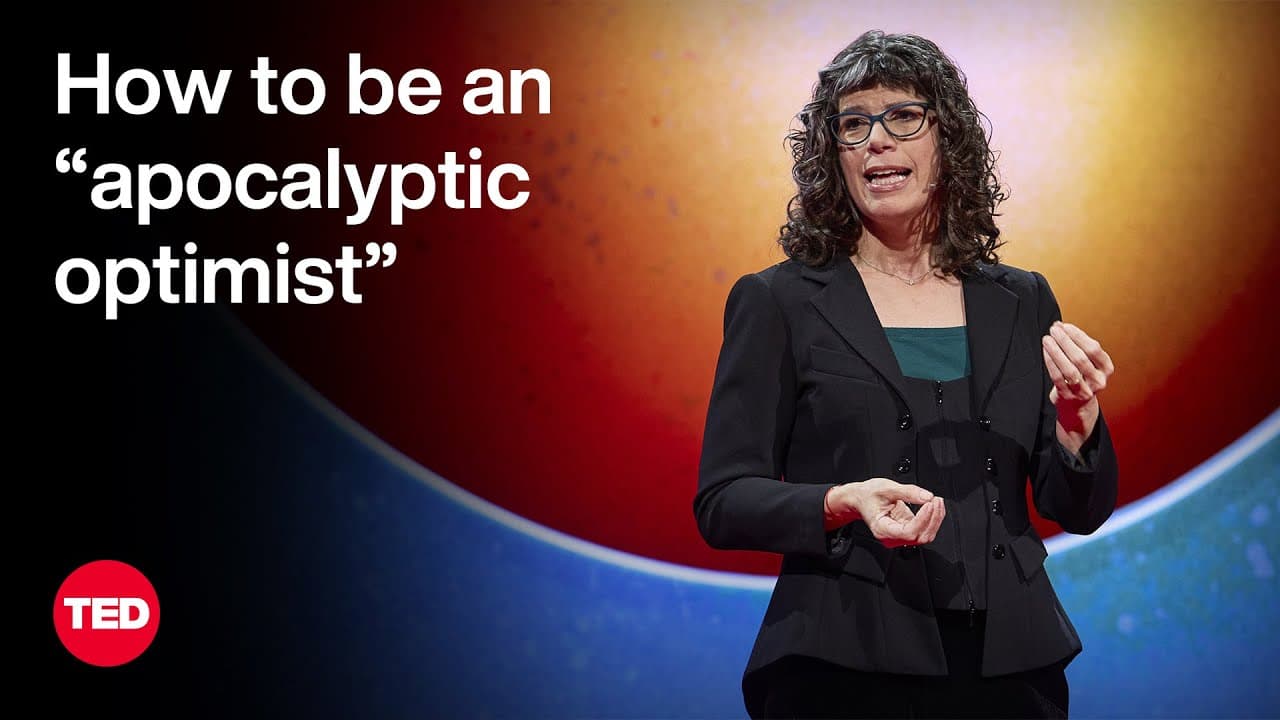
I call myself an “apocalyptic optimist,” but I wasn't always this way. I used to believe that technology could save us from the climate crisis, that all the big brains in the world would come up with a silver bullet to stop carbon pollution, that a clever policy would help that technology spread, and our concern about the greenhouse gases heating t... Read More
Key Insights
- 👨💼 The belief in technological solutions for the climate crisis has been challenged by systemic failures in policy and response from governments and businesses.
- 🥺 Fossil fuel interests significantly obstruct meaningful climate action, often leading to ineffective and incremental policies.
- ❓ Civil society's role is crucial; grassroots activism can translate personal climate experiences into collective action and political pressure.
- ❓ Local activism that resonates with diverse identities can strengthen the climate movement and broaden its appeal.
- ❓ Disruption in activism can be a catalyst for engagement, as witnessed in historical movements where state repression galvanized greater participation.
- 🤨 Non-violent civil disobedience strategies are vital for raising awareness and demonstrating urgency in tackling climate issues.
- 🐕🦺 Service corps and community engagement programs enhance resilience through collaboration and practical support during environmental crises.
Install to Summarize YouTube Videos and Get Transcripts
Explore YouTube Video Summarizer or Get YouTube Transcript Extractor
Questions & Answers
Q: What led to the author's shift from believing in technology's ability to solve the climate crisis to recognizing the importance of civil mobilization?
The author's transformation stemmed from observing the inadequacy of climate policies and the overwhelming influence of fossil fuel interests, which resulted in incremental changes rather than the necessary systemic shifts. They realized that collective action and community engagement would be crucial in addressing the climate challenges we face, especially as more people are impacted by climate shocks.
Q: How does the author define "apocalyptic optimism"?
The term "apocalyptic optimist" reflects a dual perspective where one acknowledges the potentially dire consequences of the climate crisis while simultaneously believing in the possibility of enacting meaningful change through collective action. The author emphasizes the importance of being prepared for the anticipated impacts while remaining hopeful about mobilizing civil society for advocacy and resilience.
Q: What are the radical flank effects mentioned in the content and how do they relate to social movements?
The radical flank effect refers to the phenomenon where more confrontational elements of a social movement can mobilize sympathizers to adopt more moderate stances. When activists employ disruptive tactics, it can spark broader support as people witness injustice against peaceful protesters, motivating them to become involved. This process reflects how various tactics within a movement can function to build momentum for change.
Q: What role do community resilience programs play in addressing the climate crisis?
Community resilience programs are designed to empower individuals and communities to withstand the impacts of climate change effectively. By fostering local connections and providing training in sustainable practices, these programs enhance preparedness for climate shocks, such as natural disasters. They represent a proactive approach to mitigate suffering during crises by building strong, informed, and cohesive communities.
Summary & Key Takeaways
-
The author reflects on their evolving perspective from believing in technological solutions to recognizing systemic issues in climate policy, driven by fossil fuel interests.
-
Although small progress has been made, the need for civil mobilization is urgent, as more individuals experience climate impacts, fostering a collective demand for action.
-
The author emphasizes that everyone can contribute to resilience efforts, highlighting successful community programs that promote sustainable practices and collective support during climate shocks.
Read in Other Languages (beta)
Share This Summary 📚
Summarize YouTube Videos and Get Video Transcripts with 1-Click
Try YouTube Summary with ChatGPT & Claude or YouTube Transcript Generator
Explore More Summaries from TED 📚



Summarize YouTube Videos and Get Video Transcripts with 1-Click
Try YouTube Summary with ChatGPT & Claude or YouTube Transcript Generator