What Is the Celtic Influence on English Grammar?
TL;DR
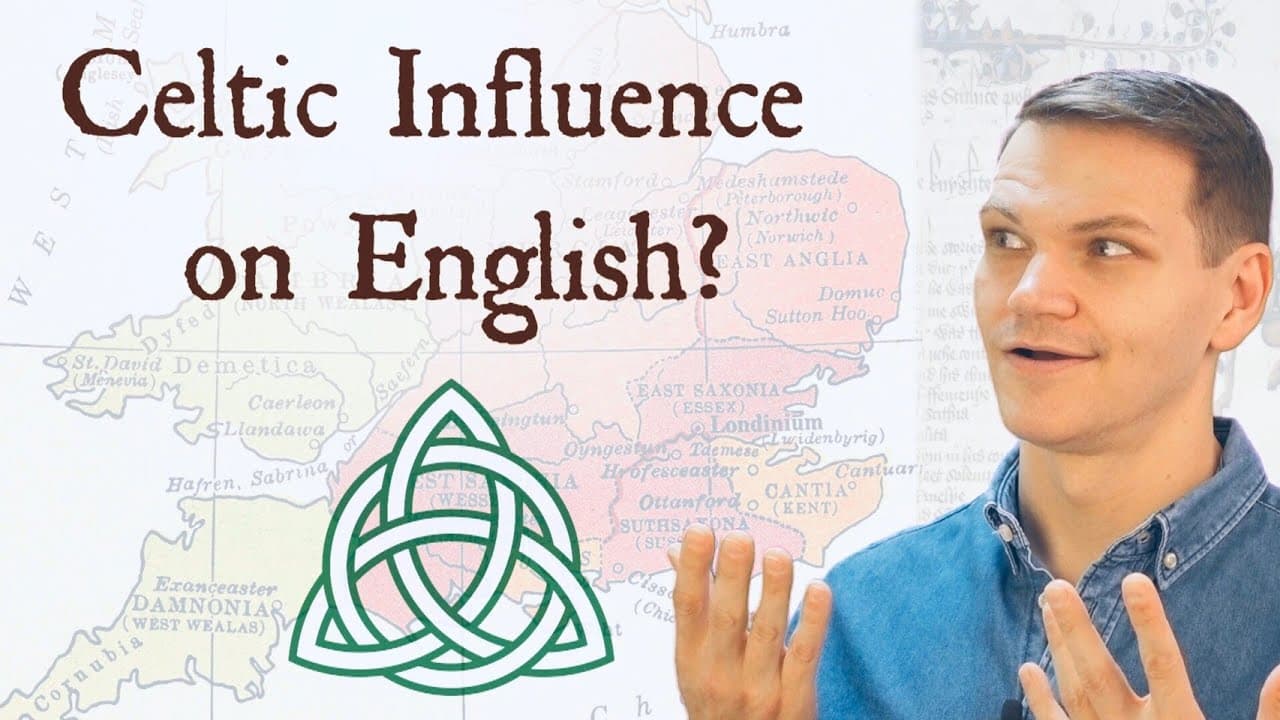
Celtic influence on the English language is evident in certain grammatical features, despite the lack of Celtic vocabulary. Key similarities include the use of 'do support' in questions and negatives and the present continuous form, both of which bear resemblance to structures found in Welsh and Cornish. Genetic and archaeological evidence suggests that the Anglo-Saxons absorbed the Celts, potentially allowing for such influences to take root in English.
Transcript
Hello, everyone! Welcome to the Langfocus Channel and my name is Paul. People who are interested in the history of English know that english is a Germanic language that developed from Old English, the language of the Anglo-Saxons who began invadind and settling in Britain in the 5th century. It's also widely known that the development of English wa... Read More
Key Insights
- English is a Germanic language primarily influenced by Old Norse and French, but Celtic influence is often overlooked due to historical biases.
- Genetic and archaeological evidence suggests the Anglo-Saxons ruled over, intermarried, and absorbed the Celts rather than eliminating them entirely.
- The concept of 'do support' in English, used in questions and negatives, is paralleled only by Welsh and Cornish among global languages.
- The present continuous form in English, used for actions occurring now, is similar to structures in Welsh and Cornish, suggesting Celtic influence.
- Celtic influence on English may have been present in spoken language long before it appeared in written records, due to the prestige of written Old English.
- The use of 'do' in affirmative sentences for emphasis in English has historical roots that align with Celtic languages' broader use of auxiliary verbs.
- The progressive form in English, originally formed with a participle, shifted to a verbal noun structure similar to Celtic languages.
- The lack of Celtic vocabulary in English does not negate grammatical influences, which may have been more significant due to the Celtic majority population.
Install to Summarize YouTube Videos and Get Transcripts
Explore YouTube Video Summarizer or Get YouTube Transcript Extractor
Questions & Answers
Q: What is the traditional view of Celtic influence on English?
The traditional view is that the Anglo-Saxons massacred or displaced the Celts, leaving little room for Celtic influence on English. This view suggests minimal impact from Celtic languages, as the Anglo-Saxons were thought to have dominated the population. However, recent evidence challenges this perspective.
Q: How does genetic and archaeological evidence challenge the traditional view?
Genetic and archaeological evidence suggests that the Anglo-Saxons did not entirely eliminate the Celts but rather ruled over, intermarried with, and absorbed them into the population. This implies that Celtic languages could have influenced English, as the Celts likely formed a significant portion of the population.
Q: What is 'do support' and how is it related to Celtic languages?
Do support is the use of the auxiliary 'do' in English questions and negatives, like 'Do you drink coffee?' or 'I don't drink coffee.' This feature is rare globally, found only in Welsh and Cornish among other languages, suggesting a possible Celtic influence on English grammar.
Q: How does the present continuous form in English relate to Celtic languages?
The present continuous form in English, used to describe actions occurring now, is similar to structures in Welsh and Cornish. While many languages have a present continuous form, English's exclusive use for present actions aligns more closely with Celtic languages, indicating potential influence.
Q: Why might Celtic influence not appear in Old English records?
Celtic influence might not appear in Old English records because the written language was more conservative and prestigious, reflecting elite norms rather than common speech. After the Norman Conquest, English lost its prestige, allowing spoken features, potentially including Celticisms, to enter written language.
Q: What historical changes in English grammar suggest Celtic influence?
Historical changes include the shift from participle forms to verbal noun structures in the progressive tense, similar to Celtic languages. Additionally, the broader historical use of 'do' in affirmative sentences aligns with Celtic languages' use of auxiliary verbs, further suggesting influence.
Q: How does the video address the lack of Celtic vocabulary in English?
The video acknowledges the absence of Celtic vocabulary but argues that grammatical features, such as 'do support' and the present continuous form, indicate a more significant influence. These features may have persisted due to the Celtic majority population adopting English as a second language.
Q: Why does the video focus on Welsh and Cornish rather than other Celtic languages?
The video focuses on Welsh and Cornish because they are Brythonic languages that developed alongside English in Britain, unlike Gaelic, which developed in Ireland. The Anglo-Saxons had more contact with Brythonic languages, making them more relevant for examining potential Celtic influence on English.
Summary & Key Takeaways
-
The video discusses the often-overlooked influence of Celtic languages on English, highlighting grammatical features that suggest a Celtic substrate. Despite the lack of Celtic vocabulary in English, grammatical parallels with Welsh and Cornish are explored, particularly the use of 'do support' and the present continuous form.
-
Genetic and archaeological evidence challenges the notion that the Anglo-Saxons eradicated the Celts, suggesting they absorbed them into the population. This raises the possibility of Celtic influence on English, seen in unique grammatical features that align with Welsh and Cornish.
-
The presenter argues that Celtic influence on English may have been present in spoken language before appearing in written records due to the prestige of Old English. The video examines the use of 'do support' and the present continuous form, drawing parallels with Welsh and Cornish.
Read in Other Languages (beta)
Share This Summary 📚
Summarize YouTube Videos and Get Video Transcripts with 1-Click
Try YouTube Summary with ChatGPT & Claude or YouTube Transcript Generator
Explore More Summaries from Langfocus 📚



Summarize YouTube Videos and Get Video Transcripts with 1-Click
Try YouTube Summary with ChatGPT & Claude or YouTube Transcript Generator