How a Bible prophecy shapes Trump's foreign policy
TL;DR
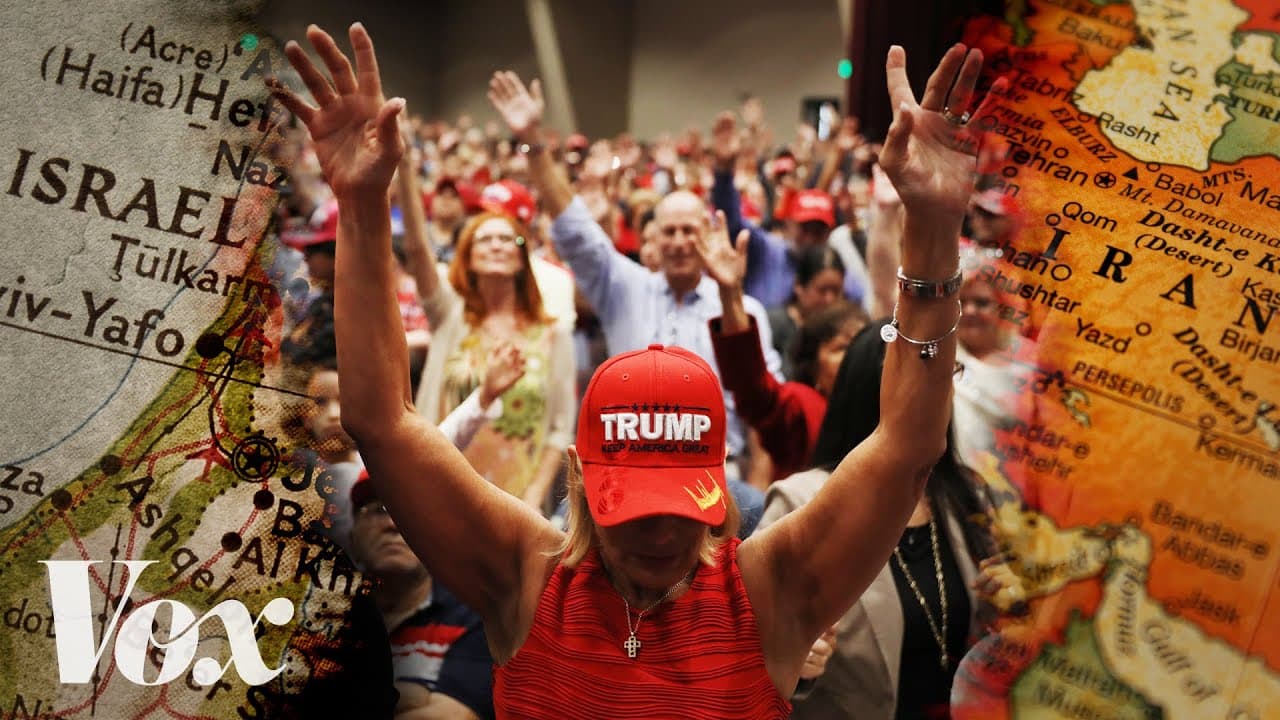
Evangelicals influence Trump's foreign policy through Biblical prophecy.
Transcript
There's a church in the city of Bethlehem. It was built on the spot where Christians believe Jesus was born. It's called the Church of the Nativity. If you consult UNESCO's List of World Heritage Sites, or ask travel expert Rick Steves, both will tell you that the church is in Palestine. But when a question about the church's location came up durin... Read More
Key Insights
- Evangelical Christians are a significant political force in the United States, influencing foreign policy under the Trump administration, particularly regarding Israel and Iran.
- Christian Zionism, a belief held by many evangelicals, views the return of Jews to Israel as a key event signaling the second coming of Jesus.
- The Trump administration's policies, such as moving the US Embassy to Jerusalem, align with evangelical beliefs and are seen as fulfilling Biblical prophecy.
- Evangelicals view the Bible as a prophetic roadmap, with events like the rebirth of Israel seen as divine interventions that must be supported politically.
- The story of Esther is significant for evangelicals, drawing parallels between ancient Persia (modern-day Iran) and current geopolitical tensions.
- Key figures in the Trump administration, including Mike Pence and Mike Pompeo, are evangelicals, shaping policies that align with Christian Zionist beliefs.
- Evangelicals' support for Trump is partly due to his alignment with their prophetic interpretations, influencing decisions like the drone strike on Iran's Qasem Soleimani.
- The influence of evangelical Christians on US foreign policy represents a shift from fringe to mainstream in Republican politics, impacting Middle East dynamics.
Install to Summarize YouTube Videos and Get Transcripts
Explore YouTube Video Summarizer or Get YouTube Transcript Extractor
Questions & Answers
Q: How do evangelical Christians influence Trump's foreign policy?
Evangelicals influence Trump's foreign policy through their belief in Christian Zionism, which views the return of Jews to Israel as a key event in Biblical prophecy. This belief has led to policy decisions that support Israel and oppose Iran, aligning with their prophetic interpretations.
Q: What is Christian Zionism?
Christian Zionism is a belief held by many evangelicals that the return of the Jewish people to Israel is a fulfillment of Biblical prophecy. It sees this event as a precursor to the second coming of Jesus, influencing political support for Israel and opposition to its enemies.
Q: Why is the story of Esther significant to evangelicals?
The story of Esther is significant to evangelicals because it parallels ancient Persia (modern-day Iran) with current geopolitical tensions. Evangelicals see this story as relevant to their belief that the US must support Israel against Iran, drawing on Biblical narratives to inform foreign policy.
Q: What role do Mike Pence and Mike Pompeo play in evangelical influence?
Mike Pence and Mike Pompeo, both evangelicals, play crucial roles in shaping policies that align with Christian Zionist beliefs. Their influence is evident in decisions like the US Embassy move to Jerusalem and actions against Iran, reflecting evangelical interpretations of Biblical prophecy.
Q: How does evangelical belief affect US policy towards Israel?
Evangelical belief affects US policy towards Israel by promoting actions that support Israel as part of fulfilling Biblical prophecy. This includes political and military support, as well as recognizing Jerusalem as Israel's capital, aligning with their interpretation of prophetic events.
Q: What is the evangelical view of the Bible's role in modern politics?
Evangelicals view the Bible as a prophetic roadmap that informs modern politics. They believe that events described in the Bible are unfolding today, guiding their support for policies that align with these prophecies, particularly concerning Israel and the Middle East.
Q: How has the evangelical influence shifted in Republican politics?
Evangelical influence has shifted from a fringe element to a central role in Republican politics, particularly under Trump. Their beliefs in Biblical prophecy now significantly shape foreign policy, especially regarding Israel and Iran, reflecting a mainstream acceptance of their views.
Q: What motivates evangelical support for Trump?
Evangelical support for Trump is motivated by his alignment with their prophetic interpretations, particularly regarding Israel. His policies, such as moving the US Embassy to Jerusalem and actions against Iran, are seen as fulfilling Biblical prophecy, solidifying their political backing.
Summary & Key Takeaways
-
Evangelical Christians hold significant sway in US politics, particularly under Trump, where their interpretation of Biblical prophecy influences foreign policy decisions. Their belief in Christian Zionism drives support for Israel and opposition to Iran, aligning with their view of the Bible as a prophetic roadmap.
-
The Trump administration's policies, such as moving the US Embassy to Jerusalem and actions against Iran, reflect evangelical beliefs in Biblical prophecy. Key figures like Mike Pence and Mike Pompeo, both evangelicals, have played crucial roles in shaping these policies.
-
The evangelical perspective sees the return of Jews to Israel as a fulfillment of prophecy, with parallels drawn between Biblical stories and modern geopolitical events. This belief system has transitioned from a fringe element to a central influence in Republican politics, impacting US foreign policy.
Read in Other Languages (beta)
Share This Summary 📚
Summarize YouTube Videos and Get Video Transcripts with 1-Click
Try YouTube Summary with ChatGPT & Claude or YouTube Transcript Generator
Explore More Summaries from Vox 📚



Summarize YouTube Videos and Get Video Transcripts with 1-Click
Try YouTube Summary with ChatGPT & Claude or YouTube Transcript Generator