What Are Descriptive Analysis and Its Key Measures?
TL;DR
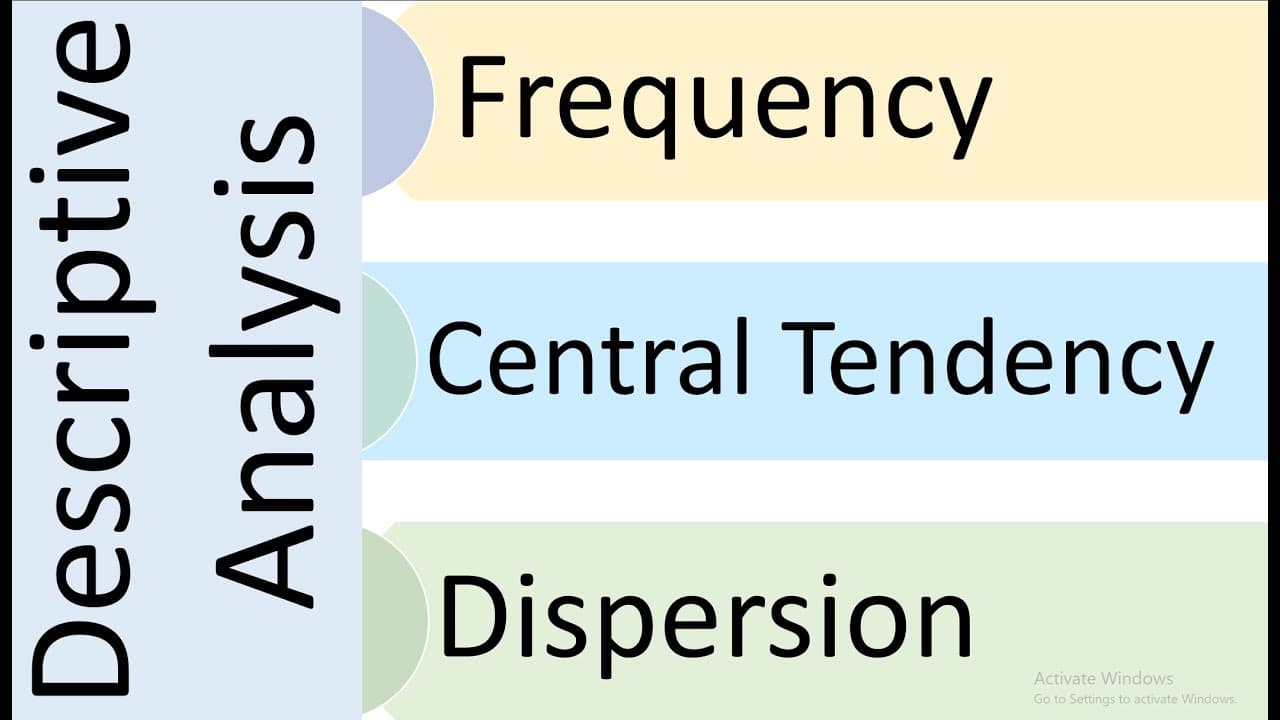
Descriptive analysis summarizes sample data, revealing patterns and trends while preparing the data for further analysis. Key measures include frequency distribution, central tendency (mean, median, mode), and dispersion (range, variance, standard deviation), which help understand the variability and characteristics of the data.
Transcript
hello and welcome to lesson 29 descriptive analysis based on the data type that we collected for our research we can classify data analysis into quantitative data analysis and qualitative data analysis and again quantitative data analysis can be divided into descriptive analysis and inferential analysis according to our research purpose and today w... Read More
Key Insights
- 📈 Descriptive analysis helps summarize and understand sample data, identifying trends and errors.
- ❓ Inferential analysis is used to make conclusions about populations and study cause and effect relationships.
- 📈 Frequency distribution can be represented graphically through bar graphs, histograms, pie charts, and frequency polygons.
- 🔂 Measures of central tendency (mean, median, mode) summarize a dataset using a single value.
- 🧡 Measures of dispersion (range, variance, standard deviation) indicate data variability.
- 🇨🇫 Central tendency measures differ in their susceptibility to outliers.
- 🚰 Graphical representations and tables are used to organize frequency distribution data.
Install to Summarize YouTube Videos and Get Transcripts
Explore YouTube Video Summarizer or Get YouTube Transcript Extractor
Questions & Answers
Q: What is descriptive analysis and how does it differ from inferential analysis?
Descriptive analysis summarizes and describes sample data, helping to identify patterns and prepare for further statistical analysis. Inferential analysis, on the other hand, makes conclusions about populations based on randomly selected samples and examines cause and effect relationships.
Q: How can frequency distribution be represented graphically?
Frequency distribution can be shown using bar graphs (for comparing discrete or interval data categories), histograms (for continuous data distribution), pie charts (for data proportions), and frequency polygons (derived from connecting midpoints of class frequencies).
Q: What are measures of central tendency and how do they differ?
Measures of central tendency, such as mean, median, and mode, summarize the whole dataset using a single value. Mean is the mathematical average but is highly affected by outliers, while the median represents the middle value and is robust against extreme values. Mode is the most frequent value in the dataset.
Q: How do measures of dispersion indicate data variability?
Measures of dispersion, including range, variance, and standard deviation, provide insights into how data is spread out or clustered. A larger standard deviation suggests greater variability or heterogeneity, while a smaller standard deviation indicates homogeneity or less variability.
Summary & Key Takeaways
-
Descriptive analysis helps summarize and describe sample data, identify patterns and trends, and detect errors and outliers.
-
Inferential analysis is used to make inferences about populations and study cause and effect relationships between variables.
-
Frequency distribution can be represented through graphical methods like bar graphs, histograms, pie charts, and frequency polygons, or through tabular representations.
-
Measures of central tendency include mean (affected by outliers), median (positional average), and mode (most frequent value).
-
Measures of dispersion, such as range, variance, and standard deviation, indicate the variability and homogeneity of data.
Read in Other Languages (beta)
Share This Summary 📚
Summarize YouTube Videos and Get Video Transcripts with 1-Click
Try YouTube Summary with ChatGPT & Claude or YouTube Transcript Generator
Explore More Summaries from Solomon Getachew 📚
Summarize YouTube Videos and Get Video Transcripts with 1-Click
Try YouTube Summary with ChatGPT & Claude or YouTube Transcript Generator