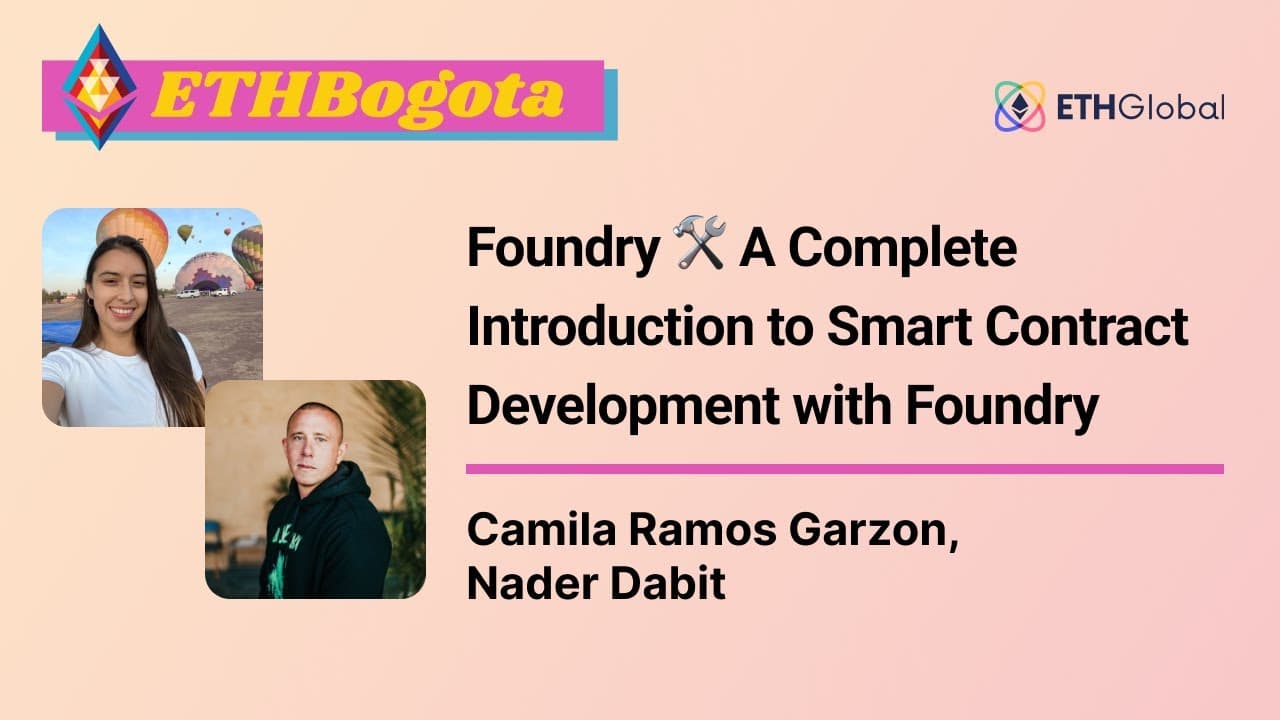
Foundry 🛠 A Complete Introduction to Smart Contract Development with Foundry
TL;DR
This content is a workshop that provides a comprehensive introduction to smart contract development using the Foundry toolkit, including topics such as testing, fuzzing, logging, and deployment.
Transcript
foreign [Applause] key mission statements as a developer Advocate is to make sure that computer science education in general is widely accessible to people from all over the world and that means that when you're in a different country with a different language making sure that those people can access education in the same way I did a check here and... Read More
Key Insights
- 🎓 Foundry aims to make computer science education widely accessible by providing tools for smart contract development.
- 🏆 Writing tests in Solidity reduces context switching and improves the developer experience.
- 😒 Foundry's use of Rust allows for faster performance compared to other tools.
- 🏆 Fuzzing automates testing for all possible cases, ensuring comprehensive coverage.
- 👻 Anvil allows developers to spin up a local Ethereum node for testing purposes.
- 😓 Cast enables interaction with live contracts on the Ethereum network.
- 😒 Forge provides the ability to install and use libraries in Foundry projects.
Install to Summarize YouTube Videos and Get Transcripts
Explore YouTube Video Summarizer or Get YouTube Transcript Extractor
Questions & Answers
Q: What is the unique value proposition of Foundry compared to its competitors?
Foundry allows developers to write tests in Solidity, offers faster performance due to being written in Rust, and provides an improved developer experience with features like fuzzing.
Q: Can Foundry be used to interact with live contracts deployed on the Ethereum network?
Yes, Foundry includes the "cast" CLI tool, which enables developers to interact with any live EVM network, not just contracts created using Foundry.
Q: How does fuzzing work in Foundry?
Fuzzing is an automated testing strategy that ensures all possible edge cases are tested. It allows developers to handle failed cases and create more comprehensive tests by injecting multiple variables into their contracts.
Q: What tools come with Foundry, besides the core toolkit?
Foundry includes additional tools like Anvil (a local Ethereum node for testing), Cast (for interacting with smart contracts), and Forge (for installing and using libraries).
Key Insights:
- Foundry aims to make computer science education widely accessible by providing tools for smart contract development.
- Writing tests in Solidity reduces context switching and improves the developer experience.
- Foundry's use of Rust allows for faster performance compared to other tools.
- Fuzzing automates testing for all possible cases, ensuring comprehensive coverage.
- Anvil allows developers to spin up a local Ethereum node for testing purposes.
- Cast enables interaction with live contracts on the Ethereum network.
- Forge provides the ability to install and use libraries in Foundry projects.
- Mocking users and testing token transfers are important aspects of smart contract development.
Summary & Key Takeaways
-
Foundry is a portable toolkit for Ethereum application development, offering similar functionality to other tools like Hardhat and Truffle.
-
Foundry allows developers to write tests in Solidity instead of JavaScript, improving the developer experience and reducing context switching.
-
It includes features like fuzzing, which automates testing for all possible cases, and provides an improved developer experience for smart contract development.
Read in Other Languages (beta)
Share This Summary 📚
Summarize YouTube Videos and Get Video Transcripts with 1-Click
Try YouTube Summary with ChatGPT & Claude or YouTube Transcript Generator
Explore More Summaries from ETHGlobal 📚

Summarize YouTube Videos and Get Video Transcripts with 1-Click
Try YouTube Summary with ChatGPT & Claude or YouTube Transcript Generator