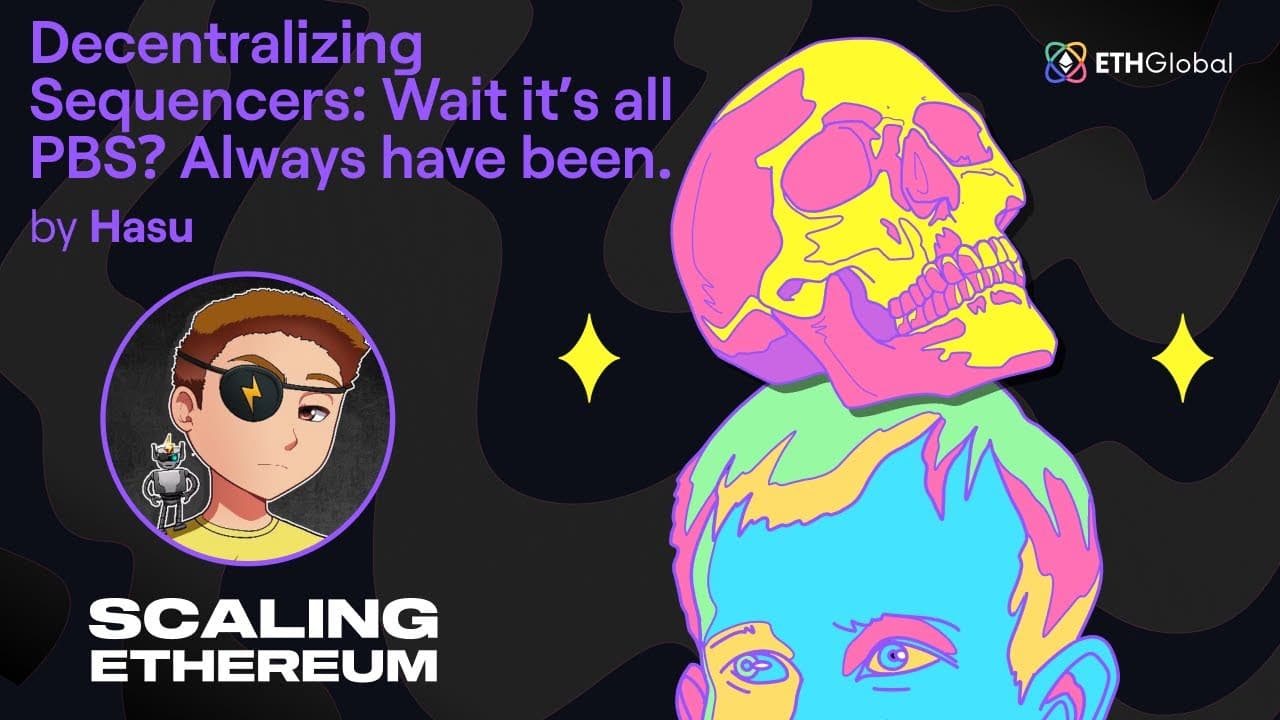
Decentralizing Sequencers Wait it’s all PBS Always have been - Hasu
TL;DR
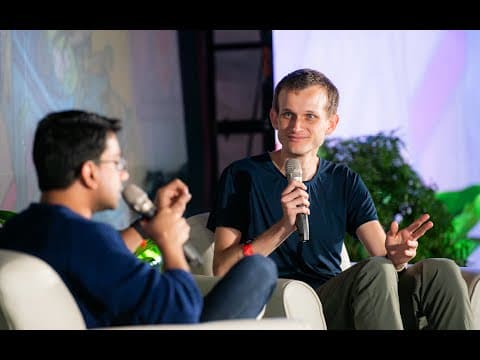
The video discusses the importance of decentralizing layer 2 sequences, the challenges involved, and proposed solutions.
Transcript
foreign [Applause] PBS yeah uh always has been so in this talk um I will come into roll ups are in the process of decentralizing on their sequencer so every roll up um has a decentralization roadmap and all of these roadmaps have some plans for decentralizing the sequencer however this uh the way that sequencing works and they are too it actually c... Read More
Key Insights
- 🔍 Roll-ups are in the process of decentralizing on their sequencer, which combines layer 1 proposal and layer 1 block builder roles, posing challenges to privacy, cross-domain MEV, and lower latency.
- 🧩 Decentralizing the layer 2 sequence is important as roll-ups become more critical, with volume and liquidity shifting to these new execution layers.
- 💰 Roll-up providers are now offering "Roll-Ups as a Service," with the possibility of spinning up new blockchains becoming more common.
- ⚖️ Centralized sequences can cause issues such as user censorship, offline access, arbitrary pricing, regulatory chokepoints, and visibility into unconfirmed transactions.
- ⛓️ Various proposals exist for decentralizing sequences, including layer one or "other chain" sequencing, shared sequencing, optimistic style sequencing/block auction, random selection from a proof-of-stake set, and committee-based solutions.
- ⚙️ The innovation in these decentralization proposals is mostly focused on the leader election mechanism, while the ordering mechanism is largely ignored.
- 🔒 Privacy is a significant challenge in decentralizing roll-up sequences, as centralized sequences have made users accustomed to easy privacy.
- 🌐 Cross-domain MEV and latency are additional challenges in the decentralization of roll-up sequences, requiring solutions that balance decentralization and scalability.
Install to Summarize YouTube Videos and Get Transcripts
Explore YouTube Video Summarizer or Get YouTube Transcript Extractor
Questions & Answers
Q: What are the challenges posed by centralized sequences in layer 2 networks?
Centralized sequences in layer 2 networks can lead to potential abuses by the sequencer, regulatory choke points, transaction surveillance, and inefficient MEV auctions, which undermine the benefits of decentralization and user privacy.
Q: How can layer 2 sequences be decentralized?
There are several proposed solutions, including layer one or other chain sequencing, shared sequencing, optimism-style sequencer/block auction, random selection from a proof-of-stake set, and committee-based solutions. Each approach has its own advantages and challenges in terms of decentralization.
Q: What is the role of PBS (Potential Block Swap) in layer 2 decentralization?
PBS plays a crucial role in shielding the proposer role from the centralizing effects of MEV, promoting competition among block builders, maximizing protocol revenue, and minimizing negative externalities. PBS ensures that different block builders can compete equally without compromising privacy or protocol integrity.
Q: What challenges arise when decentralizing layer 2 sequences?
Privacy becomes a major challenge when decentralizing layer 2 sequences, as different approaches may compromise user privacy or require trust in centralized block builders. Cross-domain MEV and latency are also challenges due to the fragmentation of liquidity and the need for faster confirmations while maintaining decentralization and geographical neutrality.
Summary & Key Takeaways
-
Layer 2 sequences are becoming more important as volume and liquidity move to roll-ups, but their centralized nature poses problems such as potential abuse, regulatory choke points, and lack of privacy.
-
Various proposals for decentralizing sequences include layer one or other chain sequencing, shared sequencing, optimism-style sequencer/block auction, random selection from a proof-of-stake set, and committee-based solutions.
-
The talk emphasizes the need to separate the proposal and block builder roles, highlights the benefits of Potential Block Swap (PBS), and addresses challenges related to privacy, cross-domain MEV, and latency.
Read in Other Languages (beta)
Share This Summary 📚
Summarize YouTube Videos and Get Video Transcripts with 1-Click
Try YouTube Summary with ChatGPT & Claude or YouTube Transcript Generator
Explore More Summaries from ETHGlobal 📚
Summarize YouTube Videos and Get Video Transcripts with 1-Click
Try YouTube Summary with ChatGPT & Claude or YouTube Transcript Generator