Impacts of Agricultural Practices| Land and water use| AP Environmental science| Khan Academy
TL;DR
The video discusses the impacts of agricultural practices, such as tilling, slash and burn farming, and the use of fertilizers.
Transcript
- [Voiceover] Hey there. Today I'm gonna cover the impacts of agricultural practices. And to do so, I'm gonna take you through my morning ritual. It sounds weird, but my bowl of multigrain Cheerios, and rice milk, and relaxing in my super comfy pajamas, they're all connected to intensive agricultural practices, in particular tilling, slash and burn... Read More
Key Insights
- 🥺 Tilling, while beneficial in controlling weeds, can lead to soil compaction and erosion if done excessively.
- 🍉 Slash and burn farming, although it temporarily fertilizes the soil, causes long-term soil degradation and contributes to climate change.
- 😒 The use of fertilizers can increase crop yields but must be carefully managed to avoid water pollution and eutrophication.
- 😘 Alternative farming practices, such as low till or no till farming and using compost as a fertilizer, can help mitigate the negative impacts of traditional agricultural practices.
Install to Summarize YouTube Videos and Get Transcripts
Explore YouTube Video Summarizer or Get YouTube Transcript Extractor
Questions & Answers
Q: What is tilling and how is it used in agriculture?
Tilling is the process of turning soil to control weeds and prepare the soil for seeding. It helps loosen the soil and can break down compacted soil, allowing for easier crop planting.
Q: How does repeated tilling impact the soil?
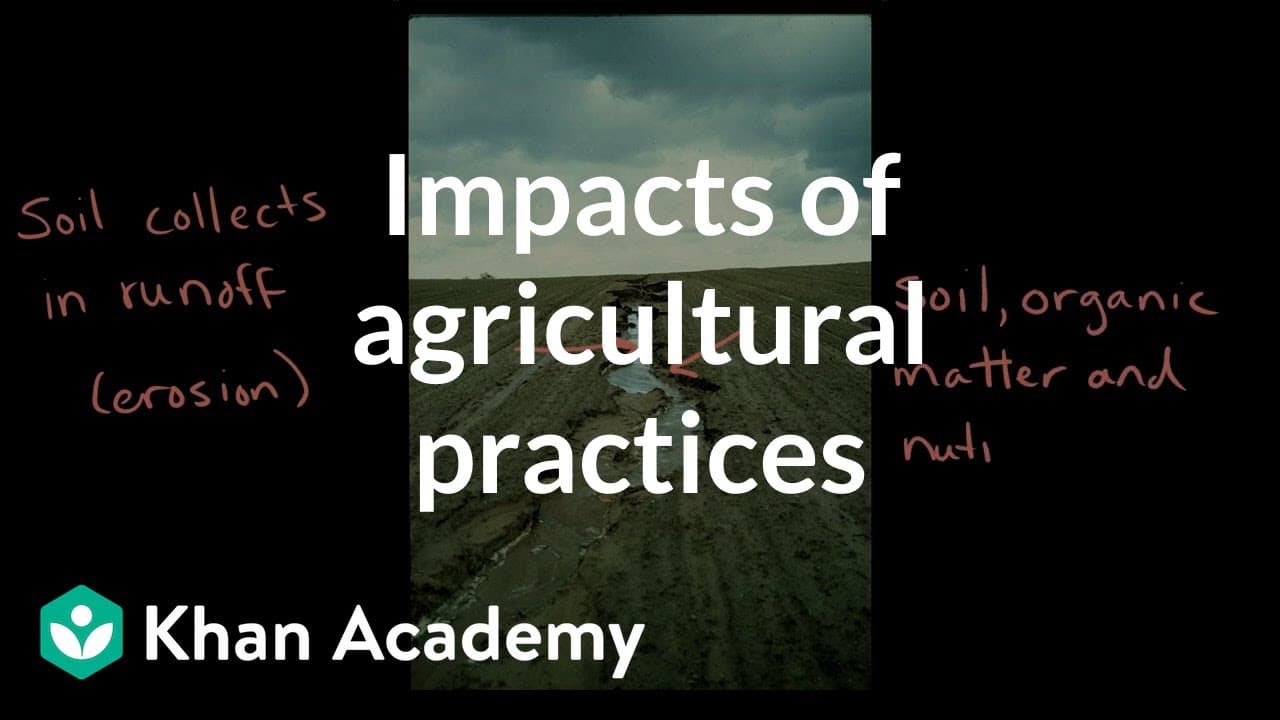
Repeated intensive tilling can lead to soil compaction, which reduces the soil's ability to hold water and nutrients. It also exposes the soil surface to erosion, causing the loss of soil, organic matter, and nutrients.
Q: What is slash and burn farming, and what are its consequences?
Slash and burn farming involves cutting down forest plots and burning them to fertilize the soil. However, this practice leads to soil degradation, loss of nutrients, and contributes to climate change through the release of greenhouse gases.
Q: How do fertilizers impact waterways and marine ecosystems?
Excess fertilizer can pollute runoff water and cause eutrophication in bodies of water. This leads to the growth of harmful algae blooms, depletes oxygen levels in the water, and can result in fish die-offs in what are known as dead zones.
Summary & Key Takeaways
-
Tilling is the process of turning soil and is used to control weeds and prepare the soil for seeding, but repeated intensive tilling can lead to soil compaction and erosion.
-
Slash and burn farming is a technique where forest plots are slashed and burned to fertilize the soil, but it can lead to soil degradation and contribute to climate change.
-
The use of fertilizers can increase crop yields but can also pollute waterways and cause eutrophication, leading to the growth of harmful algae and fish die-offs.
Read in Other Languages (beta)
Share This Summary 📚
Summarize YouTube Videos and Get Video Transcripts with 1-Click
Try YouTube Summary with ChatGPT & Claude or YouTube Transcript Generator
Explore More Summaries from Khan Academy 📚



Summarize YouTube Videos and Get Video Transcripts with 1-Click
Try YouTube Summary with ChatGPT & Claude or YouTube Transcript Generator