Marla Spivak: Why bees are disappearing
TL;DR
Bees are crucial for pollinating our crops, but they are dying at an alarming rate due to factors such as pesticides, habitat loss, and parasites.
Transcript
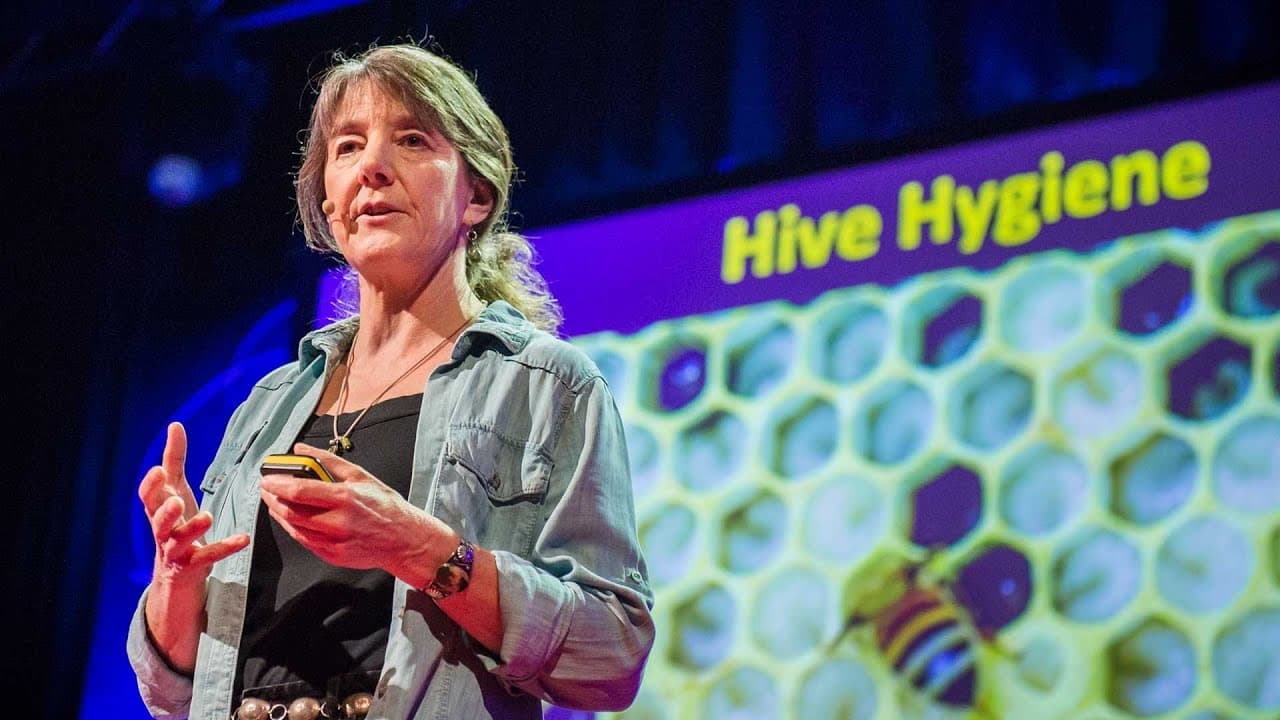
This is our life with bees, and this is our life without bees. Bees are the most important pollinators of our fruits and vegetables and flowers and crops like alfalfa hay that feed our farm animals. More than one third of the world's crop production is dependent on bee pollination. But the ironic thing is that bees are not out there pollinating our... Read More
Key Insights
- 🐝 Bees are the most important pollinators and are responsible for one-third of the world's crop production. They unintentionally provide this valuable service while foraging for food.
- 🍅 Tomato growers often rely on hand pollination or using a vibrating tool to release pollen within their tomato flowers due to the specific way the tomato flower holds its pollen.
- 🌸 Bees are not only important for their pollination services, but they also contribute to the beauty of our world with over 20,000 species of bees, many of which have unique and stunning characteristics.
- 🏵️ Bees have a complex social structure and operate as a super-organism with up to 50,000 individual bee organisms working together without any central authority. Their collective decision-making and task allocation are awe-inspiring.
- 💊 Bees have their own healthcare system, where they exhibit behaviors such as hygiene and propolis collection to keep the colony healthy and free from pathogens. Propolis, in particular, acts as a natural disinfectant and antibiotic.
- 🌽 Changes in farming practices since World War II have contributed to a decline in bee populations due to the elimination of flowering plants, the use of synthetic fertilizers, herbicides, and the shift towards monoculture farming.
- 🐝 Bees face multiple threats, including pesticide exposure, diseases, parasites, and the loss of a diverse and nutritious food source. These factors interact and amplify the risk of bee deaths.
- 🌻 Individuals can make a significant impact on bee conservation by planting bee-friendly flowers and avoiding the use of pesticides. Creating a diverse and healthy landscape benefits not just bees, but also other wildlife.
Install to Summarize YouTube Videos and Get Transcripts
Explore YouTube Video Summarizer or Get YouTube Transcript Extractor
Questions & Answers
Q: Why are bees the most important pollinators of our fruits and vegetables?
Bees are the most important pollinators of our fruits and vegetables because more than one third of the world's crop production is dependent on bee pollination. Bees unintentionally pollinate our food as they move from flower to flower gathering nectar and pollen.
Q: How do bees obtain the nutrients they need?
Bees obtain the protein they need from pollen and the carbohydrates they need from nectar. They are flower-feeders and as they visit flowers to gather food, they inadvertently provide the valuable service of pollination.
Q: What is the business of hand pollination?
In parts of the world where there are no bees or where they plant varieties that are not attractive to bees, people are paid to do the business of pollination by hand. These individuals manually move pollen from flower to flower using tools like paintbrushes or hand-held vibrators.
Q: How do bumblebees pollinate tomato flowers?
Bumblebees are one of the few kinds of bees that are able to pollinate tomato flowers. They vibrate the flower by shaking their flight muscles at a frequency similar to the musical note C. This vibration releases the pollen, which sticks to the bumblebee's body and is collected as food.
Q: Why do tomato growers put bumblebee colonies inside greenhouses?
Tomato growers put bumblebee colonies inside greenhouses to improve pollination and yield better quality tomatoes. Bumblebees provide more efficient pollination compared to hand pollination or other mechanical methods.
Summary & Key Takeaways
-
Bees are the most important pollinators for crop production, with over one-third of the world's crop production dependent on bee pollination.
-
Pesticides, habitat loss, and diseases are causing the decline of bees.
-
Individuals can help bees by planting bee-friendly flowers and avoiding the use of pesticides.
Read in Other Languages (beta)
Share This Summary 📚
Summarize YouTube Videos and Get Video Transcripts with 1-Click
Try YouTube Summary with ChatGPT & Claude or YouTube Transcript Generator
Explore More Summaries from TED 📚





Summarize YouTube Videos and Get Video Transcripts with 1-Click
Try YouTube Summary with ChatGPT & Claude or YouTube Transcript Generator