How Are Microchips Manufactured From Silicon Wafers?
TL;DR
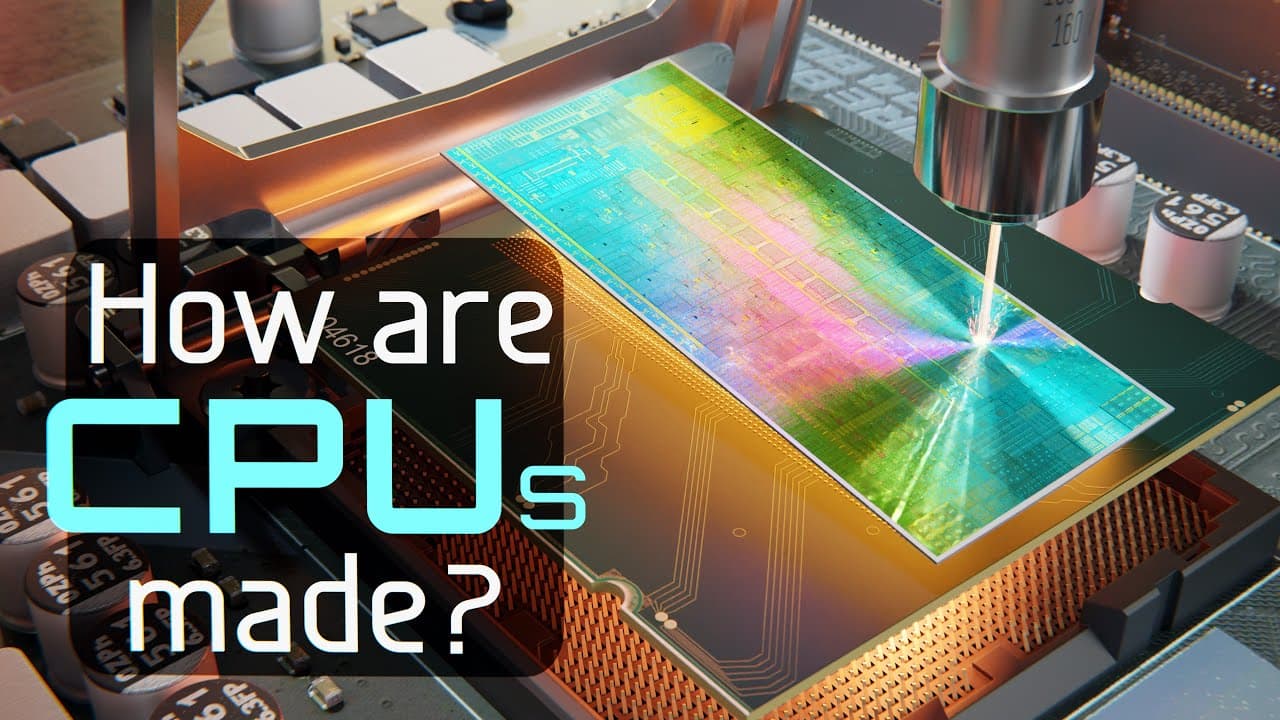
Microchips are manufactured through a complex process in semiconductor fabrication plants, involving around 940 precise steps over three months. Each silicon wafer can yield multiple microchips, each containing billions of transistors. Key processes include photolithography, etching, and deposition, which require advanced technology and meticulous quality control.
Transcript
Inside this smartphone are 62 microchips containing a total of 90 billion transistors. These microchips are incredibly powerful and the cornerstone of all technology, but how are billions of nanoscopic transistors manufactured into a microchip the size of a tiny ant? Well, all these microchips were manufactured in a semiconductor fabricati... Read More
Key Insights
- 🌱 Semiconductor fabrication plants span large areas, featuring complex machinery that collectively processes silicon wafers.
- 😒 A typical silicon wafer can accommodate multiple microchips, such as 230 CPUs, representing efficient use of materials during manufacturing.
- ⌛ Manufacturing a microchip is a time-intensive endeavor, often spanning three months and involving approximately 940 precise steps.
- 🫷 Transistors have shrunk significantly, with modern FinFET transistors measuring as small as 36 by 6 by 52 nanometers, pushing the limits of miniaturization and enhancing computing power.
- 🎮 Quality control during manufacturing is vital, with regular inspections ensuring that defects are identified and remedied.
- 🏣 The overall value of a silicon wafer can increase dramatically post-manufacturing, reflecting the intensive processes that enhance its worth and functional capabilities.
- 👨🔬 The integration of advanced technologies and methodologies in semiconductor manufacturing underscores the importance of continual research and development in driving innovation.
Install to Summarize YouTube Videos and Get Transcripts
Explore YouTube Video Summarizer or Get YouTube Transcript Extractor
Questions & Answers
Q: How many transistors are typically found in a modern microchip?
Modern microchips can contain around 90 billion transistors, illustrating the significant miniaturization and advancements in semiconductor technology. These tiny components enable highly efficient data processing and storage capabilities within devices. The ongoing miniaturization trend is crucial to enhancing performance while reducing energy consumption and size.
Q: What role does the clean room play in microchip manufacturing?
The clean room is a controlled environment that minimizes contamination from dust, chemicals, and other variables that could affect the delicate processes of microchip manufacturing. Keeping the environment free from particulates is crucial because even tiny particles can damage the complex circuits being created. This environment allows for the safe and efficient processing of silicon wafers throughout their lengthy production cycle.
Q: What types of tools are involved in making microchips?
The manufacturing process utilizes various specialized tools categorized into groups: those that create mask layers, add materials, remove materials, modify the materials, clean wafers, and inspect them. Each tool performs specific functions essential for the successful construction of multiple layers in microchips, ensuring each step maintains the required precision and quality standards.
Q: Can you explain the significance of the photolithography process in chip making?
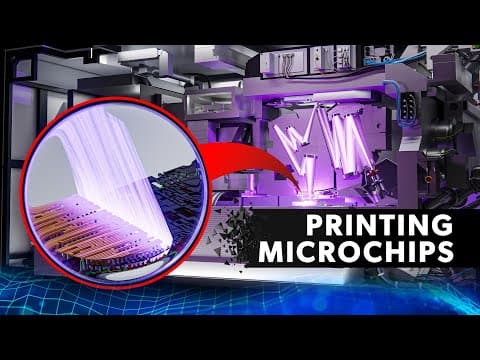
Photolithography is critical as it transfers designs onto the silicon wafer using UV light and a photomask, which essentially acts as a stencil. This process allows the intricate patterns of millions of transistors to be accurately printed onto the wafer. Its precision directly influences the performance and functionality of the microchip, making it a cornerstone of manufacturing techniques in the semiconductor industry.
Summary & Key Takeaways
-
The manufacturing of microchips takes place in semiconductor fabrication plants, involving a clean room filled with machines that execute thousands of precise steps over several months.
-
Each microchip contains billions of transistors and demonstrates advanced engineering, including processes like photolithography, etching, and deposition, requiring significant precision and specialized equipment.
-
After production, microchips undergo rigorous testing and are assembled into CPUs, showcasing the intricate relationship between various manufacturing stages and the technology utilized.
Read in Other Languages (beta)
Share This Summary 📚
Summarize YouTube Videos and Get Video Transcripts with 1-Click
Try YouTube Summary with ChatGPT & Claude or YouTube Transcript Generator
Explore More Summaries from Branch Education 📚





Summarize YouTube Videos and Get Video Transcripts with 1-Click
Try YouTube Summary with ChatGPT & Claude or YouTube Transcript Generator