What Is Pruning in Morphological Image Processing?
TL;DR
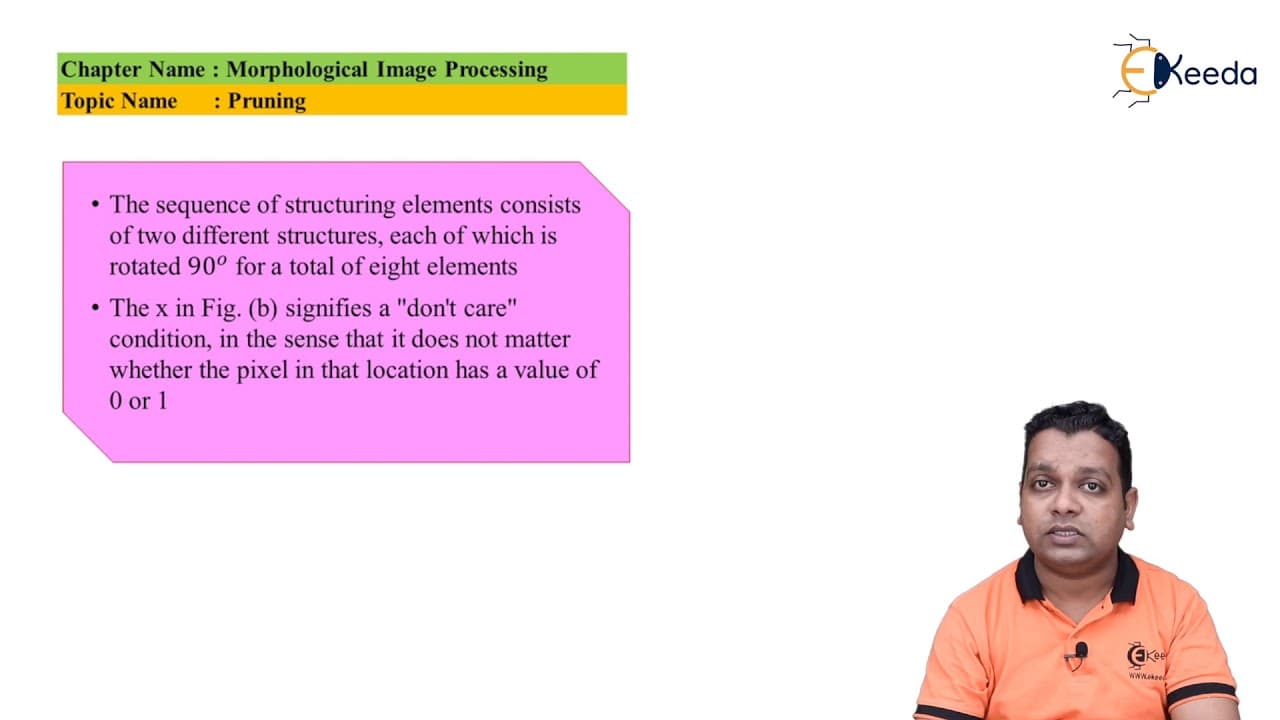
Pruning is a morphological image processing technique used to remove unwanted parasitic components from binary images. It works by eliminating small branches or features from the image, enhancing the quality of processed images and improving automated recognition of characters. This method complements thinning and skeletonization operations, ensuring clearer imagery for various applications.
Transcript
click the Bell icon to get latest videos from akira hello friends I welcome you all to this video we are with morphological image processing with the help of this video we are trying to conclude the total morphological image processing operations that are possible with the binary image so this list along right from the erosion dilation opening clos... Read More
Key Insights
- ❓ Morphological image processing involves various operations such as erosion, dilation, opening, closing, thinning, thickening, and more.
- ❓ The pruning method complements thinning and skeletonization operations by removing unwanted parasitic components from binary images.
- 🖐️ Structuring elements play a crucial role in defining the shape and size of the neighborhood used for morphological operations.
- 🤗 The removal of parasitic components in pruning helps enhance automated recognition of hand-printed characters.
- ❓ Morphological image processing techniques can be applied to both binary and grayscale images.
- 🥵 The heat or miss transformation is an important concept used in morphological operations.
- ❓ Region filling, boundary extraction, and connected components extraction are other useful techniques in morphological image processing.
Install to Summarize YouTube Videos and Get Transcripts
Explore YouTube Video Summarizer or Get YouTube Transcript Extractor
Questions & Answers
Q: What is the purpose of morphological image processing?
Morphological image processing is used to analyze and manipulate the shapes and structures present in binary images.
Q: Why is pruning important in morphological image processing?
Pruning is essential in removing undesired parasitic components or spores that may appear during erosion processes, ensuring clean and accurate image results.
Q: How does the pruning technique work?
The pruning technique involves separating and eliminating the end points of parasitic branches in a binary image, effectively removing unwanted spores. It is based on the assumption that parasitic components do not exceed a specified number of pixels.
Q: What is the role of structuring elements in morphological image processing?
Structuring elements are used to define the neighborhood relationships and influence the outcome of morphological operations, such as dilation, erosion, and pruning.
Summary & Key Takeaways
-
The video discusses various morphological image processing operations, including erosion, dilation, opening, closing, and more.
-
It explores the mathematical properties of these operations in the MATLAB environment.
-
The video specifically focuses on the pruning method as a solution to remove unwanted parasitic components from binary images.
Read in Other Languages (beta)
Share This Summary 📚
Summarize YouTube Videos and Get Video Transcripts with 1-Click
Try YouTube Summary with ChatGPT & Claude or YouTube Transcript Generator
Explore More Summaries from Ekeeda 📚






Summarize YouTube Videos and Get Video Transcripts with 1-Click
Try YouTube Summary with ChatGPT & Claude or YouTube Transcript Generator