How Can Social Computing Systems Support Collective Action?
TL;DR
Social computing systems can support collective action by prioritizing trust and familiarity among participants, which is essential for overcoming challenges like stalling and friction. Projects like Hive and Dynamo illustrate how intelligent team rotations and structured mechanisms can foster collaboration, allowing groups to effectively tackle complex issues together.
Transcript
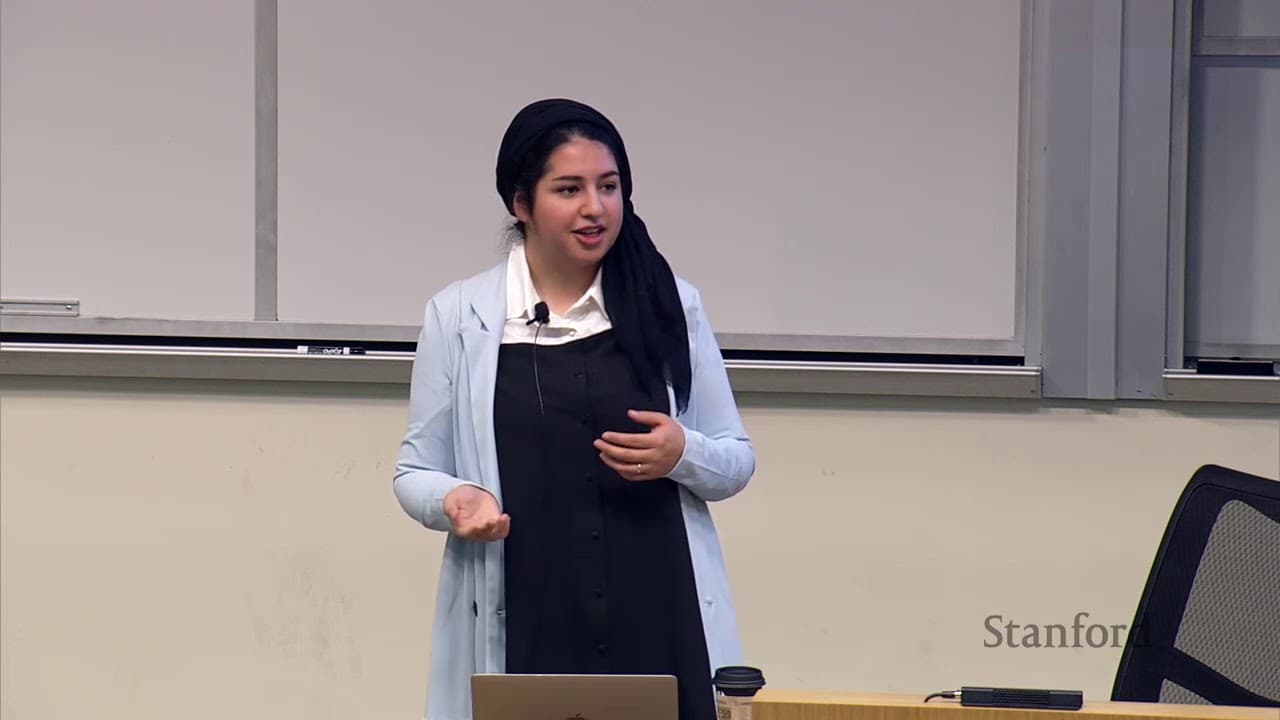
thank you Michael for that wonderful introduction so today I'm gonna be talking about designing social computing systems that support collective action by centering trust and familiarity and I'll talk about how these systems help people build strong networks as well as provide support to move efforts forward when they stall and I'm going to be pres... Read More
Key Insights
- 🖤 Lack of trust and friction among participants can hinder collective action efforts in online platforms.
- 🏛️ Building familiarity and trust among participants is crucial for successful collective action.
- 🎨 Designing social computing systems that prioritize trust and familiarity, such as through network rotations, can help address challenges in collective action.
- 🔬 The labor of action, which involves emotional and cognitive labor, plays a crucial role in preserving momentum and overcoming stalling and friction.
- 🔬 Collective action efforts require a combination of human labor and computational models to effectively support and facilitate the process.
Install to Summarize YouTube Videos and Get Transcripts
Explore YouTube Video Summarizer or Get YouTube Transcript Extractor
Questions & Answers
Q: Why do collective action efforts often fail in online platforms?
Collective action efforts can fail in online platforms due to a lack of trust, disagreements over strategy and tactics, and challenges in coordination and organization.
Q: What are the main reasons behind the stalling of collective action efforts?
Stalling in collective action efforts can occur when the next steps or how to achieve the goals are unclear or when the required work is too much for a single person. It can also happen due to a lack of motivation or disagreement among participants.
Q: How does the concept of network rotation in Hive help build familiarity among participants?
In Hive, network rotation assigns individuals to small teams and then iteratively weaves people together from different parts of the network. This approach encourages conversations and interactions between individuals to build familiarity while also exposing them to diverse perspectives.
Q: Can you provide an example of how the labor of action was used in Dynamo?
In Dynamo, the labor of action involved mechanisms like debates with deadlines and act and undo. For instance, when there was friction over a particular paragraph in ethical guidelines, setting a deadline for the debate helped participants find common ground. Act and undo was used when stalling occurred, where taking action and leaving space for objections allowed for forward motion while still accommodating feedback and changes.
Summary & Key Takeaways
-
The content discusses the challenges faced by collectives in online platforms, using the example of harassment on Twitter as a case study.
-
Lack of trust and friction among potential supporters can lead to the failure of collective action efforts.
-
The author presents two projects, Hive and Dynamo, which aim to design social computing systems that support collective action by prioritizing trust and familiarity.
-
Hive focuses on building networks of familiarity through intelligent team rotations, while Dynamo addresses stalling and friction by implementing mechanisms like debates with deadlines and act and undo.
Read in Other Languages (beta)
Share This Summary 📚
Summarize YouTube Videos and Get Video Transcripts with 1-Click
Try YouTube Summary with ChatGPT & Claude or YouTube Transcript Generator
Explore More Summaries from Stanford Online 📚


Summarize YouTube Videos and Get Video Transcripts with 1-Click
Try YouTube Summary with ChatGPT & Claude or YouTube Transcript Generator