What Are the Most Ingenious Concealed Weapons?
TL;DR
Concealed weapons have evolved into innovative designs, such as briefcase guns, pen guns, and glove guns, intended for covert operations. While these firearms offer a level of stealth, they also present significant challenges in usability, aiming, and reloading, often requiring intricate mechanisms to disguise their lethal potential.
Transcript
disguised weapons ever since the invention of firearms weapons designers have constantly sought to improve them some focused on increasing the range or accuracy While others wanted to increase the rate of fire or the ammunition capacity this has led to the creation of iconic and Infamous weapons that can lay down a blistering rate of fire to mow do... Read More
Key Insights
- 🥸 Disguised firearms stemmed from the necessity for covert operations, signaling a desire for advanced concealment methods in combat and protection.
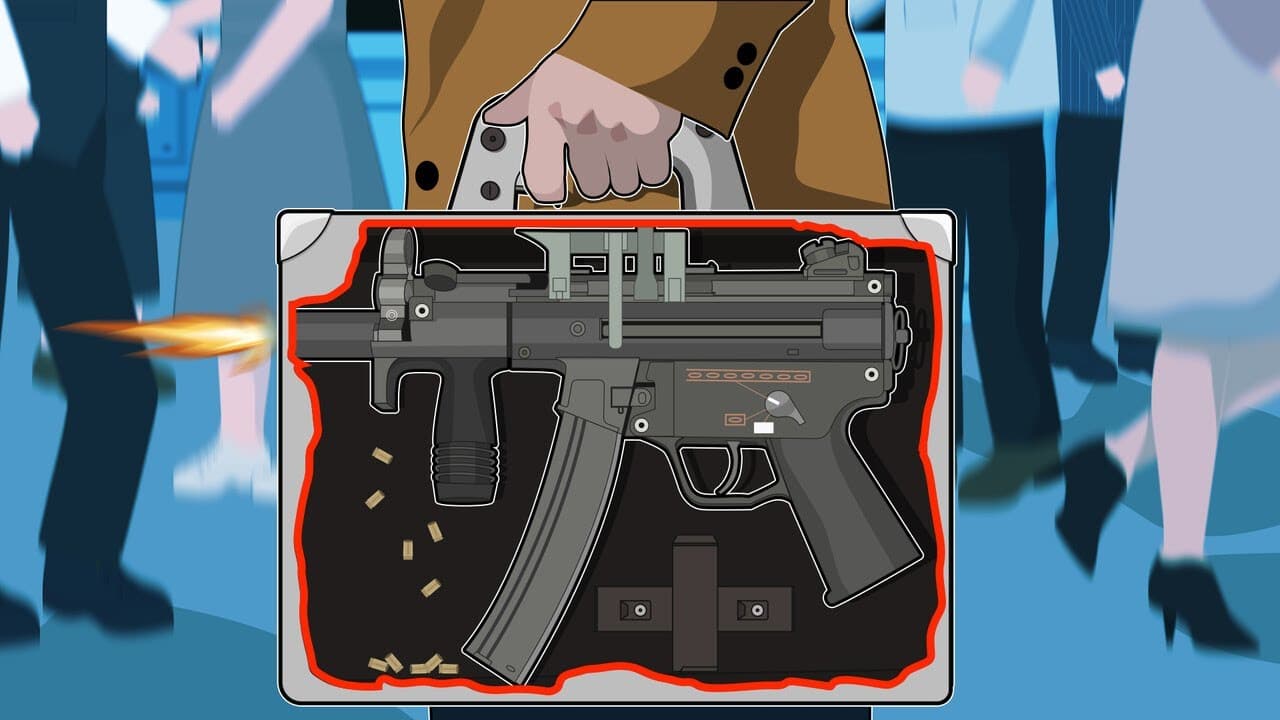
- 🥸 The briefcase gun exemplified the blend of functionality and disguise, intended for rapid response without drawing attention in high-stakes environments.
- 😀 Pen guns serve as a historical reminder of compromise between concealability and effectiveness, showcasing the challenges faced by users in real-world scenarios.
- 🤳 The glove gun reflects a unique military approach, aimed at providing soldiers with a last-ditch effort for self-defense under dire circumstances.
- 🫥 KGB operations exemplified state-sponsored use of clandestine weaponry, blurring lines between crime and political machinations throughout the Cold War.
- 🎯 The uc9 submachine gun's design highlights advancements in compact weaponry, targeting improved portability while maintaining lethal capability.
- 📤 The x-ray camera gun incident emphasizes the dangers of improvised weaponry and the potential for everyday items to become tools for crime.
Install to Summarize YouTube Videos and Get Transcripts
Explore YouTube Video Summarizer or Get YouTube Transcript Extractor
Questions & Answers
Q: What was the primary motivation behind creating concealed firearms like the briefcase gun?
The primary motivation for creating concealed firearms such as the briefcase gun was to provide bodyguards and military personnel a means to carry additional firepower without attracting attention. Following a wave of terrorist attacks in the 1970s, weapon manufacturers recognized the need for discreet yet effective protection for politicians and other high-profile individuals. This marked the emergence of designs that blended seamlessly into ordinary objects while still offering lethal capabilities when needed.
Q: How did the design of the briefcase gun affect its functionality in combat situations?
The design of the briefcase gun, while innovative for concealment, compromised its functionality in combat situations. Aiming was awkward due to its structure, making it challenging to achieve accurate shots quickly. Additionally, reloading required opening the briefcase to access the weapon, a process that took valuable time during critical moments. These factors limited the briefcase gun's utility in fast-paced or high-stakes environments where speed and precision were essential.
Q: What challenges did pen guns face as a concealed weapon option?
Pen guns faced significant challenges as a concealed weapon due to their limitations in caliber, range, and accuracy. Designed to resemble ordinary pens, these firearms typically fired small caliber rounds, restricting their effectiveness. Their single-shot capability meant that users had to manually reload after each shot, making them impractical in prolonged confrontations. Moreover, the short barrel diminished velocity and accuracy, limiting their operational range to close encounters, which restricted their use.
Q: What was the operational intent behind the glove gun, and why was it considered a last-resort weapon?
The glove gun was designed to be a last-resort weapon for soldiers caught temporarily without their primary arms. Concealed within a glove, it aimed to deliver a punch capable of firing a single shot at close range to fend off attackers suddenly. Its operational intent relied on surprise, making it a tool for countering immediate threats when traditional weapons were not accessible. However, its effectiveness was hampered by the need for the target to be within reach for the shot to succeed.
Q: How did the KGB utilize disguised weapons in their covert operations?
The KGB famously employed disguised weapons for secretive assassinations, utilizing devices like pneumatic pellet guns disguised as umbrellas and poison mist guns. These weapons allowed agents to eliminate targets discreetly, often without alerting surrounding individuals. The aim was to conduct lethal operations with minimal noise and visibility, which was vital in espionage to avoid detection while carrying out politically motivated attacks against dissidents or opponents.
Q: What led to the creation of the uc9 submachine gun, and what was its unique feature?
The uc9 submachine gun was developed to create a compact and easily concealed firearm, with the unique feature of folding in half, resembling a carrying case. This design allowed it to blend seamlessly into ordinary environments, enhancing its portability and discretion. The uc9’s innovative mechanism made it a novel approach to clandestine weaponry, aiming to provide quick access to firepower while maintaining an inconspicuous appearance among everyday items.
Q: Describe the significance of the x-ray camera gun incident. What implications did it have?
The x-ray camera gun incident underscored the lengths to which individuals would go to conceal lethal weapons and the potential for everyday objects to be weaponized. Pearl Lusk unwittingly became involved in a plot orchestrated by an ex-husband intending to harm his former wife, demonstrating the unpredictable nature of crime and personal vendettas. The event highlighted vulnerabilities in urban settings and raised questions about public safety concerning innovative yet deadly disguises in weapons.
Summary & Key Takeaways
-
Advances in weapon design focused on both effectiveness and concealment, leading to firearms disguised as everyday objects like briefcases, pens, and gloves.
-
The briefcase gun and other designs showcased the need for portable defense mechanisms, especially for politicians and covert agents, highlighting their practical applications and inherent limitations.
-
Concealed firearms, while innovative, faced significant drawbacks in usability, aiming, and reloading, often requiring elaborate designs to maintain their disguise in dangerous situations.
Read in Other Languages (beta)
Share This Summary 📚
Summarize YouTube Videos and Get Video Transcripts with 1-Click
Try YouTube Summary with ChatGPT & Claude or YouTube Transcript Generator
Explore More Summaries from Simple History 📚


Summarize YouTube Videos and Get Video Transcripts with 1-Click
Try YouTube Summary with ChatGPT & Claude or YouTube Transcript Generator