Gandhi's Letters to Hitler
TL;DR
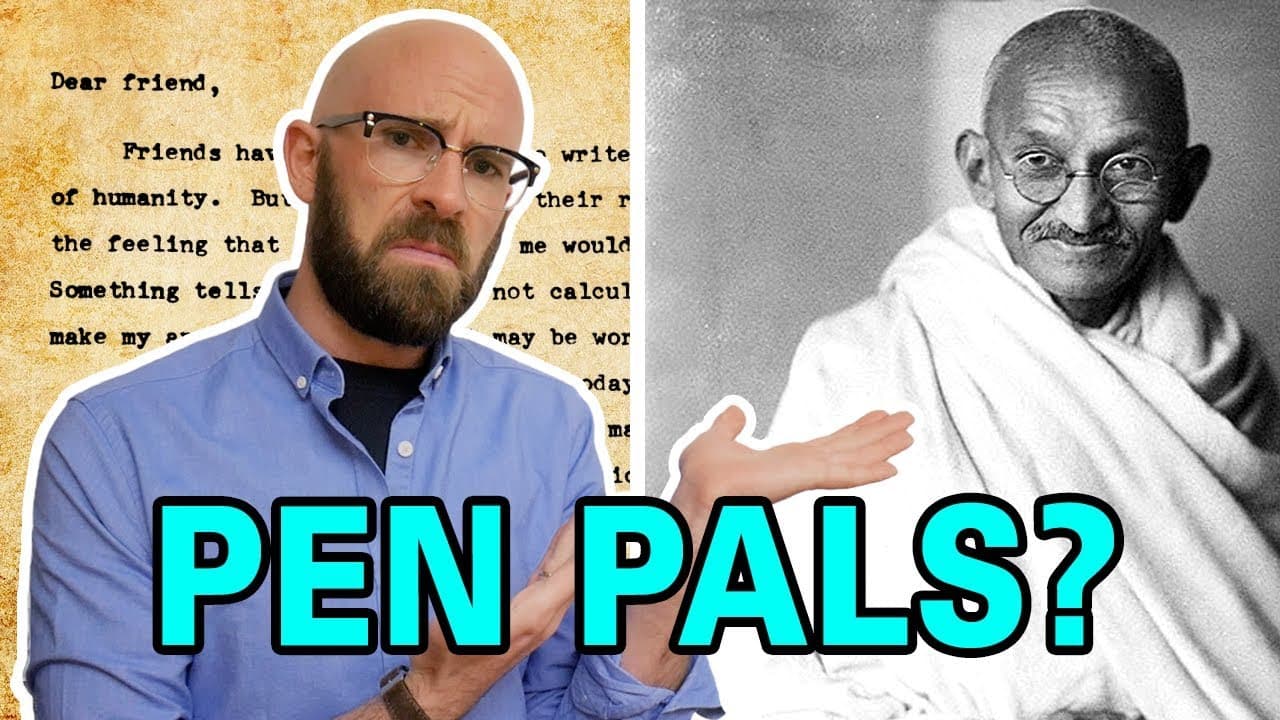
Gandhi wrote two letters to Adolf Hitler, appealing for peace and urging him to stop the war, but his efforts were unsuccessful.
Transcript
By the late 1930s, Gandhi's method of peaceful non-cooperation had already won significant concessions from the British Raj, including the founding of a national administration and local and national legislative assemblies, albeit still under British oversight. Gandhi, himself, was internationally famous for his various acts of non-violent, civil d... Read More
Key Insights
- 🇮🇴 Gandhi's nonviolent methods achieved remarkable concessions from the British Raj.
- 🤨 Hitler's aggressive actions in the late 1930s raised concerns worldwide.
- 💌 Gandhi's letters highlight his commitment to peace and his willingness to engage world leaders, even those he strongly disagreed with.
- 💌 The British government's interception of Gandhi's letters illustrates their efforts to manage international relations during a critical time.
- 💌 Gandhi's letters reflect his belief in the power of nonviolence and his desire to prevent the devastating consequences of war.
- 💌 The failure of Gandhi's letters to reach Hitler highlights the challenges of diplomacy and communication during times of heightened tension.
- ❓ Gandhi's disapproval of Hitler's actions and his condemnation of violence showcase his unwavering commitment to promoting human dignity.
Install to Summarize YouTube Videos and Get Transcripts
Explore YouTube Video Summarizer or Get YouTube Transcript Extractor
Questions & Answers
Q: Why did people urge Gandhi to write to Hitler?
People believed that Gandhi's reputation for effective nonviolent change could influence Hitler and prevent a second world war. They hoped that Gandhi's appeal for peace would resonate with him.
Q: Why did Gandhi send two letters to Hitler?
Gandhi sent the first letter because he believed that as the leader of Germany, Hitler had the power to prevent a war. The second letter was sent after Hitler continued his aggressive actions, expressing Gandhi's disappointment and urging him to reconsider his actions.
Q: Why did the British government intercept Gandhi's letters?
The British government intercepted the letters because they feared that Gandhi's words would strengthen Hitler's regime or complicate their own diplomatic strategies. They wanted to prevent any outside interference in the escalating tensions in Europe.
Q: Did Gandhi's letters have any impact on Hitler's actions?
Unfortunately, Gandhi's letters did not reach Hitler, so they had no direct impact. However, it is unlikely that Hitler would have been receptive to Gandhi's message of peace, as he was pursuing his aggressive expansionist agenda.
Summary & Key Takeaways
-
By the late 1930s, Gandhi had already achieved significant concessions from the British Raj through non-cooperation and civil disobedience.
-
Many people implored Gandhi to write to Hitler to prevent a second world war.
-
Gandhi sent two letters to Hitler in 1939, pleading for peace, but they were intercepted by the British government.
Read in Other Languages (beta)
Share This Summary 📚
Summarize YouTube Videos and Get Video Transcripts with 1-Click
Try YouTube Summary with ChatGPT & Claude or YouTube Transcript Generator
Explore More Summaries from Today I Found Out 📚






Summarize YouTube Videos and Get Video Transcripts with 1-Click
Try YouTube Summary with ChatGPT & Claude or YouTube Transcript Generator