Michael Addition Reaction Mechanism
TL;DR
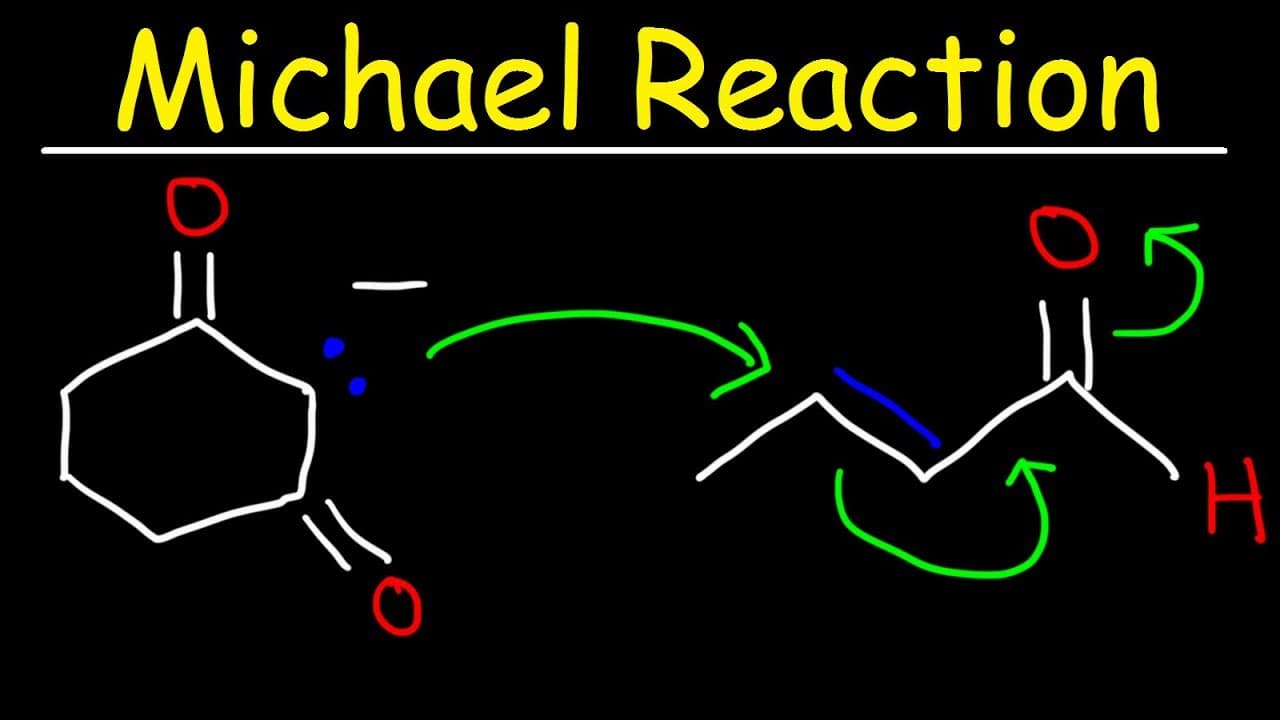
The microreaction involves the use of a stabilized enolate ion as a micro donor to react with an alpha-beta unsaturated compound, resulting in the formation of a 1,5-dicarbonyl compound. The yield of the reaction depends on the strength of the base and the accessibility of the carbonyl carbon.
Transcript
in this video we're going to talk about the microreaction so the first thing we need is a michael donor which is typically a stabilized enolate so let's use a base to remove the alpha hydrogen in the first step and so here we have an enolate that is stabilized by two carbonyl groups and then this is going to react with an alpha beta unsaturated ald... Read More
Key Insights
- 😒 The microreaction involves the use of a stabilized enolate as a nucleophile to react with alpha-beta unsaturated compounds.
- 👊 Weak bases prefer to attack the beta carbon, while strong bases tend to attack the carbonyl carbon in the microreaction.
- ♿ The yield in the microreaction can be increased by using sterically hindered alpha-beta unsaturated ketones or reducing the accessibility of the carbonyl carbon.
- 📶 The pKa values of the conjugate acids determine the relative strength of the bases involved in the microreaction.
- 👋 Nitroethane can serve as a good micro donor due to the relative acidity of its alpha hydrogen.
Install to Summarize YouTube Videos and Get Transcripts
Explore YouTube Video Summarizer or Get YouTube Transcript Extractor
Questions & Answers
Q: What is the key role of a stabilized enolate in the microreaction?
The stabilized enolate acts as a nucleophile, attacking the beta carbon of the alpha-beta unsaturated compound to form a 1,5-dicarbonyl compound.
Q: Why do weak bases prefer to attack the beta carbon in the microreaction?
Weak bases prefer to attack the beta carbon because it is more accessible due to its proximity to the enolate ion and the electron-donating effect of the adjacent carbonyl groups.
Q: How can the yield in the microreaction be increased using ketones?
By using sterically hindered alpha-beta unsaturated ketones, the accessibility of the carbonyl carbon is reduced, resulting in a higher yield of the desired microaddition product.
Q: Why is the enolate ion between two carbonyl groups considered a weak base for the microreaction?
The enolate ion between two carbonyl groups is a relatively strong base and prefers to attack the carbonyl carbon instead of the beta carbon, leading to lower yields in the microreaction.
Summary & Key Takeaways
-
The microreaction involves a stabilized enolate ion reacting with an alpha-beta unsaturated compound.
-
Weak bases tend to attack the beta carbon, resulting in conjugate addition, while strong bases attack the carbonyl carbon, leading to direct addition.
-
Yield in the microreaction can be increased by using sterically hindered alpha-beta unsaturated ketones or reducing the accessibility of the carbonyl carbon.
Read in Other Languages (beta)
Share This Summary 📚
Summarize YouTube Videos and Get Video Transcripts with 1-Click
Try YouTube Summary with ChatGPT & Claude or YouTube Transcript Generator
Explore More Summaries from The Organic Chemistry Tutor 📚






Summarize YouTube Videos and Get Video Transcripts with 1-Click
Try YouTube Summary with ChatGPT & Claude or YouTube Transcript Generator