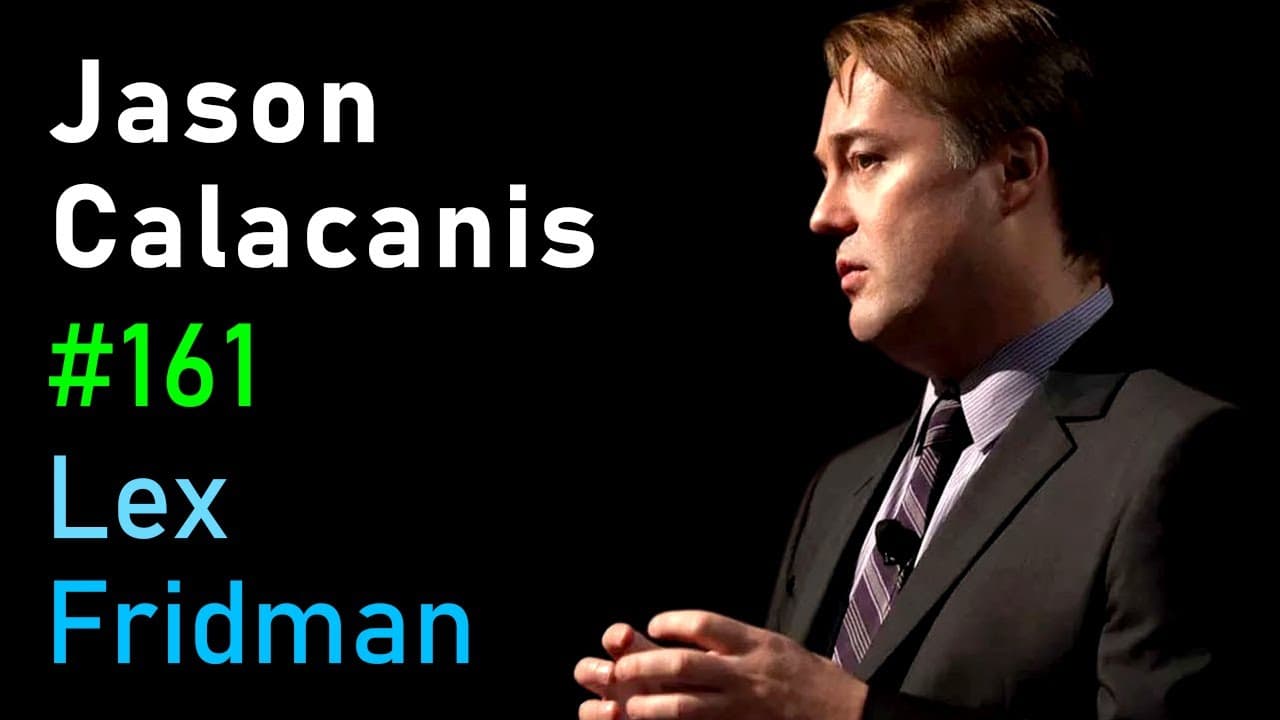
Jason Calacanis: Startups, Angel Investing, Capitalism, and Friendship | Lex Fridman Podcast #161
TL;DR
Wall Street Bets transformed the financial landscape by enabling retail investors to challenge hedge funds through coordinated trading of stocks like GameStop. This movement, fueled by technology and social media, raised questions about market transparency and the dynamics of power between everyday investors and traditional finance. The long-term implications could reshape how we think about investing and financial systems.
Transcript
the following is a conversation with jason calacanis who's an entrepreneur investor author of angel how to invest in technology startups and as many people may know he's a fun brilliant long time podcast host of this week in startups and co-host of the all in podcast with chamath palahapatia david sax and david friedberg who all happen to be poker ... Read More
Key Insights
- 😮 The rise of social media and fintech platforms has empowered retail investors, allowing them to challenge traditional power structures in finance.
- 🖤 The GameStop frenzy exposed flaws in the financial system, such as short-selling practices and the lack of transparency in certain areas.
- 😀 Communication played a crucial role in shaping public opinion during the event, with companies like Robinhood facing backlash for their handling of the situation.
Install to Summarize YouTube Videos and Get Transcripts
Explore YouTube Video Summarizer or Get YouTube Transcript Extractor
Questions & Answers
Q: What led to the GameStop frenzy?
The GameStop frenzy was driven by a group of retail investors on the subreddit Wall Street Bets who organized a massive short squeeze on hedge funds that had heavily shorted the stock. This, coupled with the accessibility of trading through platforms like Robinhood, allowed small investors to challenge the power dynamics in the market.
Q: How did Robinhood handle the situation?
Robinhood faced backlash for restricting trading on GameStop and other stocks, which led to accusations of favoring institutional investors. The platform claimed it needed to raise additional capital to meet regulatory requirements, but this decision ultimately infuriated many users and raised questions about the role of fintech platforms in the financial ecosystem.
Q: What role did communication play in this situation?
Communication played a significant role in shaping the public perception of the events. Poor communication by Robinhood led to speculation and conspiracy theories, while the open communication on platforms like Clubhouse allowed for deeper discussions about the implications of this event on finance and society.
Q: What are the potential long-term consequences of the Wall Street Bets and GameStop situation?
The event has sparked conversations around the need for more transparency in the financial system, the power of social media, and the impact of retail investors on traditional finance. It may also lead to increased regulation and scrutiny of platforms like Robinhood, as well as a reevaluation of the relationship between large hedge funds and individual investors.
Key Insights:
- The rise of social media and fintech platforms has empowered retail investors, allowing them to challenge traditional power structures in finance.
- The GameStop frenzy exposed flaws in the financial system, such as short-selling practices and the lack of transparency in certain areas.
- Communication played a crucial role in shaping public opinion during the event, with companies like Robinhood facing backlash for their handling of the situation.
- This event has highlighted the need for more education and financial literacy among individual investors, as well as a reexamination of regulatory frameworks in light of new technologies.
Summary:
In this conversation, Jason Calacanis, an entrepreneur and investor, discusses the saga of Wall Street Bets and GameStop from his perspective. He talks about his early investment in Robinhood and the founders' vision to democratize stock trading for millennials. Calacanis also touches on the power of competition and capitalism, the importance of learning new skills, and the potential of challenge trials in addressing pandemics. He criticizes the lack of communication and transparency from Robinhood during the recent events, emphasizing the need for companies to get ahead of problems and effectively communicate with their users.
Questions & Answers:
Q: Can you share some insights about the saga of Wall Street Bets and GameStop from your perspective?
From my perspective, I was an angel investor in Robinhood, and I met the founders in a bar where they pitched me on their idea of creating an app to get millennials to trade stocks for free. At that time, there was a lack of interest from retail investors in participating in the stock market. However, I believed in the potential of their outlandish idea, as the most unconventional ideas often have the greatest returns. Over time, Robinhood has succeeded in creating a generation of financially sophisticated individuals who are challenging the hedge fund industry with their knowledge and activism.
Q: What are some of the challenges faced by Robinhood?
One of the challenges faced by Robinhood is the lack of transparency and communication during the recent events. As a trading platform, it is essential for them to get ahead of any problems and provide clear information to their users. The liquidity crisis they faced, where they had to put up billions of dollars in collateral, was a significant issue that could have been communicated better. The lack of transparency also extends to the list of people who have shorted stocks, which should be publicly available but currently isn't.
Q: Can you one-sidedly summarize Chamath Palihapitiya's argument against Robinhood?
Chamath Palihapitiya, a co-host of the All In podcast, has criticized Robinhood for its lack of communication and handling of the recent events. He argues that the company should have been more transparent about the liquidity crisis and its impact on their users. Palihapitiya believes that Robinhood's actions showed a disregard for their users' interests and raised questions about their alignment with the hedge funds. He emphasizes the importance of strong communication in times of crisis to maintain trust and transparency.
Q: How does capitalism and competition contribute to progress and innovation?
Capitalism and competition are essential drivers of progress and innovation. When entrepreneurs and companies compete, they strive to create better products and services that benefit society as a whole. This competition induces a market to exist and improves existing systems. For example, companies like Airbnb and Uber have disrupted traditional industries and provided new opportunities for people. Capitalism, with its emphasis on entrepreneurship, rewards those who take risks and create value, driving economic growth and societal development.
Q: What skills do you believe are essential for success?
The ability to learn new skills is crucial for success. In today's world, information is readily available for free, and the internet provides access to courses and tutorials on virtually any skill. Being able to learn and adapt quickly gives individuals an edge in any field. Additionally, having a foundational knowledge in various areas can help people navigate and understand complex industries. The key is to focus on deliberate practice and continuously refine one's skill set to stay competitive.
Q: How do communication and transparency contribute to the success of companies?
Communication and transparency are vital for building trust and maintaining strong relationships with users. Companies should be proactive in identifying potential issues and addressing them promptly. By being transparent about challenges, companies can communicate their intentions clearly and gain users' trust. Effective communication also allows companies to avoid the negative effects of misinformation and speculation. Transparency should extend beyond internal communication to include openness about operations, policies, and decision-making processes.
Q: What impact do challenge trials have in the fight against pandemics?
Challenge trials, where healthy individuals are deliberately infected with a virus to test vaccines or treatments, have the potential to accelerate the development of solutions for pandemics. While challenge trials raise ethical concerns, they also present an opportunity to prevent unnecessary deaths and contain the spread of diseases. The current pandemic has highlighted the need for different approaches to address global health crises. Society should engage in nuanced discussions about the risks and benefits of challenge trials in acute situations like pandemics.
Q: How can capitalism and competition counteract societal challenges?
Capitalism and competition encourage innovation and entrepreneurship, enabling individuals to tackle societal challenges. By fostering an environment that rewards risk-taking and hard work, capitalism provides opportunities for people to address problems and create positive change. Competition drives companies to continually improve their products and services, benefiting consumers and driving economic growth. However, it is important to strike a balance and address issues such as wealth inequality and social responsibility to ensure a fair and equitable society.
Q: How does the lack of belief in individual potential hinder progress?
Lack of belief in individual potential can hinder progress by limiting people's aspirations and willingness to take risks. When individuals doubt their own ability to succeed or believe that others can't change their circumstances, they may not actively pursue opportunities for growth and development. This mindset can obstruct personal and societal progress. Encouraging individuals to believe in their own potential and providing equal access to education and resources can empower them to contribute positively to society and drive innovation.
Q: Why is effective communication crucial in the face of challenges?
Effective communication is crucial during challenging times because it helps build trust, maintain confidence, and prevent misinterpretation or misinformation. When faced with a crisis, companies need to communicate promptly and transparently about the situation, acknowledging the challenges and outlining potential solutions. By keeping users informed, companies can address concerns, manage expectations, and prevent speculation or rumors from spreading. Strong communication fosters a sense of unity and shows empathy towards users' needs, which is essential for maintaining strong relationships.
Q: How can companies learn from recent events to enhance their communication strategies?
Recent events have highlighted the importance of proactive communication and transparency. Companies should analyze their communication strategies and identify areas for improvement. They should be prepared to communicate openly and honestly during times of crisis and create mechanisms for quickly addressing user concerns. Transparency should extend to all aspects of company operations, providing users with the information they need to make informed decisions. Learning from past challenges, companies can develop robust communication strategies that prioritize user trust and engagement.
Takeaways:
The recent events surrounding Wall Street Bets and GameStop have shed light on the importance of effective communication and transparency within companies. Robinhood, as a trading platform, faced criticism for its handling of the liquidity crisis and lack of clear communication with its users. It is crucial for companies to get ahead of problems, be transparent, and provide timely updates to maintain trust and prevent speculation. Additionally, capitalism and competition drive progress and innovation by encouraging entrepreneurship and rewarding those who take risks. By fostering an environment of learning and adaptability, individuals can develop the skills necessary for success in a rapidly changing world. The recent pandemic has also underscored the need for society to challenge existing regulations and be open to new approaches, such as challenge trials, in addressing global health crises. Overall, effective communication, belief in individual potential, and a competitive spirit are essential for driving positive change in society.
Summary & Key Takeaways
-
Jason Calacanis, an entrepreneur, investor, and author, discusses the Wall Street Bets and GameStop saga, providing insights into the events as they unfolded.
-
Calacanis shares his perspective on the rise of Robinhood, the fintech app at the center of the controversy, and how it democratized stock trading.
-
The conversation delves into the role of social media, the power dynamics between retail investors and hedge funds, and the potential long-term consequences of this event.
Read in Other Languages (beta)
Share This Summary 📚
Summarize YouTube Videos and Get Video Transcripts with 1-Click
Try YouTube Summary with ChatGPT & Claude or YouTube Transcript Generator
Explore More Summaries from Lex Fridman Podcast 📚




Summarize YouTube Videos and Get Video Transcripts with 1-Click
Try YouTube Summary with ChatGPT & Claude or YouTube Transcript Generator