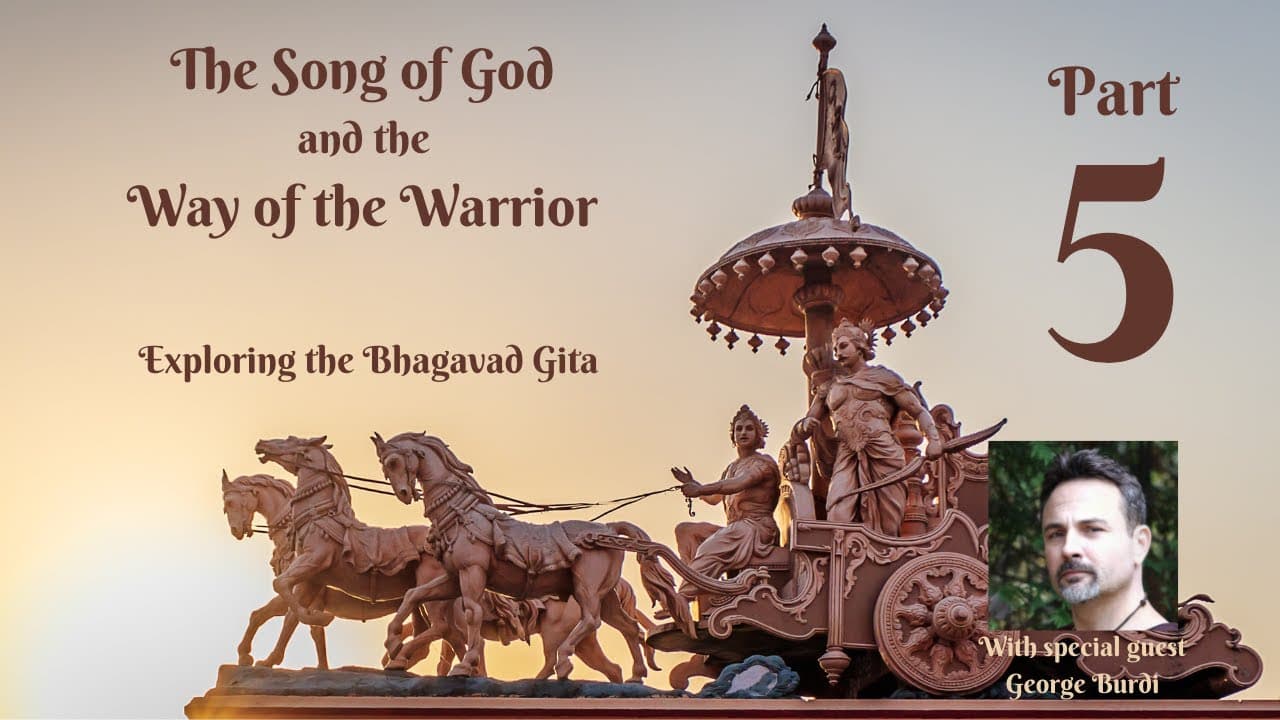
5 - The Song of God and the Way of the Warrior (with special guest: Überfolk)
TL;DR
The Bhagavad Gita explores meditation, self-control, and balancing duties with spirituality.
Transcript
hey everybody welcome to tonight's show another uh chapter of the bhagavad gita that we're going to tackle tonight and i have with me here my partner in crime george the other half of uber folk that you guys will probably know from the music that i've done he is also the artistic master behind the revolt series he does all the video and audio editi... Read More
Key Insights
- ❓ Action without attachment is a crucial tenet of yoga, promoting true selflessness in fulfilling one's duties.
- 🤯 The mind's restlessness can hinder meditation; consistent practice helps train the mind to achieve greater focus and tranquility.
- ❓ Spiritual growth requires discipline and regular practice, manifesting through actions aligned with spiritual principles.
- 💠 The interconnectedness of all beings highlights that one's spiritual journey shapes not only personal growth but also impacts others.
- 🍝 Rebirth offers a second chance for those who seek spiritual growth, as past actions and knowledge can influence future lives.
- 😋 The significance of moderation in all aspects of life, including food, sleep, and desires, is essential for maintaining balance and clarity in practice.
- 🙎 Overcoming emotional turmoil through spiritual practices solidifies a person's ability to face life's challenges with grace and resilience.
Install to Summarize YouTube Videos and Get Transcripts
Explore YouTube Video Summarizer or Get YouTube Transcript Extractor
Questions & Answers
Q: What is the main theme of the chapter on the Yoga of Meditation in the Bhagavad Gita?
The primary theme is the practice of meditation, emphasizing the importance of acting without attachment to results and maintaining self-control. Krishna teaches Arjuna that true yoga combines action with a serene mind, leading to spiritual growth and liberation from suffering.
Q: How does Krishna differentiate between the self and the Self?
Krishna explains that the lowercase self represents individual ego and desires, while the uppercase Self signifies the higher spiritual consciousness. Mastery over the self leads to self-realization and harmonious living in connection with others and the universe.
Q: What advice does Krishna give about dealing with distractions during meditation?
Krishna acknowledges that the restless mind is a natural challenge during meditation. He advises practitioners to gently rein in their wandering thoughts and return their focus to their chosen point of concentration, emphasizing that patience and perseverance are essential.
Q: What reassurance does Krishna provide to Arjuna about the fate of those who practice yoga?
Krishna reassures Arjuna that those sincerely pursuing yoga will not lose their progress. They will either attain a favorable rebirth in a supportive environment or experience spiritual development in their next life, ensuring continuity in their path toward enlightenment.
Summary & Key Takeaways
-
The chapter emphasizes that true yoga involves action performed without attachment to the results, highlighting the importance of self-control and detachment in spiritual practice.
-
Krishna reassures Arjuna that sincere efforts in yoga are never wasted; any progress is carried into future lives, promoting the idea of continued spiritual development.
-
Meditation is portrayed as a practice of habitually returning to focus, with discipline and moderation key to overcoming the restless mind and achieving inner calm.
Read in Other Languages (beta)
Share This Summary 📚
Summarize YouTube Videos and Get Video Transcripts with 1-Click
Try YouTube Summary with ChatGPT & Claude or YouTube Transcript Generator
Explore More Summaries from PhilosophiCat 📚



Summarize YouTube Videos and Get Video Transcripts with 1-Click
Try YouTube Summary with ChatGPT & Claude or YouTube Transcript Generator