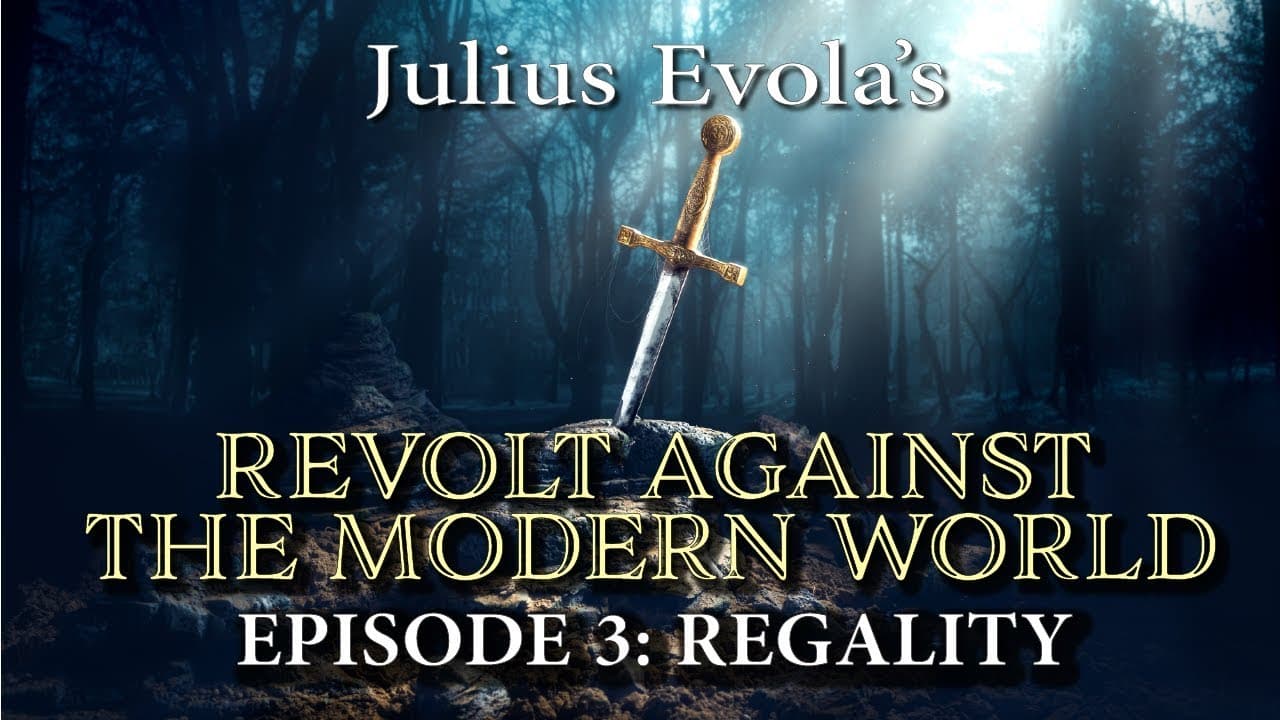
Julius Evola - Revolt Against the Modern World - Episode 3: Regality
TL;DR
Kingship symbolizes divine authority contrasting modern democratic governance.
Transcript
where is our king who will pull the sword from the stone myths and legends tell of great men with sacred blood hearts of purest gold anointed by the gods themselves now we have only distant memories of them etched into ancient stones and now mortal men with their leaden souls are not worthy to dawn the crown of rebel splendor though the kings of ol... Read More
Key Insights
- 📏 Traditional kingship portrayed the ruler as a divine manifestation tasked with embodying spiritual authority and moral leadership.
- 🥺 The transition away from divine legitimacy and spiritual responsibility has led to disillusionment with modern political systems and rulers.
- 🤬 Historical narratives regarding kingship often reveal deep metaphysical connections between rulers and celestial symbols, emphasizing unity with divine forces.
- 😉 Spiritual integrity was believed to directly affect the stability and fortune of a kingdom, making the king's character and moral conduct paramount.
- 👔 Kingship was closely tied to ancient myths and archetypes that illustrated the metaphysical journey towards attaining rightful authority.
- ❓ The decline of metaphysical understanding in leadership has contributed to societal fragmentation and longing for an idealized regal figure.
- ⚖️ Feminine archetypes in traditional kingship underscore the necessary balance of strength and wisdom in governance, represented through divine unions.
Install to Summarize YouTube Videos and Get Transcripts
Explore YouTube Video Summarizer or Get YouTube Transcript Extractor
Questions & Answers
Q: How does the concept of kingship differ from modern democracy?
Kingship is depicted as a divine institution where authority is derived from a spiritual connection to a higher moral order. In contrast, modern democracy shifts power to the masses, often ignoring spiritual and ethical foundations. This inversion affects society's stability, leading to a longing for traditional leadership that embodies virtue and connection to the divine.
Q: What is the significance of the pontifex in the context of kingship?
The pontifex, meaning "builder of bridges," symbolizes the king's role as a mediator between the physical and metaphysical realms. This role emphasizes the king's responsibility to connect his subjects with divine principles and moral laws, contrasting with contemporary political leaders who often prioritize public opinion over ethical governance.
Q: What does the concept of the divine right of kings entail?
The divine right of kings refers to the traditional belief that a king's authority is granted by divine mandate. Kings were seen as accountable to God rather than to the people, and their connection to the divine granted them moral legitimacy. As societies transitioned away from this belief, many rulers became more accountable to secular political forces, losing their spiritual grounding.
Q: How has the perception of kingship changed throughout history?
Initially revered as embodiments of divine right and authority, kingship has evolved into a more secular institution. Many modern kings are viewed as political figures lacking the spiritual qualities that once defined their rule. The shift reflects broader societal changes, including the decline of metaphysical connections and the rise of materialism, which has led to disillusionment with traditional governance.
Q: In what ways does a king's personal conduct impact the stability of his kingdom?
A king's moral and spiritual integrity directly affects the health of his kingdom. Traditional views suggest that the welfare of the state reflects the king’s adherence to divine principles and moral order. If the king strays from this path, the kingdom may face instability or misfortunes as a result of his failure to maintain the necessary metaphysical energy.
Q: Can you explain the metaphor of the sun as it relates to kingship?
The sun symbolizes illumination and life, embodying the king's role as a source of light and wisdom. Just as the sun conquers darkness, a king who overcomes his inferior nature aligns himself with divine truth. This solar symbolism highlights the connection between the king's spiritual journey and his ability to guide his people toward enlightenment and moral order.
Q: What role do women play in the traditional concept of kingship?
Women, particularly goddesses or archetypal figures, represent the divine feminine forces that complement the masculine qualities of the king in traditional narratives. Their union with a king reflects the integration of spiritual and metaphysical powers, suggesting that successful kingship derives strength from both masculine authority and feminine wisdom, leading to a balanced governance.
Q: How do ancient myths illustrate the qualities necessary for kingship?
Myths like the story of rex nemorensis highlight the necessity of inner virtue and transcendence for true kingship. The aspirant must have liberated himself from base desires and achieved spiritual enlightenment to attain the kingship. Such tales emphasize that genuine authority comes from a deep connection to divine principles, not merely through physical force or political maneuvering.
Summary & Key Takeaways
-
The concept of kingship as a divine institution contrasts with modern democratic governance, which often lacks spiritual and moral foundations. Traditionally, kings were seen as representatives of divine authority, connecting the people with a higher moral order.
-
Historical perspectives suggest kingship was associated with spiritual power and legitimacy. The divine right of kings, often linked to ancestry from gods, highlights the belief that a king's moral integrity affected the fortunes of his kingdom.
-
The evolution of kingship reveals a shift from revered leaders embodying spiritual authority to modern figures often seen as power-driven. This decline has led people to long for a return to traditional values and leadership that embodies the transcendent.
Read in Other Languages (beta)
Share This Summary 📚
Summarize YouTube Videos and Get Video Transcripts with 1-Click
Try YouTube Summary with ChatGPT & Claude or YouTube Transcript Generator
Explore More Summaries from Julius Evola : Revolt Against the Modern World Episodes 📚
Summarize YouTube Videos and Get Video Transcripts with 1-Click
Try YouTube Summary with ChatGPT & Claude or YouTube Transcript Generator