How to Fix Our Broken Education System
TL;DR
The education system is systemically broken, often failing to nurture genuine curiosity and individual growth. Alternatives like homeschooling and unschooling can offer more personalized and effective learning experiences. Parents can take control by exploring different educational paths and not relying solely on traditional schooling methods.
Transcript
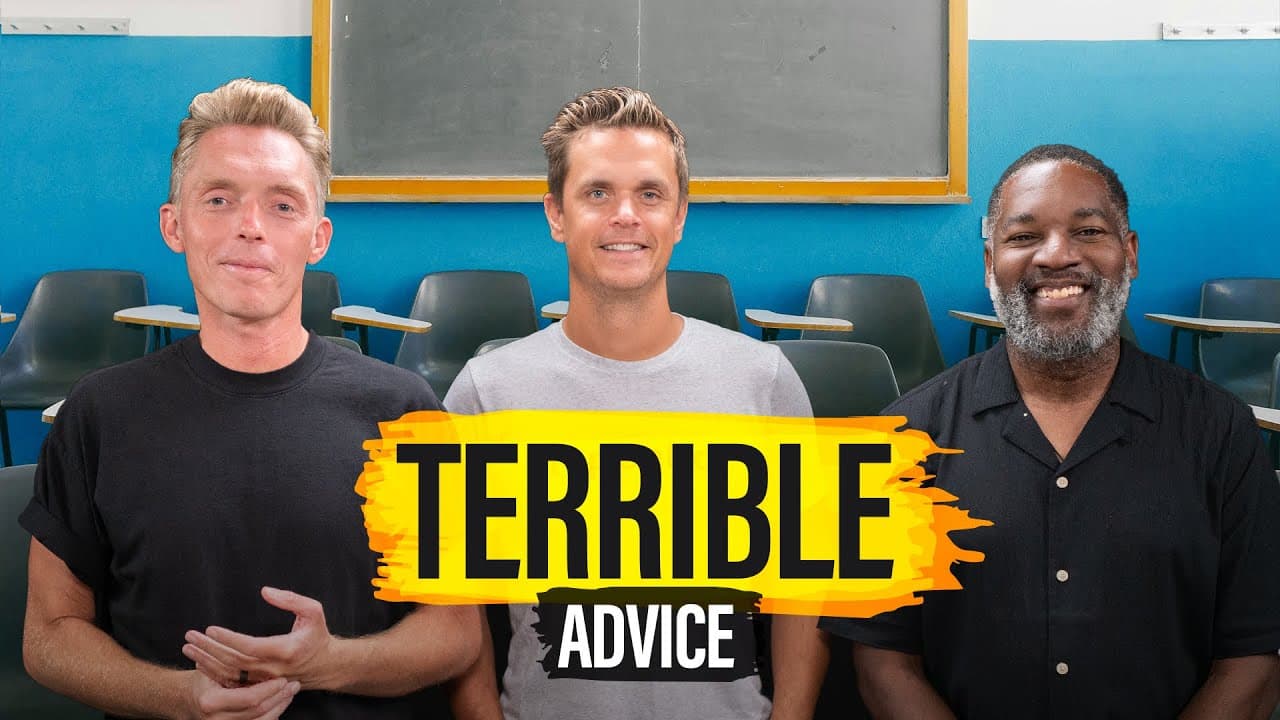
Hello everybody. Welcome to the minimalist podcast where we discuss what it means to live a meaningful life with less. My name is Joshua Fields Milbour and joining me here at Earththing Studios in West Hollywood, California is my good friend TK Coleman. Yo yo yo. Today we're joined by Isaac Mohouse. Isaac is the CEO of Open Ed, which is an organiza... Read More
Key Insights
- The current education system often stifles curiosity and creativity, focusing more on conformity and standardized testing.
- Homeschooling and unschooling provide opportunities for personalized learning and can reduce anxiety in children.
- Socialization in traditional schools is limited by age segregation and does not reflect real-world interactions.
- Parents can create educational environments that encourage exploration and personal growth.
- Financial burdens from student loans can be avoided by exploring alternative education paths and questioning the necessity of a college degree.
- The COVID-19 pandemic revealed that traditional schooling is not the only path to effective education and personal development.
- A degree is often used as a proxy for job readiness, but real-world skills and experiences can be more valuable.
- Curiosity should be nurtured as it is a key driver of genuine learning and personal development.
Install to Summarize YouTube Videos and Get Transcripts
Explore YouTube Video Summarizer or Get YouTube Transcript Extractor
Questions & Answers
Q: How can parents take control of their child's education?
Parents can take control of their child's education by exploring alternative methods such as homeschooling or unschooling. This allows for a more personalized learning experience that can be tailored to the child's interests and needs. Additionally, parents can create environments that encourage exploration and personal growth, moving away from the standardized approach of traditional schooling.
Q: What are the limitations of socialization in traditional schools?
Traditional schools often limit socialization by segregating students strictly by age, which does not reflect real-world interactions. This age-based grouping can restrict the development of social skills across different age groups and create high-pressure environments focused on social status games. In contrast, homeschooling and unschooling often encourage interactions with a wider range of age groups, fostering more natural social development.
Q: Why is the current education system considered broken?
The current education system is considered broken because it often prioritizes conformity and standardized testing over genuine curiosity and creativity. It tends to stifle individual growth and fails to prepare students for real-world challenges. The system's structure and incentives do not align with fostering a love for learning or developing critical thinking skills.
Q: What impact did COVID-19 have on perceptions of education?
COVID-19 shifted perceptions of education by exposing the limitations of traditional schooling and highlighting the potential of alternative education methods. Many families realized that their children could learn effectively outside of the conventional classroom setting, leading to an increased interest in homeschooling and unschooling. The pandemic demonstrated that education could be flexible and personalized, rather than confined to a one-size-fits-all approach.
Q: How can financial burdens from student loans be avoided?
Financial burdens from student loans can be avoided by questioning the necessity of a college degree and considering alternative education paths. Prospective students should evaluate whether a degree is essential for their desired career and explore options like apprenticeships, online courses, or direct entry into the workforce. Being intentional about educational spending and seeking scholarships or community college options can also help mitigate debt.
Q: What role does curiosity play in education?
Curiosity is a fundamental driver of genuine learning and personal development. It encourages students to explore, ask questions, and seek understanding beyond the confines of a curriculum. When nurtured, curiosity leads to a deeper engagement with material and fosters a lifelong love of learning. Education systems that prioritize curiosity over rote memorization tend to produce more well-rounded and innovative thinkers.
Q: Why is a degree often used as a proxy for job readiness?
A degree is often used as a proxy for job readiness because it is a standardized credential that employers can easily reference. It signals that a candidate has completed a certain level of education and possesses basic competencies. However, this reliance on degrees can overlook the importance of real-world skills and experiences, which are often more indicative of a candidate's ability to perform in a job.
Q: How can real-world skills be more valuable than a degree?
Real-world skills can be more valuable than a degree because they demonstrate practical experience and the ability to apply knowledge in real-life situations. Skills such as problem-solving, communication, and adaptability are highly sought after by employers and often cannot be fully captured by a degree alone. Gaining experience through internships, projects, or self-directed learning can provide a competitive edge in the job market.
Summary & Key Takeaways
-
The education system is criticized for its focus on conformity and lack of genuine learning opportunities. Alternatives such as homeschooling and unschooling offer more personalized educational experiences and can alleviate anxiety in children.
-
Socialization in traditional schools is limited by age segregation, which does not prepare students for real-world interactions. Parents can create environments that encourage exploration and personal growth.
-
The financial burden of student loans can be avoided by questioning the necessity of a college degree and exploring alternative education paths. Real-world skills and experiences are often more valuable than a degree.
Read in Other Languages (beta)
Share This Summary 📚
Summarize YouTube Videos and Get Video Transcripts with 1-Click
Try YouTube Summary with ChatGPT & Claude or YouTube Transcript Generator
Explore More Summaries from The Minimalists Podcast 📚




Summarize YouTube Videos and Get Video Transcripts with 1-Click
Try YouTube Summary with ChatGPT & Claude or YouTube Transcript Generator