Is the Universe an App? Exploring the Chandian Effect and the Illusion of Certainty.
TL;DR
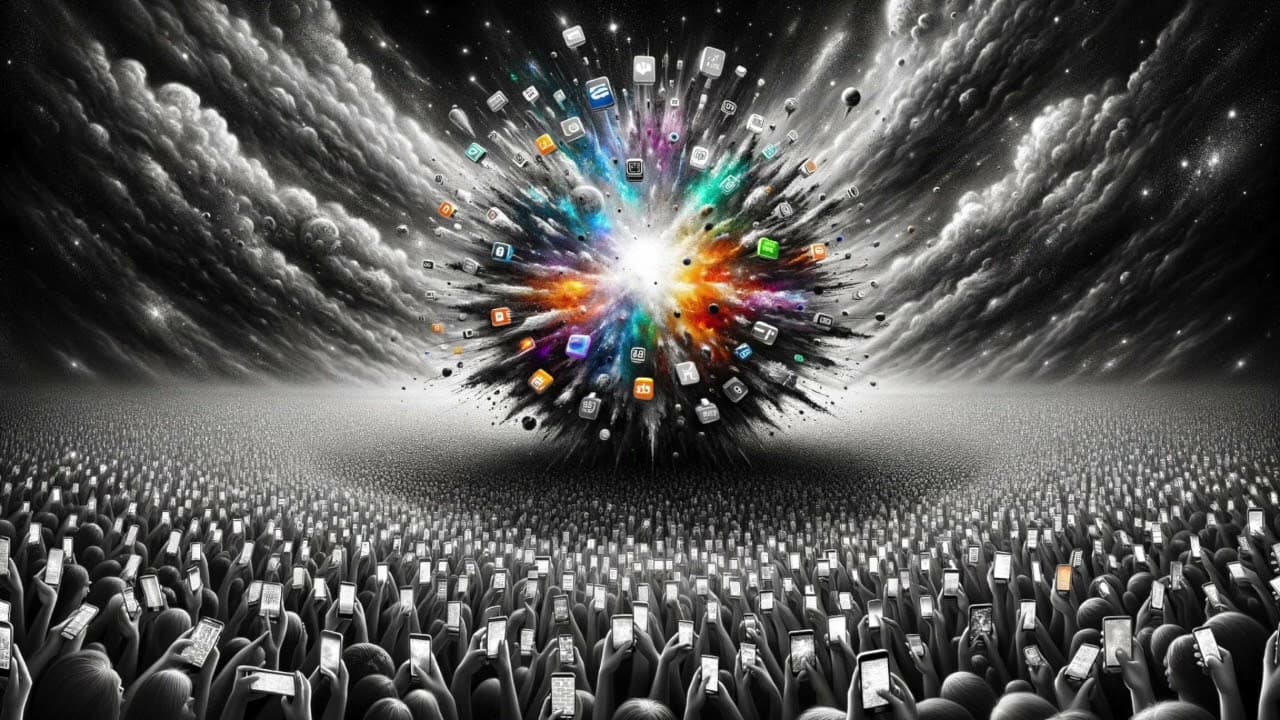
Explores consciousness, simulation theory, and the illusion of reality.
Transcript
is the universe an app exploring the shandan effect and the illusion of certainty David Christopher Lane and Andrea deem although we experience the illusion of receiving high resolution images from our eyes what the optic nerve actually sends to the brain is just a series of outlines and clues about points of interest in our visual field we then es... Read More
Key Insights
- Our perception of reality is a simulation created by the brain, which processes external and internal stimuli to construct a virtual environment.
- Nick Bostrom's simulation hypothesis suggests that we might be living in a computer simulation, challenging the notion of an objective reality.
- The Chandian effect describes how certainty in our perceptions can blur the line between reality and illusion, impacting our interpretation of experiences.
- Religious visions and mystical experiences, as illustrated by Faqir Chand, may be projections of one's own faith and consciousness rather than external divine interventions.
- The universe as a computational simulation aligns with theories in neuroscience and quantum physics, suggesting reality is a detailed illusion.
- The brain's ability to simulate experiences is evident in dreaming, where we create vivid worlds without external stimuli, questioning the nature of consciousness.
- Advancements in CGI and artificial intelligence demonstrate how easily human consciousness can be deceived, paralleling the idea of reality as a sophisticated simulation.
- Philosophical and scientific inquiries into consciousness and reality challenge the certainty of our waking state, prompting deeper exploration of the mind's capabilities.
Install to Summarize YouTube Videos and Get Transcripts
Explore YouTube Video Summarizer or Get YouTube Transcript Extractor
Questions & Answers
Q: What is the main argument of Nick Bostrom's simulation hypothesis?
Nick Bostrom's simulation hypothesis argues that we might be living in a computer simulation. He presents three propositions: humanity is unlikely to reach a post-human stage before extinction, posthuman civilizations are unlikely to run many simulations of their evolutionary history, or we are almost certainly living in a simulation. This challenges the notion of an objective reality.
Q: How does Faqir Chand's realization relate to the nature of religious visions?
Faqir Chand realized that religious visions are not external divine interventions but projections of one's own faith and consciousness. He concluded that these experiences are illusory projections, influenced by internal processes rather than external forces. This challenges the authenticity of mystical experiences and suggests they are products of the mind's simulation capabilities.
Q: What is the Chandian effect, and how does it relate to perception?
The Chandian effect describes how the certainty in our perceptions can blur the line between reality and illusion. It suggests that what we perceive as real is influenced by the intensity and duration of our certainty, impacting our interpretation of experiences. This effect challenges the reliability of our perceptions and highlights the mind's role in constructing reality.
Q: How do advancements in CGI and AI relate to the concept of reality as a simulation?
Advancements in CGI and AI demonstrate how easily human consciousness can be deceived by artificial constructs, paralleling the idea of reality as a sophisticated simulation. These technologies can create hyper-realistic simulations that challenge our perceptions, illustrating the brain's susceptibility to illusions and supporting the notion that reality might be a detailed simulation.
Q: How does the brain simulate reality during dreaming?
During dreaming, the brain simulates reality by creating vivid worlds without external stimuli. This process illustrates the brain's ability to construct detailed experiences internally, questioning the nature of consciousness and highlighting its role as a neural simulator. Dreaming demonstrates how reality can be an elaborate simulation, challenging the distinction between waking and dream states.
Q: What role does the brain play in constructing our perception of reality?
The brain plays a crucial role in constructing our perception of reality by processing external and internal stimuli to create a virtual environment. It acts as a neural simulator, interpreting sensory inputs and reconstructing them into coherent experiences. This process suggests that our perception of reality is a sophisticated simulation, influenced by the brain's interpretation of data.
Q: How do philosophical and scientific inquiries challenge the certainty of our waking state?
Philosophical and scientific inquiries challenge the certainty of our waking state by questioning the reliability of our perceptions and the nature of consciousness. These inquiries explore the possibility that reality is a simulation, prompting deeper investigation into the mind's capabilities and the influence of neural processes on our interpretation of experiences. They encourage skepticism about the objective nature of reality.
Q: What is the significance of the idea that the universe is a computational simulation?
The idea that the universe is a computational simulation is significant because it challenges traditional notions of reality and suggests that our experiences are detailed illusions. It aligns with theories in neuroscience and quantum physics, proposing that reality is a sophisticated construct influenced by computational processes. This concept prompts reevaluation of our understanding of consciousness and the nature of existence.
Summary & Key Takeaways
-
The content explores the idea that our perception of reality is a sophisticated simulation created by the brain, challenging the notion of an objective world. It delves into Nick Bostrom's simulation hypothesis, suggesting we might be living in a computer simulation, and discusses the Chandian effect, which blurs the line between reality and illusion.
-
Religious visions, as illustrated by Faqir Chand, are examined as projections of one's own faith and consciousness rather than external divine interventions. The content also connects the universe as a computational simulation with theories in neuroscience and quantum physics, suggesting reality is a detailed illusion.
-
Advancements in CGI and artificial intelligence demonstrate the ease with which human consciousness can be deceived, paralleling the idea of reality as a sophisticated simulation. Philosophical and scientific inquiries into consciousness and reality challenge the certainty of our waking state, prompting deeper exploration of the mind's capabilities.
Read in Other Languages (beta)
Share This Summary 📚
Summarize YouTube Videos and Get Video Transcripts with 1-Click
Try YouTube Summary with ChatGPT & Claude or YouTube Transcript Generator
Explore More Summaries from neuralsurfer 📚


Summarize YouTube Videos and Get Video Transcripts with 1-Click
Try YouTube Summary with ChatGPT & Claude or YouTube Transcript Generator