BACON, HOBBES, DESCARTES, a Podcast
TL;DR
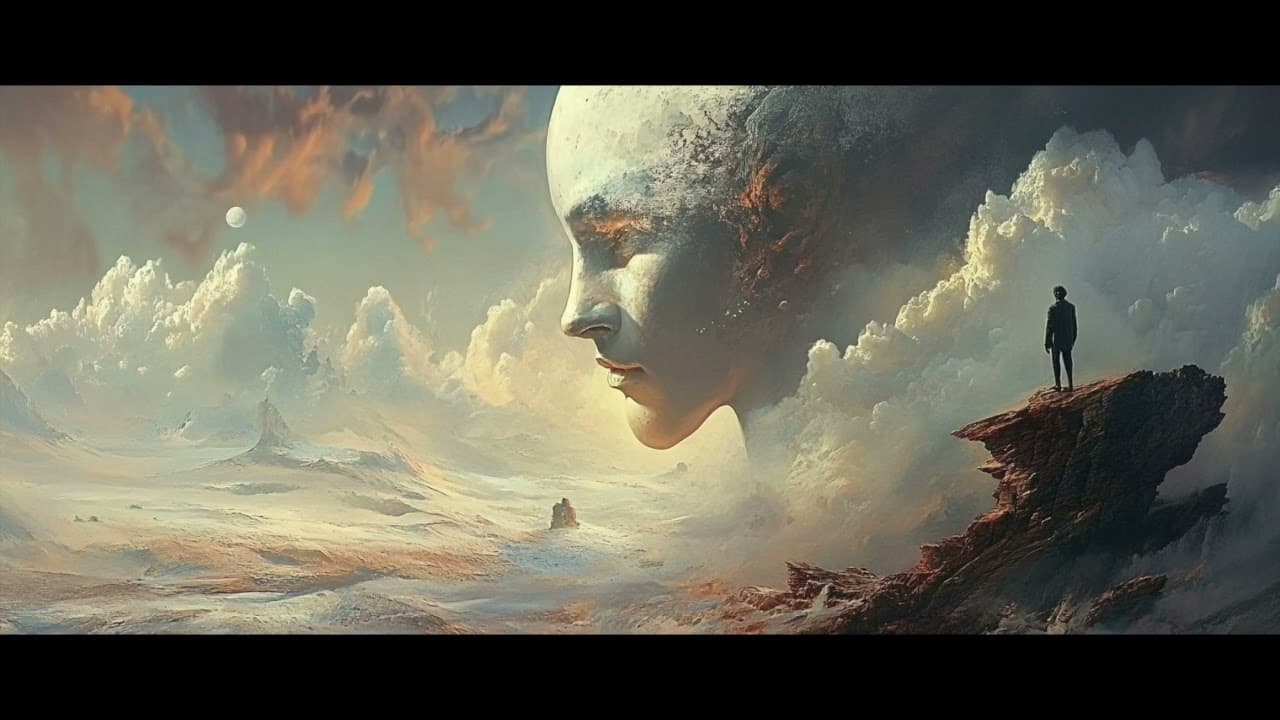
Exploration of modern philosophy's roots and its influential thinkers.
Transcript
welcome to uh a deep dive oh into the philosophical Renaissance okay so we're going to be looking at how you know thinkers wrestled with age-old questions about knowledge power the nature of reality and in the process sort of set the stage for the modern world our guide for this journey is the chapter the philosophical Renaissance from the ... Read More
Key Insights
- The philosophical Renaissance was marked by a revival of ancient Greek ideas, significantly influenced by Islamic scholars, leading to a resurgence of interest in thinkers like Aristotle and Plato.
- The Copernican Revolution was not just a scientific shift but a philosophical upheaval that challenged traditional views of the universe and humanity's place within it.
- Giordano Bruno embraced the concept of an infinite universe, a dangerous idea at the time, which ultimately led to his persecution and execution.
- Francis Bacon, despite his personal controversies, was a visionary who advocated for the practical application of knowledge to improve human life, although he paradoxically rejected the Copernican theory.
- René Descartes is known for his methodical approach to knowledge, emphasizing doubt and reason, which laid the groundwork for the Enlightenment and modern scientific inquiry.
- Descartes' concept of mind-body dualism has profoundly influenced Western thought, raising questions about consciousness, free will, and moral responsibility.
- The philosophical Renaissance emphasized reason and individual inquiry, setting the stage for the Enlightenment and the modern scientific method.
- The era grappled with fundamental questions about reality, knowledge, and consciousness, questions that continue to challenge and fascinate us today.
Install to Summarize YouTube Videos and Get Transcripts
Explore YouTube Video Summarizer or Get YouTube Transcript Extractor
Questions & Answers
Q: What was the philosophical Renaissance about?
The philosophical Renaissance was a period of intellectual revival and transformation that revisited and expanded upon ancient Greek ideas, significantly influenced by Islamic scholars. It set the stage for modern philosophy by challenging traditional views and exploring new concepts about reality, knowledge, and humanity's place in the universe.
Q: How did the Copernican Revolution impact philosophy?
The Copernican Revolution was a philosophical earthquake that challenged the traditional geocentric view of the universe, proposing instead that the Earth revolved around the sun. This shift not only altered scientific understanding but also had profound implications for philosophical thought, questioning humanity's place in the cosmos and the hierarchy of the universe.
Q: Who was Giordano Bruno and what were his contributions?
Giordano Bruno was a visionary philosopher who embraced the concept of an infinite universe filled with multiple inhabited worlds. His ideas were considered dangerous at the time, leading to his persecution and eventual execution. Bruno's willingness to explore these radical concepts demonstrated a significant break from traditional thought and influenced later philosophical developments.
Q: What were Francis Bacon's views on knowledge and science?
Francis Bacon was a proponent of the practical application of knowledge, believing that science should be used to improve the human condition. He envisioned a future where scientific advancements could lead to the creation of new materials and even forms of life. Despite his forward-thinking approach, Bacon paradoxically rejected the Copernican theory, illustrating the complexity of his views.
Q: What is René Descartes known for in philosophy?
René Descartes is known for his methodical approach to knowledge, emphasizing doubt and reason. His famous phrase 'Cogito, ergo sum' ('I think, therefore I am') captures his foundational insight into the certainty of self-existence. Descartes' work laid the groundwork for the Enlightenment and modern scientific inquiry, profoundly influencing Western thought.
Q: What is mind-body dualism, and why is it significant?
Mind-body dualism is the concept that the mind and body are separate entities, with the mind being immaterial and the body being material. This idea, proposed by Descartes, has had a profound impact on Western thought, influencing discussions on consciousness, free will, and moral responsibility. It challenges the understanding of the self and the nature of human existence.
Q: How did the philosophical Renaissance influence modern thought?
The philosophical Renaissance emphasized reason and individual inquiry, setting the stage for the Enlightenment and the modern scientific method. It encouraged critical thinking, questioning authority, and seeking evidence-based explanations, thus empowering individuals to challenge traditional views and seek knowledge independently, shaping the course of modern philosophy and science.
Q: What are the lasting impacts of the philosophical Renaissance?
The philosophical Renaissance continues to shape contemporary thought through its emphasis on reason, individual inquiry, and the exploration of fundamental questions about reality and knowledge. It laid the groundwork for the Enlightenment, influenced political philosophy through concepts like the social contract, and raised enduring ethical questions about free will and moral responsibility.
Summary & Key Takeaways
-
The podcast explores the philosophical Renaissance, highlighting the revival of ancient Greek thought through Islamic scholars and the subsequent impact on Western philosophy.
-
Key figures like Giordano Bruno and Francis Bacon are discussed, showcasing their groundbreaking ideas and the challenges they faced in a time of intellectual upheaval.
-
René Descartes' contributions to philosophy, particularly his method of doubt and mind-body dualism, are examined, revealing their lasting impact on modern thought.
Read in Other Languages (beta)
Share This Summary 📚
Summarize YouTube Videos and Get Video Transcripts with 1-Click
Try YouTube Summary with ChatGPT & Claude or YouTube Transcript Generator
Explore More Summaries from neuralsurfer 📚
Summarize YouTube Videos and Get Video Transcripts with 1-Click
Try YouTube Summary with ChatGPT & Claude or YouTube Transcript Generator