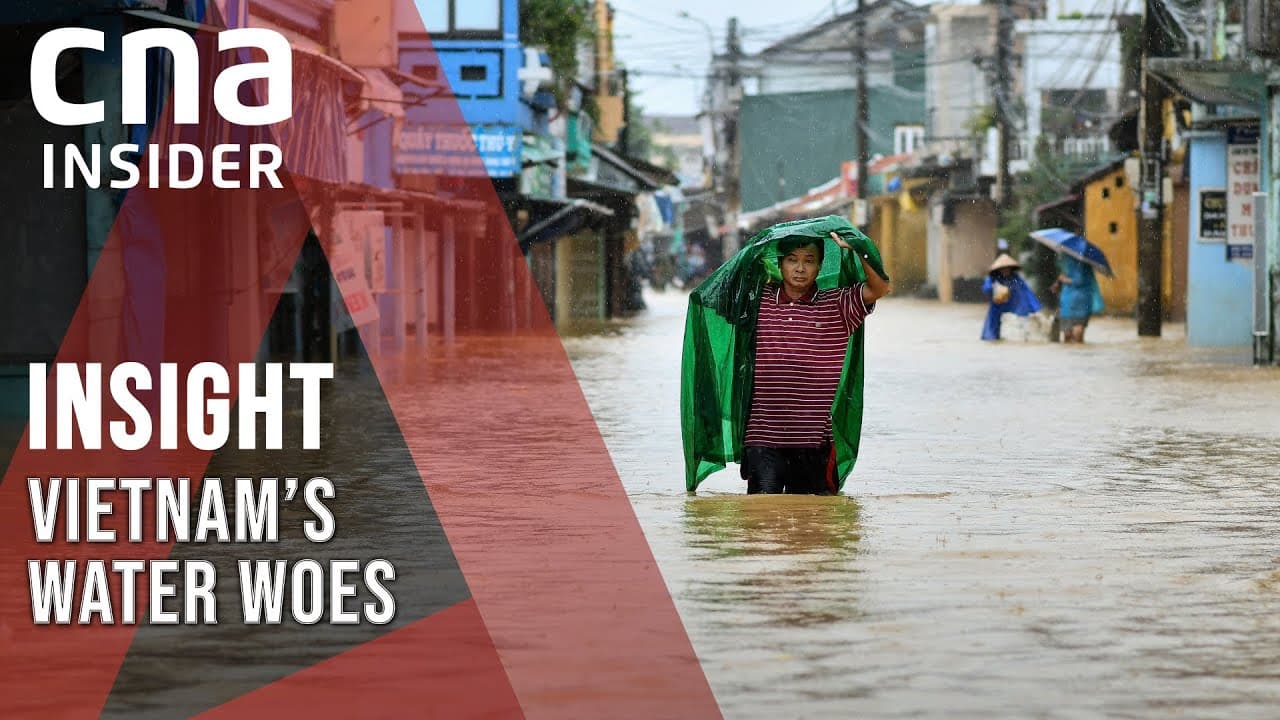
How Did Tropical Vietnam Run Out Of Clean Water? | Insight | Full Episode
TL;DR
Vietnam is facing a severe water crisis due to contamination, scarcity, and mismanagement, which poses threats to public health and the country's economy.
Transcript
Vietnam a country abundant in water but it is thirsty for more we have the growing Urban population that is creating a lot of Demands for water supply and they put pressure on existing infrastructure water scarcity has become a pressing problem for the country and what it has may not be safe whether too much or too little could Vietnam's water Rose... Read More
Key Insights
- 😲 Vietnam's water crisis is a complex issue influenced by factors such as climate change, dam construction, and pollution from multiple sources.
- 💦 Water contamination, particularly in rural areas, poses a significant threat to public health and the economy.
- 🥺 Groundwater overexploitation leads to scarcity and land subsidence, while saline intrusion affects coastal areas.
- 💦 The government aims to provide clean water to all Vietnamese by 2045 and is investing in water infrastructure and treatment plants.
- 💦 Achieving water security in Vietnam requires addressing financial, environmental, and systemic challenges.
- 💦 Efforts to counter the water crisis include promoting rainwater harvesting, reducing groundwater extraction, and improving wastewater treatment.
Install to Summarize YouTube Videos and Get Transcripts
Explore YouTube Video Summarizer or Get YouTube Transcript Extractor
Questions & Answers
Q: What are the primary sources of water pollution in Vietnam?
The two major sources of water pollution in Vietnam are untreated industrial waste and agricultural runoff, which contain harmful substances like heavy metals and pesticides.
Q: How does the water scarcity affect rural communities?
Many rural households in Vietnam lack access to clean water, relying on natural sources and collecting water from wherever they can. This increases the risk of waterborne diseases and poses a daily challenge for these communities.
Q: How does arsenic contamination affect Vietnam's water supply?
Vietnam has high levels of naturally occurring arsenic in its groundwater, which can lead to various health problems, including cancer and cardiovascular disease. Many communities rely on arsenic-laden sources, and efforts to decontaminate water using alum have limitations.
Q: How does the water crisis impact Vietnam's economy?
The agriculture sector, which heavily depends on water, could face significant challenges due to the water crisis. Additionally, industries such as textiles, electronics, and food processing, which require substantial water usage, may also be affected. The World Bank estimates a 6% decrease in GDP by 2035 due to water-related threats.
Key Insights:
- Vietnam's water crisis is a complex issue influenced by factors such as climate change, dam construction, and pollution from multiple sources.
- Water contamination, particularly in rural areas, poses a significant threat to public health and the economy.
- Groundwater overexploitation leads to scarcity and land subsidence, while saline intrusion affects coastal areas.
- The government aims to provide clean water to all Vietnamese by 2045 and is investing in water infrastructure and treatment plants.
- Achieving water security in Vietnam requires addressing financial, environmental, and systemic challenges.
- Efforts to counter the water crisis include promoting rainwater harvesting, reducing groundwater extraction, and improving wastewater treatment.
- Balancing economic development with environmental protection remains a crucial challenge for Vietnam.
Summary & Key Takeaways
-
Vietnam is experiencing water scarcity due to complex factors such as climate change, dam construction, and pollution from industrial waste and agricultural runoff.
-
Water contamination is a major problem, with the government estimating that 80% of diseases are linked to water pollution, particularly in rural areas.
-
The water crisis poses a significant threat to Vietnam's economy, with the World Bank warning that it could lead to a 6% decrease in GDP by 2035.
Read in Other Languages (beta)
Share This Summary 📚
Summarize YouTube Videos and Get Video Transcripts with 1-Click
Try YouTube Summary with ChatGPT & Claude or YouTube Transcript Generator
Explore More Summaries from CNA Insider 📚



Summarize YouTube Videos and Get Video Transcripts with 1-Click
Try YouTube Summary with ChatGPT & Claude or YouTube Transcript Generator