How to Use R's Slice Function for Data Subsetting
TL;DR
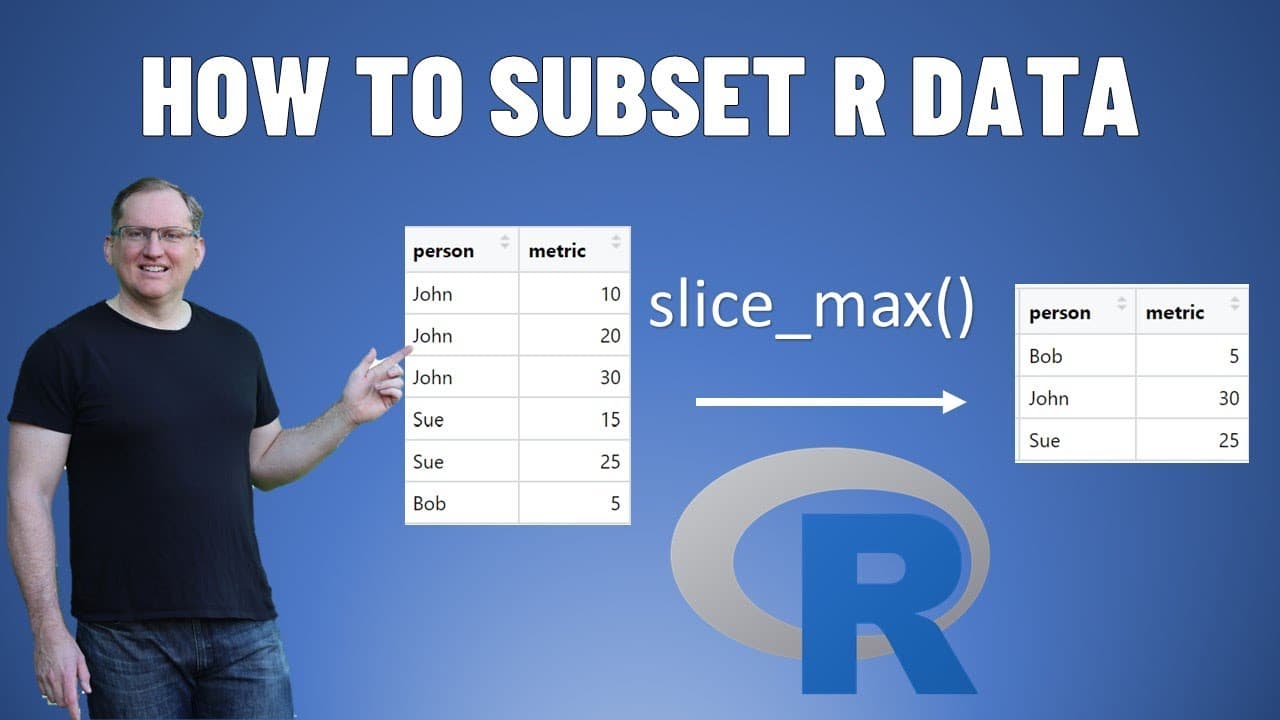
To subset data in R using the slice function, utilize variations like slice Max to get the highest values and slice Min for the lowest. You can also randomly sample data with slice Sample or access specific rows using slice Head and slice Tail. Grouping data prior to slicing enhances targeted analysis further.
Transcript
hi friends welcome back to the channel today we're going to be looking at a really useful R function comes from the Tidy verse and it's called slice so there's a number of different variations of the slice function and they're very very useful for being able to subset particular parts of your data frame I'm going to show you a number of different e... Read More
Key Insights
- 💦 The slice function is an integral part of data manipulation in R, especially when working with the Tidyverse framework.
- 👥 By using slice Max and slice Min, users can easily extract the highest or lowest values from grouped data, which streamlines the analysis process.
- 🧑🦽 Random sampling through slice Sample can enhance exploratory analysis, providing a meaningful subset for evaluation without manual selection.
- ⤴️ Functions like slice Head and slice Tail enable efficient access to specific rows of interest, improving quick data exploration capabilities.
- ❓ Understanding how to manage NA values is crucial when using the slice function to avoid unexpected errors or inaccuracies in data analysis.
- 👥 Grouping data before applying the slice functions allows for targeted analysis, enabling analysts to focus on specific segments within the dataset.
- 👤 The Tidyverse repository provides a wealth of resources and examples, making it easier for users to learn and understand various data manipulation functions, including slice.
Install to Summarize YouTube Videos and Get Transcripts
Explore YouTube Video Summarizer or Get YouTube Transcript Extractor
Questions & Answers
Q: What is the primary purpose of the slice function in R?
The slice function in R is primarily used for subsetting data frames. It allows users to select specific rows based on criteria such as maximum or minimum values of a particular column, which is particularly useful for data analysis.
Q: How do the slice Max and slice Min functions work?
The slice Max function identifies and returns the row with the highest value of a specified metric after grouping the data, while the slice Min function does the opposite, returning the row with the lowest value. Both functions facilitate targeted data extraction for analysis.
Q: Can the slice function handle missing values in a dataset?
Yes, when using functions like slice Min and slice Max, it is important to manage missing values to prevent errors in data subsetting. The slice function has parameters for handling NA values (missing data) to ensure accurate results.
Q: What is the significance of using slice Sample in data analysis?
The slice Sample function allows analysts to take random samples from the dataset, which helps in conducting exploratory data analysis. This feature is beneficial for working with larger datasets, letting users analyze a manageable subset while maintaining randomness.
Q: How does group by interact with the slice functions?
The group by function allows for data grouping based on a specified variable. When combined with slice functions, it returns subsets that respect these groupings, allowing analysts to extract specific rows for each group, enhancing analytical precision.
Q: What are slice Head and slice Tail used for?
Slice Head is used to extract the first few rows of a dataset, while slice Tail extracts the last few rows. These functions are valuable for quickly examining the beginning or end of a dataset, especially in time-series analysis.
Q: Why is it recommended to visit the Tidyverse documentation?
The Tidyverse documentation offers comprehensive examples and detailed parameter descriptions for the slice functions, making it a valuable resource for users seeking to optimize their data manipulation techniques and learn about additional functionalities.
Summary & Key Takeaways
-
The content focuses on the R function "slice" from the Tidyverse, which is essential for subsetting data frames in R.
-
Key variations of the slice function, such as slice Max, slice Min, slice Sample, slice Head, and slice Tail, are demonstrated with practical examples.
-
The video encourages viewers to consult the Tidyverse documentation for additional parameters and examples to enhance their data manipulation skills.
Read in Other Languages (beta)
Share This Summary 📚
Summarize YouTube Videos and Get Video Transcripts with 1-Click
Try YouTube Summary with ChatGPT & Claude or YouTube Transcript Generator
Explore More Summaries from Dr Lyndon Walker 📚




Summarize YouTube Videos and Get Video Transcripts with 1-Click
Try YouTube Summary with ChatGPT & Claude or YouTube Transcript Generator