Classification of Polymers Based on Structure Of Polymers - Polymers - Chemistry Class 12
TL;DR
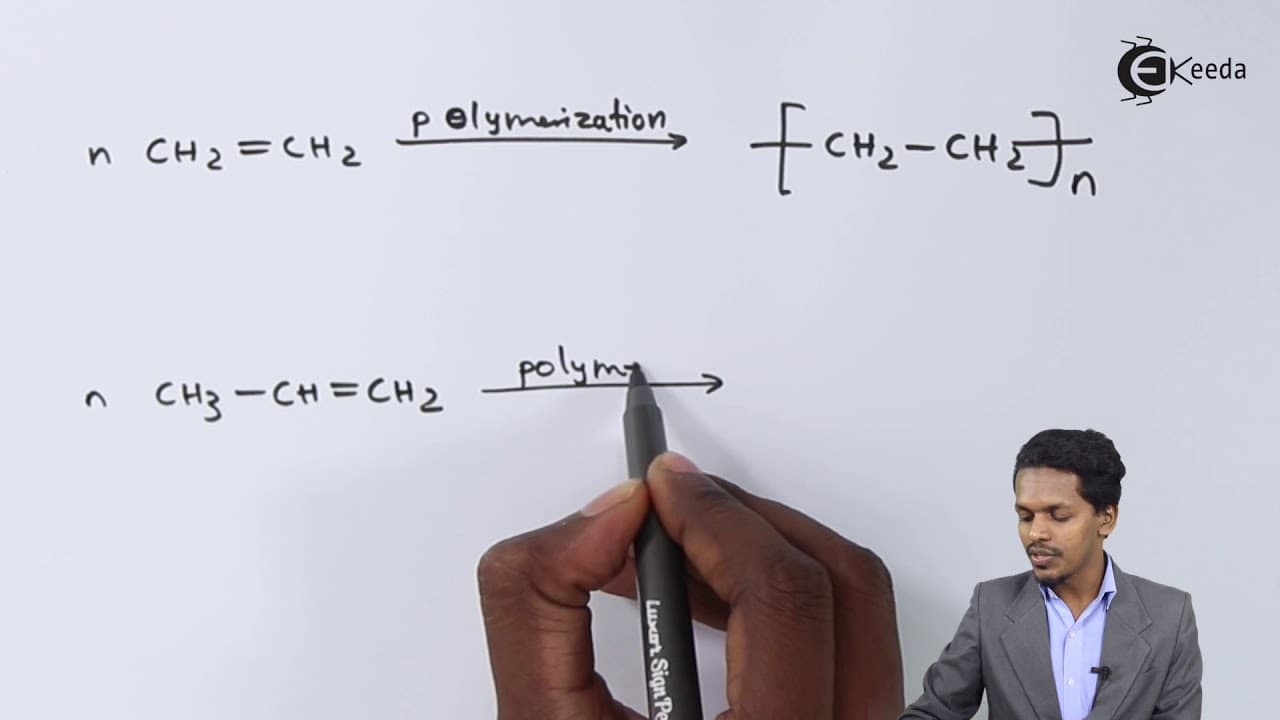
This video discusses the classification of polymers based on their structure, including linear polymers, branched polymers, and network or cross-linked polymers.
Transcript
click the bell icon to get latest videos from equator the previous section we have business about the classification of polymers based on the sources and now in this topic we are going to talk about the classification of polymers based on the structure of polymers so now let's get started so friends in this topic let me talk about the classificatio... Read More
Key Insights
- ⚾ Polymers can be classified based on their structure into linear, branched, and network polymers.
- 🪘 Linear polymers are long chain polymers with no branches.
- 🌲 Branched polymers have extended branches, similar to branches on a tree.
- 🖇️ Network or cross-linked polymers are formed by linking two chain polymers using other atoms or groups.
- 😵 Examples of cross-linked polymers include vulcanized rubber and bakelite.
- 🩹 Understanding the structure of polymers is important in various industries, such as plastics, adhesives, and coatings.
- 🅰️ Each type of polymer structure has its own unique properties and applications.
Install to Summarize YouTube Videos and Get Transcripts
Explore YouTube Video Summarizer or Get YouTube Transcript Extractor
Questions & Answers
Q: What are linear polymers?
Linear polymers are long chain polymers with no extended branches. They do not have an extended branching structure.
Q: How are branched polymers different from linear polymers?
Branched polymers have extended branches, similar to branches on a tree. These branches are formed by additional atoms attaching to the main chain.
Q: What are network or cross-linked polymers?
Network or cross-linked polymers are formed when two chain polymers are linked or combined with the help of other atoms or groups. This creates a branching structure between the two chains.
Q: Can you provide examples of cross-linked polymers?
Examples of cross-linked polymers include vulcanized rubber and bakelite. These polymers have a certain atom or molecule that combines the two linear chain polymers, forming a cross-linked structure.
Summary & Key Takeaways
-
Polymers can be classified based on their structure into three categories: linear polymers, branched polymers, and network or cross-linked polymers.
-
Linear polymers are long chain polymers with no extended branches.
-
Branched polymers have extended branches, similar to branches on a tree.
-
Network or cross-linked polymers are formed when two chain polymers are linked using other atoms.
Read in Other Languages (beta)
Share This Summary 📚
Summarize YouTube Videos and Get Video Transcripts with 1-Click
Try YouTube Summary with ChatGPT & Claude or YouTube Transcript Generator
Explore More Summaries from Ekeeda 📚



Summarize YouTube Videos and Get Video Transcripts with 1-Click
Try YouTube Summary with ChatGPT & Claude or YouTube Transcript Generator