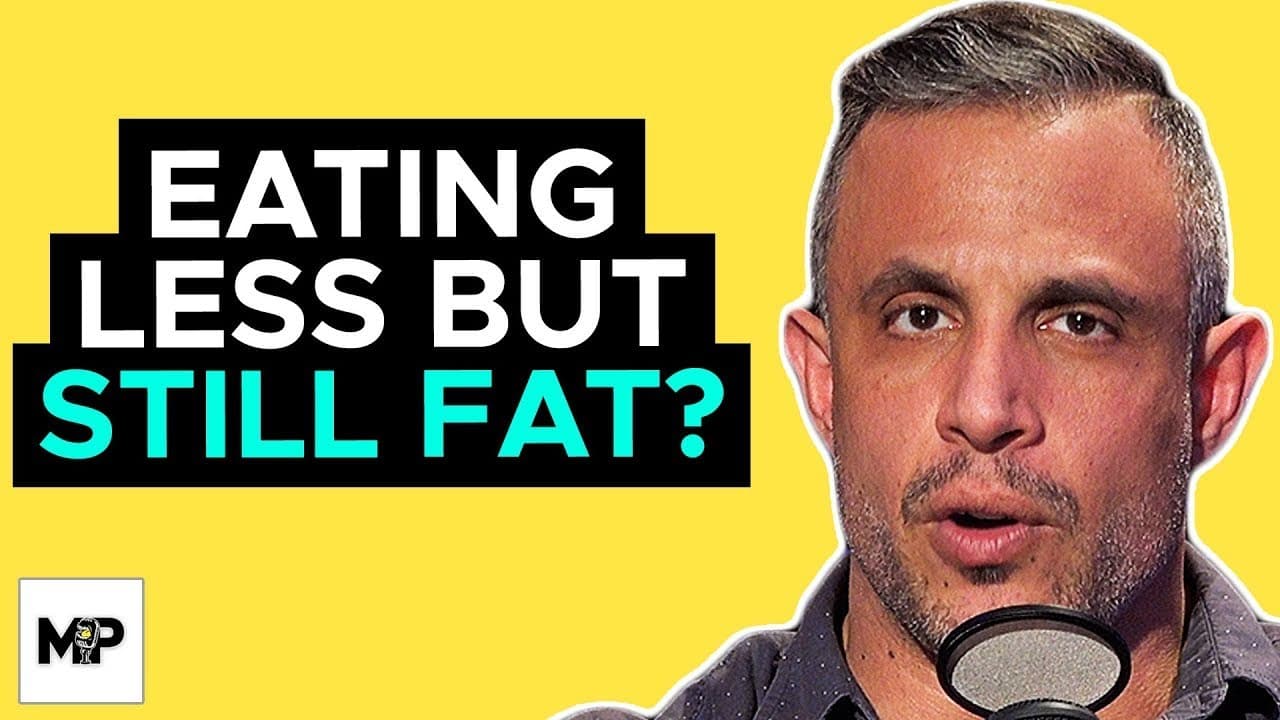
How Does Eating Too Little Cause Weight Gain?
TL;DR
Eating too little can lead to muscle loss, slowing metabolism and increasing body fat percentage, even if weight decreases. This often results in a cycle of binging, nutrient deficiencies, and hormonal shifts that promote fat storage. To maintain a healthy weight, focus on balanced nutrition and resistance training to preserve muscle and boost metabolism.
Transcript
foreign did you know eating too little can actually make you fatter no it's totally true there's many reasons why eating too little will actually cause you to be fatter than you are now that's what we're gonna talk about today I can't wait to see The Tick Tock clip of that I know add a contact parts of the ah yeah this is a whole podcast by the way... Read More
Key Insights
- Eating too little can cause muscle loss, which slows metabolism and increases body fat percentage.
- Losing muscle mass reduces your body's ability to burn calories, making it harder to maintain weight loss.
- A slow metabolism makes it more challenging to manage weight in a modern society with abundant food.
- Hormones shift towards fat storage when calorie intake is too low, as the body tries to protect itself.
- Eating too little often leads to binging, which can result in rapid fat gain due to a primed body.
- Nutrient deficiencies are common when consuming very low calories, affecting overall health and weight management.
- Behaviorally, low calorie intake reduces energy levels, leading to less physical activity and fewer calories burned.
- Building muscle and consuming adequate calories can lead to a faster metabolism and healthier body composition.
Install to Summarize YouTube Videos and Get Transcripts
Explore YouTube Video Summarizer or Get YouTube Transcript Extractor
Questions & Answers
Q: How does eating too little affect metabolism?
Eating too little slows metabolism by causing muscle loss, which reduces the body's calorie-burning capacity. Muscle is metabolically active tissue, and losing it means fewer calories burned at rest, making it harder to maintain weight loss and easier to gain fat.
Q: Why does eating too little lead to binging?
Prolonged calorie restriction increases hunger and cravings, leading to a higher likelihood of binging when food is available. This behavior results from the body's attempt to compensate for the energy deficit, often leading to rapid fat gain when normal eating resumes.
Q: What are the hormonal effects of eating too little?
Eating too little triggers hormonal shifts that promote fat storage. The body perceives a lack of calories as stress and adapts by storing more fat to protect against future scarcity. This hormonal adaptation makes it harder to lose weight and maintain muscle mass.
Q: How does eating too little cause nutrient deficiencies?
Low-calorie diets often lack the variety needed to provide essential nutrients. Consuming insufficient food reduces intake of vitamins and minerals, leading to deficiencies that can affect overall health, energy levels, and the body's ability to lose fat and build muscle.
Q: What is the impact of muscle loss on body composition?
Muscle loss reduces the body's ability to burn calories, leading to a higher body fat percentage even if weight decreases. This can result in a 'skinny fat' appearance, where the body looks leaner but has a higher fat-to-muscle ratio, complicating weight management.
Q: Why is a slow metabolism a problem in modern society?
A slow metabolism makes it difficult to manage weight in a society where high-calorie foods are readily available. With fewer calories burned at rest, individuals are more likely to gain weight, making a fast metabolism a valuable asset for maintaining a healthy weight.
Q: How can resistance training benefit metabolism?
Resistance training helps preserve and build muscle mass, which increases the body's calorie-burning capacity. By boosting metabolism, resistance training aids in weight management and counters the metabolic slowdown that occurs with low-calorie diets.
Q: What behavioral changes occur with low-calorie diets?
Low-calorie diets often lead to reduced energy levels, resulting in less physical activity and fewer calories burned throughout the day. This decrease in non-exercise activity thermogenesis (NEAT) can offset the calorie deficit created by dieting, hindering weight loss efforts.
Summary & Key Takeaways
-
Eating too little can paradoxically lead to increased body fat. When calorie intake is too low, the body loses muscle, which slows metabolism and increases fat percentage. This often results in binging and rapid fat gain.
-
A slow metabolism makes weight management difficult in a society with abundant food. Hormonal shifts towards fat storage occur as the body tries to protect itself, further complicating weight loss efforts.
-
Nutrient deficiencies are common with low-calorie diets, affecting health and weight loss. To maintain a healthy weight, focus on balanced nutrition and resistance training to preserve muscle and boost metabolism.
Read in Other Languages (beta)
Share This Summary 📚
Summarize YouTube Videos and Get Video Transcripts with 1-Click
Try YouTube Summary with ChatGPT & Claude or YouTube Transcript Generator
Explore More Summaries from Mind Pump Show 📚

Summarize YouTube Videos and Get Video Transcripts with 1-Click
Try YouTube Summary with ChatGPT & Claude or YouTube Transcript Generator