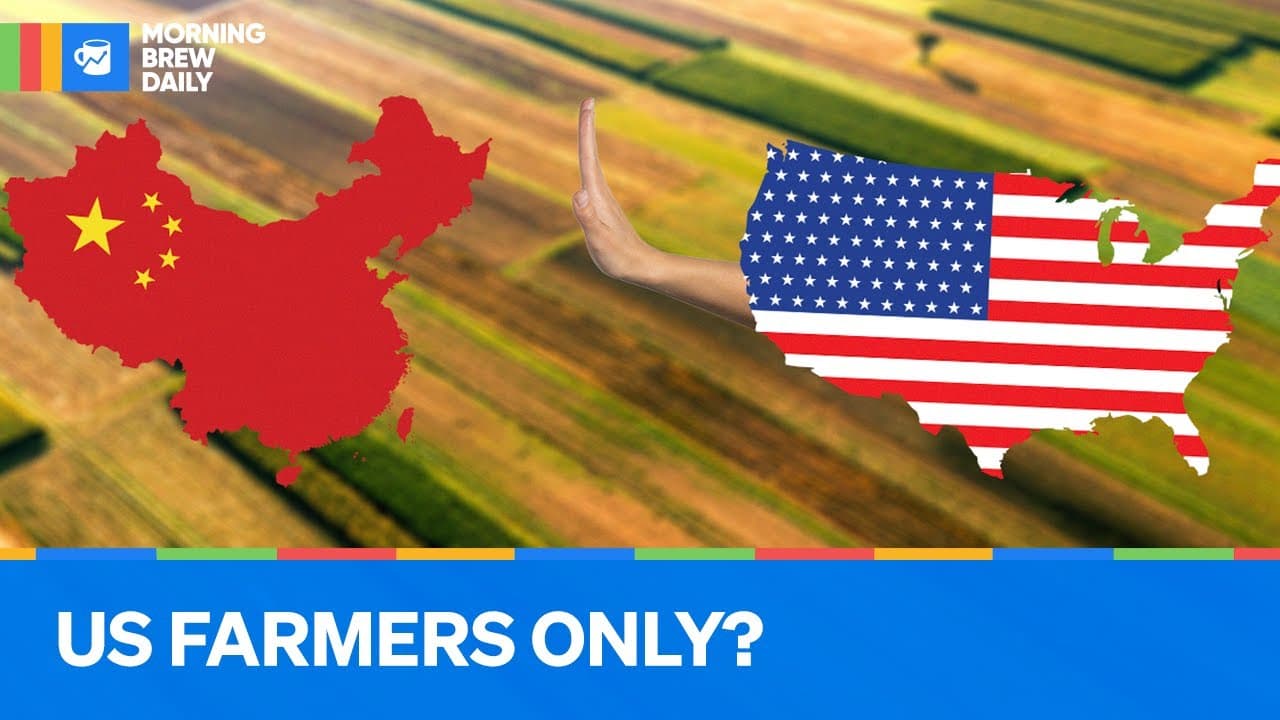
Why the US is Banning Farmland Sales from Chinese Investors
TL;DR
US bans Chinese investors from buying farmland due to security concerns.
Transcript
Good Morning Brew Daily Show. I'm Neal Freyman. and I'm Toby Howell. Today, the $237 million debate over Vladimir Zelenskyy's suit. Then the Agricultural department has had it with foreign investors buying up U.S. farmland. It's Wednesday, July 9th. Let's ride. The number one rule of Hollywood is if you have a hit on your hands, you must run it bac... Read More
Key Insights
- The US Department of Agriculture is banning farmland sales to foreign adversaries, especially targeting Chinese investors due to national security concerns.
- Foreigners own about 45 million acres of US farmland, but Chinese investors hold less than 1% of that, sparking debate on the necessity of the ban.
- The ban is part of a broader national security strategy that gained momentum after incidents like the Chinese spy balloon episode in 2023.
- Critics argue that the amount of farmland owned by Chinese investors is negligible, and the focus should be on long-term leasing practices instead.
- The trend of middle management layoffs is growing, with major companies flattening their organizational structures to increase efficiency.
- Robinhood and SoFi are making private market investments more accessible to the general public, but face regulatory scrutiny and pushback from private companies.
- A Polymarket controversy over whether President Zelensky wore a suit highlights challenges in decentralized truth verification.
- Waymo is targeting teens with autonomous rides, reflecting a decline in teen driving and a shift towards self-driving technology.
Install to Summarize YouTube Videos and Get Transcripts
Explore YouTube Video Summarizer or Get YouTube Transcript Extractor
Questions & Answers
Q: Why is the US banning Chinese investors from buying farmland?
The US Department of Agriculture is banning Chinese investors from buying farmland due to national security concerns. Lawmakers fear that foreign adversaries could gain leverage over the American food supply and national security infrastructure. This move is part of a broader strategy to prevent foreign control over critical resources.
Q: How much US farmland is currently owned by Chinese investors?
Chinese investors hold about 265,000 acres of US farmland, which is less than 1% of all foreign-held acres and just 0.0003% of total US farmland. Despite this small percentage, the US government is concerned about the potential security risks posed by foreign ownership.
Q: What are the implications of the middle management layoffs in major companies?
The layoffs of middle management positions are part of a trend where companies are flattening their organizational structures to increase efficiency and reduce costs. This shift is driven by the adoption of AI technologies and a focus on having more individual contributors. However, it places more responsibility on remaining managers and changes company dynamics.
Q: What is the controversy surrounding Robinhood's offering of faux equities as tokens?
Robinhood's offering of faux equities as tokens has sparked controversy because these tokens are not actual shares but rather provide exposure to private companies. OpenAI and other companies have expressed concerns, as they did not partner with Robinhood for these offerings. This raises regulatory challenges and questions about investor protections.
Q: What was the outcome of the Polymarket controversy regarding Zelensky's suit?
The Polymarket controversy revolved around whether President Zelensky wore a suit at a NATO summit. The market initially ruled that he did not wear a suit, despite media reports describing his attire as such. This incident highlights challenges in decentralized truth verification and the complexities of defining terms in prediction markets.
Q: How is Waymo targeting the teen market with its autonomous rides?
Waymo is targeting the teen market by offering accounts for teens aged 14 to 17, allowing them to hail fully autonomous rides. This move addresses the decline in teen driving and provides a safer alternative to ride-hailing with strangers. Waymo aims to tap into this market by offering convenience for both teens and their parents.
Q: What are the potential risks of democratizing access to private market investments?
Democratizing access to private market investments poses risks such as regulatory scrutiny and the potential for investors to misunderstand the nature of their investments. Companies like Robinhood and SoFi face challenges in ensuring investor protections and maintaining transparency, as private market shares are not the same as public equities.
Q: How is the trend of flattening organizational structures affecting companies?
Flattening organizational structures is affecting companies by reducing bureaucracy and increasing efficiency. However, it also places more responsibility on top managers, who must oversee more employees. This trend is driven by cost-saving measures and the adoption of AI technologies, which are reshaping workforce dynamics and reducing the need for middle management.
Summary & Key Takeaways
-
The US is banning Chinese buyers from purchasing farmland due to national security concerns, despite their minimal ownership of US farmland. The move is part of a broader strategy to prevent foreign adversaries from gaining leverage over American resources.
-
Middle management positions are being cut across major companies as organizations aim to increase efficiency by flattening their structures. This trend is driven by cost-saving measures and the rise of AI technologies, which are reshaping workforce dynamics.
-
Robinhood and SoFi are democratizing access to private market investments, allowing individual investors to buy shares in companies before they go public. However, this shift is met with regulatory challenges and concerns from private companies about maintaining control over their equity.
Read in Other Languages (beta)
Share This Summary 📚
Summarize YouTube Videos and Get Video Transcripts with 1-Click
Try YouTube Summary with ChatGPT & Claude or YouTube Transcript Generator
Explore More Summaries from Morning Brew Daily 📚


Summarize YouTube Videos and Get Video Transcripts with 1-Click
Try YouTube Summary with ChatGPT & Claude or YouTube Transcript Generator