What Is Spin in Quantum Mechanics and Why Is It Important?
TL;DR
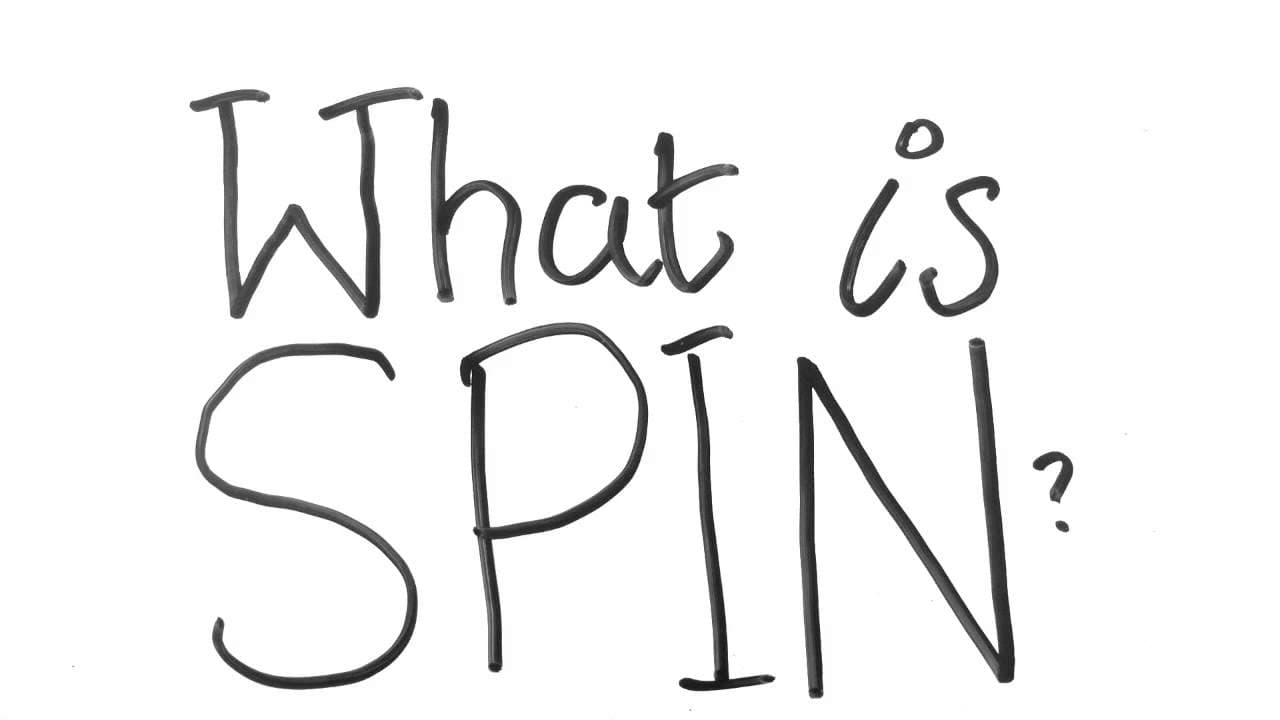
Spin is a fundamental quantum property that causes certain particles, like electrons, to behave akin to magnets, despite not being physically rotating. The Stern-Gerlach experiment revealed that these particles exhibit discrete magnetic orientations, namely spin-up and spin-down, highlighting limitations of classical physics in describing quantum behavior. The true nature of spin remains a mystery and an active area of research in quantum mechanics.
Transcript
What is spin? It’s something that apparently some particles have that you can measure... but what is it? In the video I’ll explain how we know spin exists, but also why we don’t understand it. Spin was a latecomer to the quantum mechanics party. Even after Schrodinger wrote his famous equation, and everything seemed to be working people didn’t real... Read More
Key Insights
- 💝 Spin was a late addition to the field of quantum mechanics and was discovered when particles exhibited unexpected magnetic behavior.
- ❓ The Stern-Gerlach experiment demonstrated that particles, such as electrons, experience forces as if they possess magnetic properties, even when not in rotational motion.
- 🦾 Quantum mechanics describes spin using the concepts of spin-up and spin-down, indicating the observable states of a particle's wavefunction.
- 🦾 Spin cannot be fully explained using classical analogies and requires a quantum mechanical framework.
- 👨🔬 The true nature and origin of spin in particles, such as electrons, are still not fully understood, and it remains a subject of ongoing research and study.
- 🚨 Attempts to merge quantum mechanics and relativity have shown that spin-like behavior emerges from the mathematical equations, but the deeper understanding of spin is still lacking.
- 🥺 Spin is a fundamental property of particles, and its study and understanding can lead to deeper insights into the nature of quantum physics.
Install to Summarize YouTube Videos and Get Transcripts
Explore YouTube Video Summarizer or Get YouTube Transcript Extractor
Questions & Answers
Q: What is spin in quantum mechanics?
Spin is a quantum property of particles, such as electrons, that manifests as a form of intrinsic angular momentum. It is associated with magnetic behavior but cannot be explained by classical physics.
Q: How was spin discovered?
Spin was discovered through experiments such as the Stern-Gerlach experiment, where it was observed that electrons experience forces as if they are magnets, despite not being in a state of rotational motion.
Q: Can spin be fully described using classical analogies?
No, spin cannot be fully described using classical analogies. In classical physics, the state of a magnet is described not only by its up or down orientation but also by its left or right and forward or backward orientation. However, in quantum mechanics, the up and down orientation is sufficient to describe the spin state of a particle.
Q: Why is spin considered a mysterious property?
Spin is considered mysterious because its true nature and origin are not fully understood. Despite being incorporated into quantum mechanics, the exact explanation for why particles possess spin remains elusive.
Summary & Key Takeaways
-
Spin is a quantum property that was discovered when some particles showed magnetic properties that were not predicted by classical physics.
-
In an experiment called the Stern-Gerlach experiment, it was observed that electrons, which were not expected to be magnets, exhibited magnetic behavior.
-
Quantum mechanics describes spin using the concepts of spin-up and spin-down, which are observable states of a particle's wavefunction.
Read in Other Languages (beta)
Share This Summary 📚
Summarize YouTube Videos and Get Video Transcripts with 1-Click
Try YouTube Summary with ChatGPT & Claude or YouTube Transcript Generator
Explore More Summaries from Looking Glass Universe 📚


Summarize YouTube Videos and Get Video Transcripts with 1-Click
Try YouTube Summary with ChatGPT & Claude or YouTube Transcript Generator