How To Solve Linear Systems Using Substitution By Avoiding Fractions!
TL;DR
Learn how to solve a linear system of equations by isolating one variable and substituting it into the other equation.
Transcript
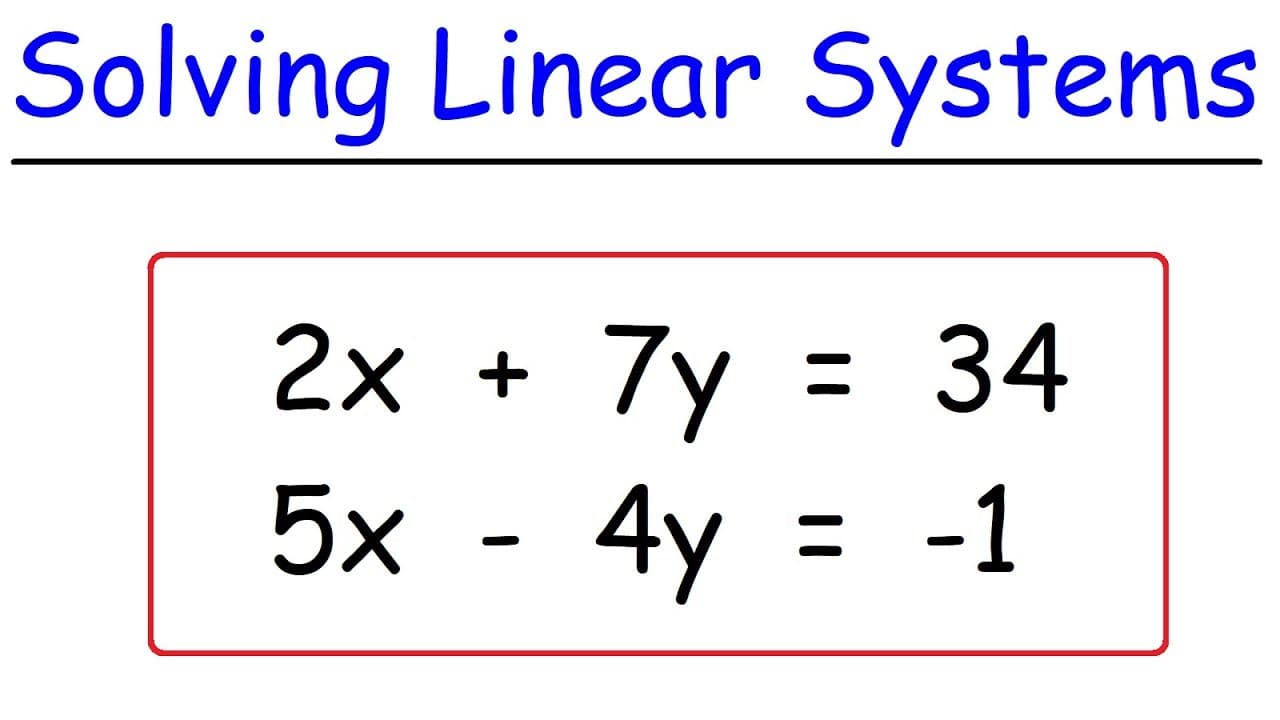
now let's say if we have a problem that looks like this three x plus six y is equal to twelve and also five x minus eight y is equal to 2. how do we solve a linear system that looks like this how do we get the the answer the values for x and y and how do we do so using the substitution method if you know what to do feel free to pause the video and ... Read More
Key Insights
- 😘 Solving for the variable with the lowest coefficient makes the calculation simpler and reduces the chances of dealing with fractions.
- 👻 Substituting the isolated variable into the other equation allows for solving the system using a single equation and one variable.
- 😘 Avoiding fractions can be achieved by carefully selecting the equation to isolate the variable and by using the equation with the lowest coefficient.
- 🙃 Dividing both sides of an equation by a certain value can help in isolating a variable and simplifying calculations.
- 🍉 Distributing and combining like terms are necessary steps in solving linear systems by substitution.
- 🙃 Subtracting or adding terms on both sides of an equation helps in isolating a variable and further simplifying the equation.
- 🙃 Dividing both sides of an equation by a common factor can help in finding the value of a variable efficiently.
Install to Summarize YouTube Videos and Get Transcripts
Explore YouTube Video Summarizer or Get YouTube Transcript Extractor
Questions & Answers
Q: How do you solve a linear system using the substitution method?
To solve a linear system using substitution, isolate one variable by solving for it in one of the equations and substitute its value into the other equation. This allows you to have a single equation with one variable, making it easier to solve.
Q: Why is it better to solve for the variable with the lowest coefficient?
It is better to solve for the variable with the lowest coefficient because it usually results in simpler calculations and avoids fractions. Choosing the variable with the lowest coefficient minimizes the chances of encountering fractions in the solution.
Q: What should be done after isolating a variable in one of the equations?
After isolating a variable, it should be replaced with its value in the other equation. This substitution allows for solving the system by working with a single equation and one variable.
Q: What is the final step in solving a linear system by substitution?
The final step is to calculate the value of the remaining variable using the substituted equation. By substituting the solved variable back into the equation, you can easily determine the value of the remaining variable.
Summary & Key Takeaways
-
To solve a linear system using the substitution method, isolate one variable by solving for it in one of the equations.
-
Focus on the equation with the lowest coefficient for easier calculation.
-
Substituting the isolated variable into the other equation allows for solving the system using a single equation and one variable.
Read in Other Languages (beta)
Share This Summary 📚
Summarize YouTube Videos and Get Video Transcripts with 1-Click
Try YouTube Summary with ChatGPT & Claude or YouTube Transcript Generator
Explore More Summaries from The Organic Chemistry Tutor 📚


Summarize YouTube Videos and Get Video Transcripts with 1-Click
Try YouTube Summary with ChatGPT & Claude or YouTube Transcript Generator