Products
Features
YouTube Video Summarizer
Summarize YouTube videos
Web & PDF Highlighter
Highlight web pages & PDFs
Chat with PDF
Ask any PDF questions with AI
Ask AI Clone
Chat with your highlights & memories
Audio Transcriber
Transcribe audio files to text
Glasp Reader
Read and highlight articles
Kindle Highlight Export
Export your Kindle highlights
Idea Hatch
Hatch ideas from your highlights
Integrations
Obsidian Plugin
Notion Integration
Pocket Integration
Instapaper Integration
Medium Integration
Readwise Integration
Snipd Integration
Hypothesis Integration
Apps & Extensions
Chrome Extension
Safari Extension
Edge Add-ons
Firefox Add-ons
iOS App
Android App
Discover
Discover
Ideas
Discover new ideas and insights
Articles
Curated articles and insights
Books
Book recommendations by great minds
Posts
Essays and notes from readers
Quotes
Inspiring quotes collection
Videos
Curated videos and summaries
Explore Glasp
Glasp Newsletter
Weekly insights and updates
Glasp Talk
Interview series with great minds
Glasp Blog
Latest news and articles
Glasp Use Cases
Learn how others use Glasp
Build & Support
Glasp API
Access Glasp's API for developers
MCP Connector
Connect Glasp to Claude & ChatGPT
Community
Glasp Reddit Community
Students
Student discount and benefits
FAQs
Frequently Asked Questions
AboutPricing
DashboardLog inSign up

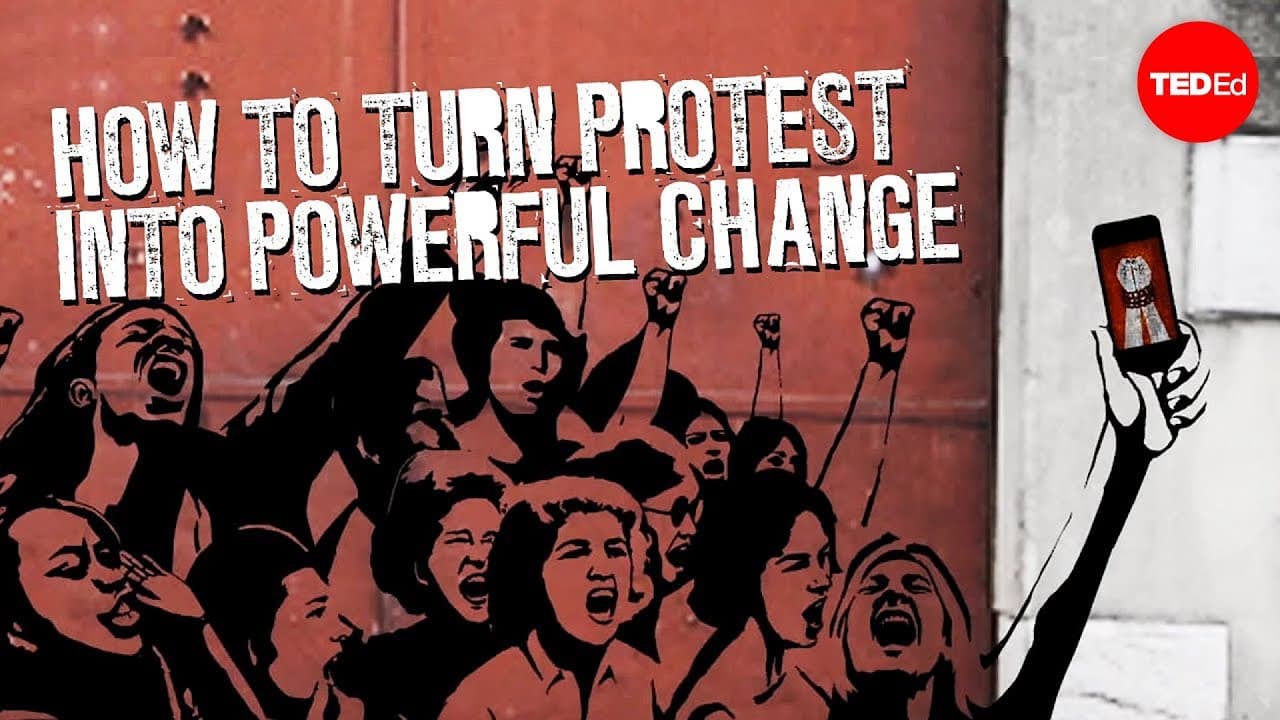
How to turn protest into powerful change - Eric Liu
352.8K views
•
July 14, 2016
by
TED-Ed
YouTube video player
How to turn protest into powerful change - Eric Liu

TL;DR

Protest alone is not enough; it must be followed by concerted action to achieve lasting change.

Transcript

We live in an age of protest. On campuses and public squares, on streets and social media, protesters around the world are challenging the status quo. Protest can thrust issues onto the national or global agenda, it can force out tyrants, it can activate people who have long been on the sidelines of civic life. While protest is often necessary, is ... Read More

Key Insights

  • 🍉 Protest alone is not enough to create long-term change; sustained political engagement is crucial.
  • 😉 Strategies for turning protest into durable political power include expanding possibilities, defining fights, and achieving early wins.
  • 🤩 Creating contrast in debates, pressing policymakers, and mobilizing voters are key components of post-protest efforts.

Install to Summarize YouTube Videos and Get Transcripts

Explore YouTube Video Summarizer or Get YouTube Transcript Extractor

Questions & Answers

Q: Why is protest often not sufficient to create lasting change?

Protest can generate awareness and topple dictators, but without follow-up efforts to mobilize voters and create inclusive government, the results may not be sustainable.

Q: What are the three core strategies for turning protest into political power?

The strategies include expanding the frame of what is possible, choosing defining fights to set terms of debate, and achieving early wins to build momentum and change perceptions.

Q: How did the activists pushing for a $15 minimum wage in the U.S. demonstrate the strategies outlined?

By setting an ambitious and contentious goal, they expanded the frame of the possible, created a contrast for debate, and achieved an early win that led to a larger discussion on economic justice.

Q: What historical movements exemplify the importance of sustained effort post-protest?

Movements like the U.S. Civil Rights Movement, Indian Independence, and Czech self-determination show that lasting change comes from continuous pressure on policymakers, changing narratives, and persuading individuals.

Summary & Key Takeaways

  • Protest can bring attention to issues and remove tyrants but must be followed by political engagement.

  • Strategies for turning protest into durable political power include expanding possibilities, choosing defining fights, and achieving early wins.

  • The key is sustained effort post-protest to mobilize voters, change narratives, and create lasting change.


Read in Other Languages (beta)

English

Share This Summary 📚

Summarize YouTube Videos and Get Video Transcripts with 1-Click

Download browser extensions on:

Try YouTube Summary with ChatGPT & Claude or YouTube Transcript Generator

Explore More Summaries from TED-Ed 📚
Why do we have hair in such random places? - Nina G. Jablonski thumbnail
Why do we have hair in such random places? - Nina G. Jablonski
TED-Ed
How to build a fictional world - Kate Messner thumbnail
How to build a fictional world - Kate Messner
TED-Ed
The myth of Sisyphus - Alex Gendler thumbnail
The myth of Sisyphus - Alex Gendler
TED-Ed
The science of attraction - Dawn Maslar thumbnail
The science of attraction - Dawn Maslar
TED-Ed
The wacky history of cell theory - Lauren Royal-Woods thumbnail
The wacky history of cell theory - Lauren Royal-Woods
TED-Ed
Can you solve the unstoppable blob riddle? - Dan Finkel thumbnail
Can you solve the unstoppable blob riddle? - Dan Finkel
TED-Ed

Summarize YouTube Videos and Get Video Transcripts with 1-Click

Download browser extensions on:

Try YouTube Summary with ChatGPT & Claude or YouTube Transcript Generator

Apps & Extensions

  • Chrome Extension
  • Safari Extension
  • Edge Add-ons
  • Firefox Add-ons
  • iOS App
  • Android App

Key Features

  • YouTube Video Summarizer
  • Web & PDF Summarizer
  • Web & PDF Highlighter
  • Chat with PDF
  • Ask AI Clone
  • Audio Transcriber
  • Glasp Reader
  • Kindle Highlight Export
  • Idea Hatch

Integrations

  • Obsidian Plugin
  • Notion Integration
  • Pocket Integration
  • Instapaper Integration
  • Medium Integration
  • Readwise Integration
  • Snipd Integration
  • Hypothesis Integration

More Features

  • APIs
  • MCP Connector
  • Blog & Post
  • Embed Links
  • Image Highlight
  • Personality Test
  • Quote Shots

Company

  • About us
  • Blog
  • Community
  • FAQs
  • Job Board
  • Newsletter
  • Pricing
Terms

•

Privacy

•

Guidelines

© 2026 Glasp Inc. All rights reserved.