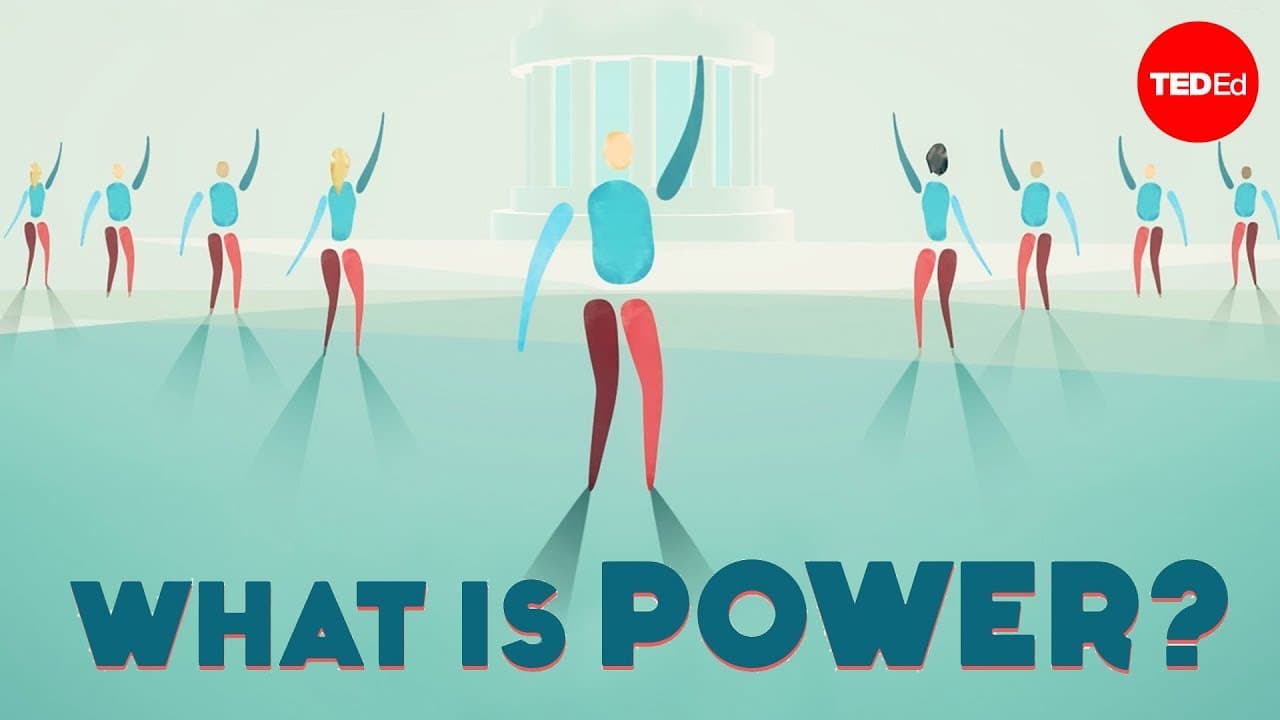
How to understand power - Eric Liu
TL;DR
Civic power is sourced from force, wealth, government, norms, ideas, and numbers and is dynamic, fluid, and compoundable in affecting public life.
Transcript
Every day of your life, you move through systems of power that other people made. Do you sense them? Do you understand power? Do you realize why it matters? Power is something we are often uncomfortable talking about. That's especially true in civic life, how we live together in community. In a democracy, power is supposed to reside with the people... Read More
Key Insights
- ✊ Civic power sources include force, wealth, government, norms, ideas, and numbers, shaping public life.
- ✊ Understanding the laws of power - accumulation, flow, and compounding - is essential for influencing civic dynamics.
- ✊ Power literacy is key in navigating civic life, requiring individuals to analyze power structures and develop effective strategies.
- ✊ The relationship between power and character is crucial, determining whether power is used for the common good or self-interest.
Install to Summarize YouTube Videos and Get Transcripts
Explore YouTube Video Summarizer or Get YouTube Transcript Extractor
Questions & Answers
Q: What are the six main sources of civic power?
The six main sources of civic power are physical force, wealth, government, social norms, ideas, and numbers. Each plays a distinct role in influencing public life dynamics and shaping societal structures.
Q: Why is it essential to understand the three laws of power?
Understanding the laws of power - accumulation, flow, and compounding - is crucial in navigating civic life dynamics. It helps individuals comprehend power dynamics, influence policy, and prevent power imbalances.
Q: How can individuals become more powerful in public life?
To become more powerful in public life, individuals need to enhance their power literacy. This involves analyzing power structures, developing effective strategies, and actively participating in civic processes to create meaningful change.
Q: Why is the relationship between power and character important in civic engagement?
The relationship between power and character is vital in civic engagement as it determines whether power is used for pro-social or anti-social purposes. A great citizen combines power with ethical character to benefit the community.
Summary & Key Takeaways
-
Civic power, derived from force, wealth, government, norms, ideas, and numbers, influences public life dynamics.
-
Power is fluid, continually changing, and can compound, affecting policy and societal structures.
-
To become powerful in civic life, one must understand power sources, laws, literacy, and character.
Read in Other Languages (beta)
Share This Summary 📚
Summarize YouTube Videos and Get Video Transcripts with 1-Click
Try YouTube Summary with ChatGPT & Claude or YouTube Transcript Generator
Explore More Summaries from TED-Ed 📚





Summarize YouTube Videos and Get Video Transcripts with 1-Click
Try YouTube Summary with ChatGPT & Claude or YouTube Transcript Generator