Population Limiting Factors | Biology
TL;DR
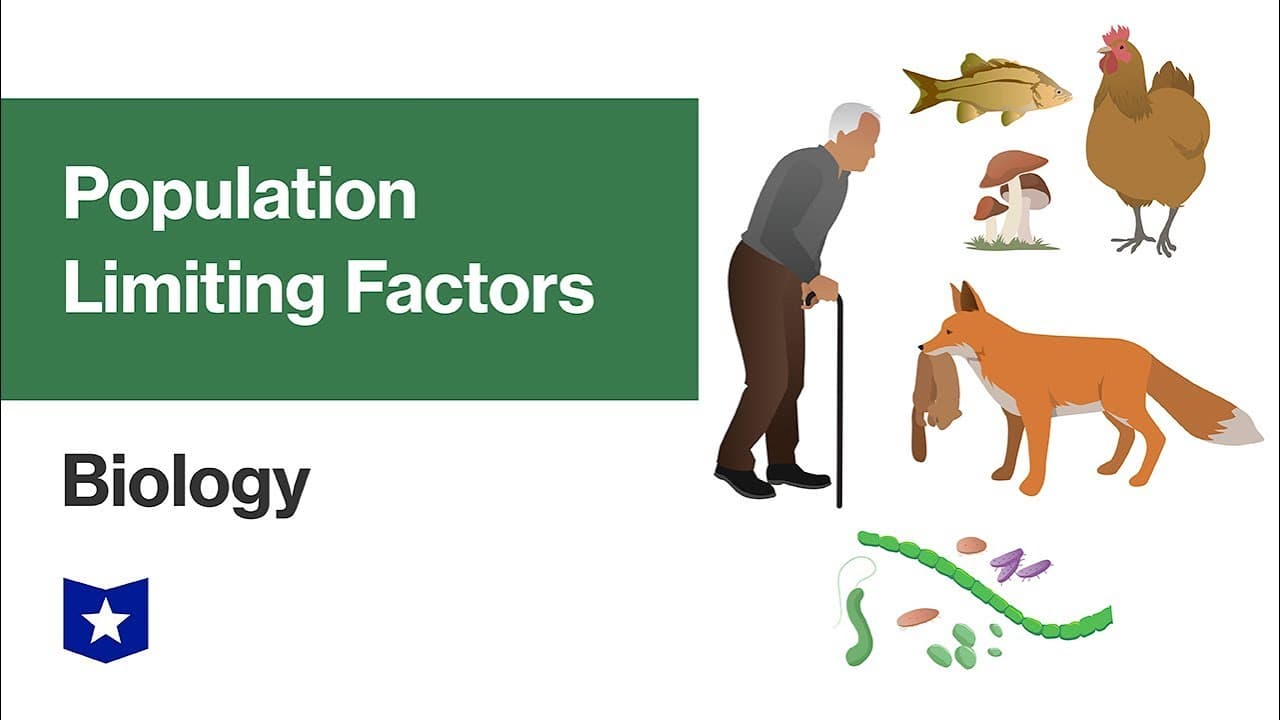
Limiting factors in ecosystems regulate population growth, including density-dependent and independent factors.
Transcript
a habitats carrying capacity or the maximum number of individuals in a population that can be supported is determined by limiting factors environmental factors that restrict the growth of populations there are several types of limiting factors density dependent factors are limitations to population growth that vary with population density such as a... Read More
Key Insights
- 🧑🏭 Habitat carrying capacity is determined by density-dependent and density-independent limiting factors.
- 🥺 The removal or introduction of predators can cause imbalances in ecosystems, leading to overpopulation or decline of certain species.
- 💦 Abiotic factors like water and climate shape ecosystems, influencing the distribution of organisms.
- 🖐️ Biotic factors such as predation and competition play crucial roles in regulating population dynamics.
- ❓ Pathogens can also impact populations by spreading diseases, especially in dense populations.
- 🥺 Competition for limited resources can lead to changes in population sizes or shifts within a population.
- 🧑🏭 Understanding and managing limiting factors is essential for maintaining healthy and balanced ecosystems.
Install to Summarize YouTube Videos and Get Transcripts
Explore YouTube Video Summarizer or Get YouTube Transcript Extractor
Questions & Answers
Q: What are density-dependent limiting factors, and how do they affect population growth?
Density-dependent factors, like competition for resources and predation, impact populations based on density, leading to changes in population size and distribution.
Q: How did the reintroduction of wolves in Yellowstone affect the ecosystem?
The reintroduction of wolves helped restore balance by controlling deer and elk populations, reducing competition for food, and allowing other species to thrive.
Q: What role do abiotic factors play in shaping ecosystems?
Abiotic factors such as water availability and climate influence the distribution of plants and animals, leading to adaptations that ensure survival in specific environments.
Q: How does predation impact population dynamics within an ecosystem?
Predation can regulate population sizes by controlling prey populations, balancing the ecosystem, and preventing overgrazing or overpopulation of certain species.
Summary & Key Takeaways
-
Habitat carrying capacity is determined by limiting factors like density-dependent (e.g., food availability) and density-independent factors (e.g., weather extremes).
-
The removal of wolves in Yellowstone led to the overpopulation of deer and elk, disrupting the ecosystem.
-
Abiotic factors (nonliving, e.g., water and climate) and biotic factors (living, e.g., predation and competition) influence ecosystems.
Read in Other Languages (beta)
Share This Summary 📚
Summarize YouTube Videos and Get Video Transcripts with 1-Click
Try YouTube Summary with ChatGPT & Claude or YouTube Transcript Generator
Explore More Summaries from Course Hero 📚


Summarize YouTube Videos and Get Video Transcripts with 1-Click
Try YouTube Summary with ChatGPT & Claude or YouTube Transcript Generator