How to Train Your Dog to Ring a Bell
TL;DR
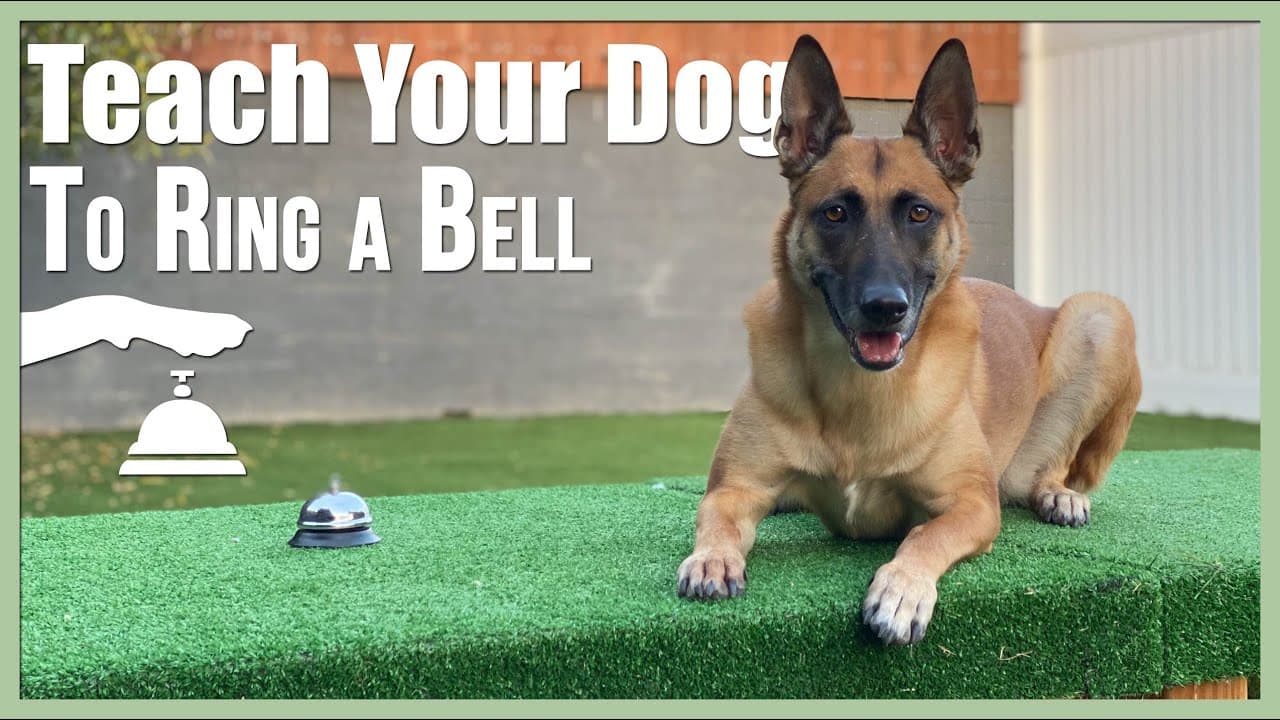
Teach your dog to ring a bell by using food as a lure and rewarding the desired behavior. Start by placing food under a bell and rewarding the dog when it rings the bell to reach the food. Gradually, associate the action with a command and use it to signal going outside.
Transcript
hey everyone welcome back to another episode today we are going to be teaching our dogs how to ring a bell now if you've been following my dog training videos you probably have a good understanding of how i teach new behaviors first we always want to make sure our dogs know the markers remember the marker is a word or sound that predicts a reward t... Read More
Key Insights
- Markers are crucial in dog training to predict rewards and pinpoint correct behavior.
- Physical cues should precede verbal commands when teaching new behaviors.
- Placing food under the bell encourages dogs to ring it to access the food.
- Repetition helps dogs associate ringing the bell with going outside.
- Dogs learn at different paces; patience is key for successful training.
- Consistent use of a command word helps solidify the association with the action.
- Rewarding effort, even if imperfect, encourages perseverance in dogs.
- High motivation and perseverance in dogs can accelerate the learning process.
Install to Summarize YouTube Videos and Get Transcripts
Explore YouTube Video Summarizer or Get YouTube Transcript Extractor
Questions & Answers
Q: How to teach a dog to ring a bell?
Start by placing food under the bell to encourage the dog to ring it. Reward the dog each time it rings the bell to access the food. Gradually introduce a verbal command to associate with the action. Consistent practice will help the dog understand that ringing the bell signals going outside.
Q: What is the role of markers in dog training?
Markers are words or sounds used to predict a reward, helping to pinpoint the exact moment a dog performs the correct behavior. They are crucial in training as they provide immediate feedback, making it easier for the dog to understand what is expected and reinforcing the desired behavior.
Q: Why use physical cues before verbal commands in training?
Physical cues help establish the desired behavior by providing a clear, immediate signal that the dog can follow. Once the dog reliably performs the behavior with the physical cue, a verbal command can be introduced, allowing the dog to associate the word with the action, leading to more precise training.
Q: How do dogs learn to associate ringing a bell with going outside?
Dogs learn this association through repetition. By consistently instructing the dog to ring the bell before going outside, the dog begins to understand that the action of ringing the bell leads to being let out. Over time, this repeated sequence helps the dog make the connection between the bell and going outside.
Q: What should you do if a dog doesn't learn as quickly as expected?
If a dog is taking longer to learn, remain patient and consistent. Continue practicing the behavior with the same cues and rewards, adjusting the training pace to suit the dog's learning style. Celebrate small successes and maintain a positive training environment to encourage perseverance and motivation.
Q: How important is motivation in dog training?
Motivation plays a crucial role in dog training as it drives the dog's willingness to learn and perform new behaviors. High motivation, often fueled by rewards and positive reinforcement, can accelerate the learning process, making it easier for the dog to understand and retain new skills.
Q: What are some effective ways to reward a dog during training?
Effective rewards include treats, praise, and playtime, which reinforce the desired behavior. The reward should be given immediately after the correct behavior to strengthen the association. Varying the types of rewards can keep the dog engaged and motivated throughout the training process.
Q: How can you ensure a dog understands the correct behavior in training?
To ensure a dog understands the correct behavior, use clear markers and consistent rewards. Break the behavior into manageable steps, providing guidance and support at each stage. Observing the dog's responses and adjusting the training approach as needed helps reinforce the correct behavior effectively.
Summary & Key Takeaways
-
To teach a dog to ring a bell, start by placing food under the bell and rewarding the dog when it rings the bell to access the food. This method uses a physical cue to establish the behavior before introducing a verbal command. Consistent repetition will help the dog associate the action with going outside.
-
The training process involves using markers to predict rewards, ensuring the dog understands the correct behavior. Initially, the focus is on getting the dog to ring the bell using a physical cue, with the verbal command introduced later. Patience and consistency are crucial, as each dog learns at its own pace.
-
Reinforcing effort, even when the bell doesn't ring perfectly, encourages dogs to keep trying. Associating the ringing of the bell with going outside helps solidify the behavior. Dogs with higher motivation and perseverance tend to learn faster, but all dogs can master this skill with enough practice.
Read in Other Languages (beta)
Share This Summary 📚
Summarize YouTube Videos and Get Video Transcripts with 1-Click
Try YouTube Summary with ChatGPT & Claude or YouTube Transcript Generator
Explore More Summaries from Nate Schoemer 📚





Summarize YouTube Videos and Get Video Transcripts with 1-Click
Try YouTube Summary with ChatGPT & Claude or YouTube Transcript Generator