Does Hydrogen in a Planet's Atmosphere Enable Life?
TL;DR
The presence of hydrogen in a planet's atmosphere can significantly expand its zone of habitability, enhancing the potential for liquid water and life. Volcanic activity on planets like TRAPPIST-1h may generate hydrogen, making conditions suitable for life. Recent fossil discoveries on Earth suggest that life may have formed much earlier than previously believed, hinting that microbial life could exist on other rocky planets as well.
Transcript
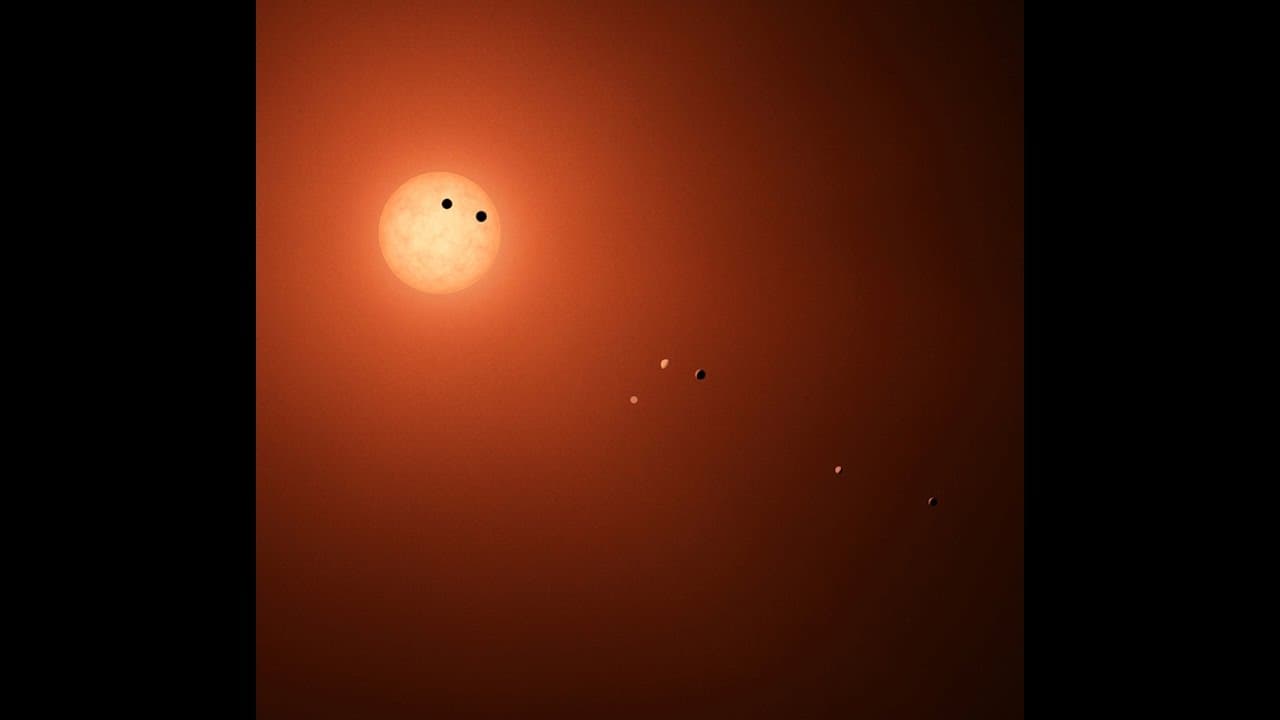
This is an update in my continuing coverage of Trappist -1, a star system that contains at least 7 earth-sized probably rocky planets. For the back story, see my other videos on the subject, links in the description below. A new paper by researchers led by Cornell University planetary scientist Dr. Ramses Ramirez and Lisa Kaltenegger could signific... Read More
Key Insights
- 💦 The presence of hydrogen in a planet's atmosphere can expand its zone of habitability, increasing the chances of liquid water and potentially life.
- 🪐 Volcanic activity plays a crucial role in maintaining hydrogen in a planet's atmosphere, making it possible for planets like Trappist-1h to have habitable conditions.
- 🤔 Recent discoveries of extremely old fossils on Earth indicate that life may have arisen earlier than previously thought and could be more diverse than expected.
- 🛟 If confirmed, these ancient fossils suggest that life on Earth arose during Mars's warm and wet period, raising the possibility of life on Mars as well.
- 🛟 The ability of life to arise quickly under harsh conditions implies that microbial life could be present on other habitable worlds, such as the planets of Trappist-1.
- 🤑 Studying hydrogen-rich atmospheres can help identify the presence of potential life on distant planets, making instruments like the James Webb Space Telescope crucial for future discoveries.
- 🛟 The organic chemistry that leads to life may be relatively straightforward, suggesting that the universe could be filled with microbial life.
Install to Summarize YouTube Videos and Get Transcripts
Explore YouTube Video Summarizer or Get YouTube Transcript Extractor
Questions & Answers
Q: How does the presence of hydrogen in a planet's atmosphere affect its zone of habitability?
Hydrogen acts as an indirect greenhouse gas, keeping greenhouse gases like methane around for longer periods, resulting in warmer temperatures and expanding the zone of habitability.
Q: Why is hydrogen difficult to hold onto in smaller, rocky planets?
Hydrogen is a light gas and tends to leak out into space instead of remaining in the atmospheres of smaller, rocky planets.
Q: How do volcanoes help maintain hydrogen in a planet's atmosphere?
Volcanic activity can produce hydrogen faster than it is lost, allowing planets like Trappist-1h to have a sufficient supply of hydrogen and favorable conditions for liquid water.
Q: What do the discoveries of older fossils on Earth suggest about the potential for microbial life on other planets?
If life arose on Earth under harsh conditions and within a few hundred million years of its formation, it suggests that microbial life could arise quickly on other habitable worlds as well.
Summary & Key Takeaways
-
Researchers have found that the presence of hydrogen in a planet's atmosphere can expand the zone of habitability, increasing the chances of liquid water and potentially life.
-
Volcanic activity on planets like Trappist-1h could produce hydrogen faster than it is lost, making conditions favorable for liquid water.
-
Recent discoveries of extremely old fossils on Earth suggest that life may have arisen earlier than previously thought, increasing the possibility of microbial life on other habitable worlds.
Read in Other Languages (beta)
Share This Summary 📚
Summarize YouTube Videos and Get Video Transcripts with 1-Click
Try YouTube Summary with ChatGPT & Claude or YouTube Transcript Generator
Explore More Summaries from John Michael Godier 📚


Summarize YouTube Videos and Get Video Transcripts with 1-Click
Try YouTube Summary with ChatGPT & Claude or YouTube Transcript Generator