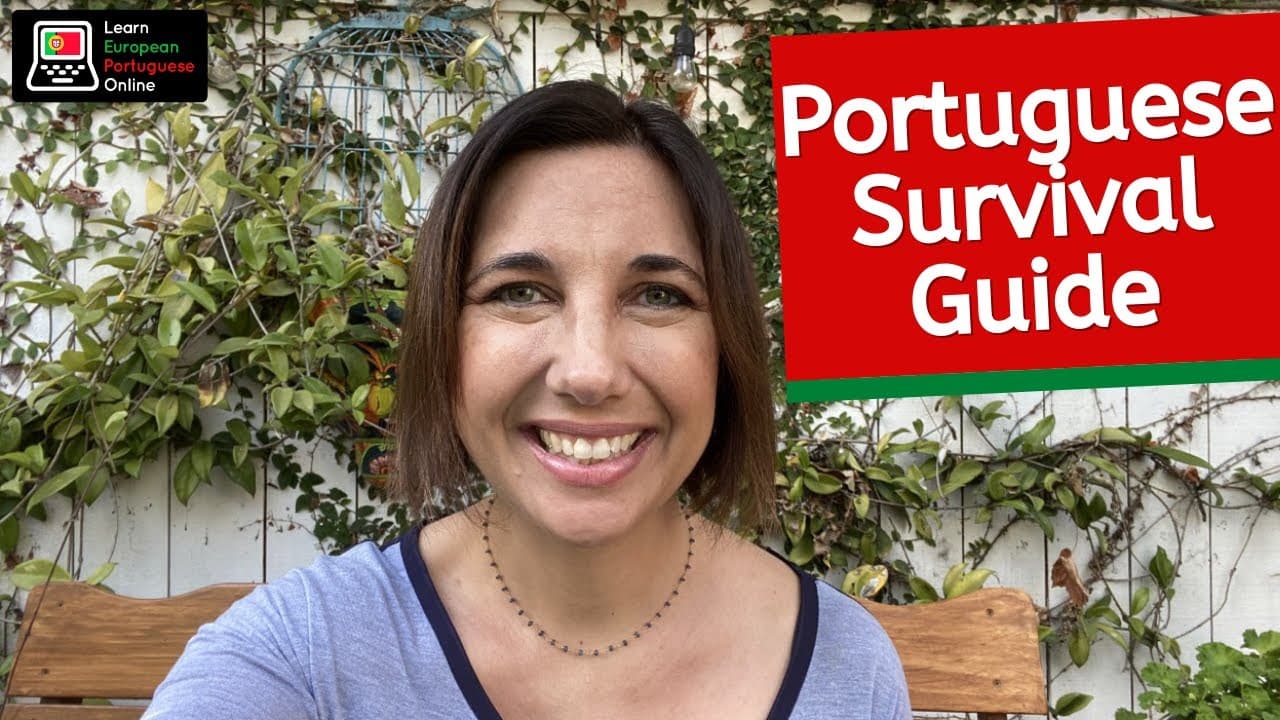
ESSENTIAL SURVIVOR GUIDE for EUROPEAN PORTUGUESE Learners in DAILY INTERACTIONS!
TL;DR
Learn key Portuguese phrases for daily interactions in Portugal.
Transcript
hi everyone hola says in this video i will be walking you through a list of situations in how to react in portuguese if you live in portugal or plan in moving or visiting these are essential to know they are usually small easy expressions that will totally make you feel like a local not only you will know how to react in these situations but also k... Read More
Key Insights
- The video provides essential Portuguese phrases for common interactions, helping learners feel more like locals in Portugal.
- Viewers learn polite expressions for answering the door, such as 'quem é' for 'who is it' and inviting guests in.
- The video covers expressions to use when someone sneezes, offering both religious and non-religious options.
- Portuguese phrases for apologizing after burping and asking for clarification when you don't understand something are explained.
- Emergency situations are addressed, teaching viewers to use 'cuidado' for 'careful' and the European emergency number 112.
- Different expressions for 'excuse me' are discussed, highlighting their context-specific usage in Portugal.
- The video includes phrases for wishing someone well, such as 'feliz aniversário' for birthdays and 'parabéns' for congratulations.
- Tips on how to agree or disagree with someone in Portuguese, as well as accepting or declining invitations, are provided.
Install to Summarize YouTube Videos and Get Transcripts
Explore YouTube Video Summarizer or Get YouTube Transcript Extractor
Questions & Answers
Q: What should you say if someone sneezes in Portugal?
In Portugal, when someone sneezes, you can say 'saúde' for 'health,' which is a common non-religious response. Alternatively, you can use 'santinho' for a male or 'santinha' for a female, which means 'little saint' and is more common in the north of Portugal.
Q: How do you respond if you don't understand something in Portuguese?
If you don't understand something in Portuguese, you can politely ask for clarification by saying 'desculpe' or 'como?' which means 'excuse me' or 'what?' respectively. You can also use 'diga' or 'diz' to ask someone to repeat what they said, using the verb 'dizer' for 'to say.'
Q: What is the European emergency number in Portugal?
The European emergency number in Portugal is 112. This number can be dialed from any landline, payphone, or cell phone to reach emergency services. It is crucial to memorize this number for safety and to be able to request assistance in emergencies while in Portugal.
Q: How do you say 'excuse me' in different contexts in Portuguese?
In Portuguese, 'excuse me' can be expressed as 'com licença' when asking for permission to pass through a crowd or enter a room. For asking someone to repeat something, 'como?' or 'diga' are used. When apologizing for something like burping, 'desculpe' or 'peço desculpa' are appropriate.
Q: How do you wish someone a happy birthday in Portuguese?
To wish someone a happy birthday in Portuguese, you can say 'feliz aniversário,' which translates directly to 'happy birthday.' Another common expression is 'parabéns,' which means 'congratulations' and can be used for birthdays or other celebratory occasions.
Q: What are some polite phrases to use when inviting someone in Portuguese?
When inviting someone in Portuguese, you can say 'entre, por favor' for 'come in, please' or 'fique à vontade' for 'make yourself comfortable.' These phrases help create a welcoming atmosphere and show politeness when hosting guests.
Q: How can you express agreement or disagreement in Portuguese?
To express agreement in Portuguese, you can say 'concordo' for 'I agree.' If you agree with a negative statement, use 'pois não.' For disagreement, 'não concordo' means 'I disagree.' These expressions help in clearly communicating your stance during conversations.
Q: What phrases can you use to accept or decline an invitation in Portuguese?
To accept an invitation in Portuguese, you can say 'claro' for 'sure' or 'combinado' for 'agreed.' If you need to decline, you can use 'não posso' for 'I can't' or 'fica para a próxima' for 'maybe next time.' These phrases help in managing social interactions politely.
Summary & Key Takeaways
-
This video is a survival guide for learning essential Portuguese phrases used in daily interactions. It covers how to answer the door, respond to sneezes, and use polite expressions in various situations, helping learners integrate into Portuguese culture.
-
Viewers are taught how to express apologies and ask for clarifications in Portuguese, which are crucial for effective communication. The video also introduces phrases for emergency situations and the European emergency number, enhancing safety awareness.
-
The video emphasizes the importance of context in using Portuguese phrases, such as different ways to say 'excuse me' and how to respond to invitations. It also covers expressions for well-wishing, contributing to a comprehensive understanding of polite interactions.
Read in Other Languages (beta)
Share This Summary 📚
Summarize YouTube Videos and Get Video Transcripts with 1-Click
Try YouTube Summary with ChatGPT & Claude or YouTube Transcript Generator
Explore More Summaries from Learn European Portuguese Online 📚



Summarize YouTube Videos and Get Video Transcripts with 1-Click
Try YouTube Summary with ChatGPT & Claude or YouTube Transcript Generator