How Can Jokes Show Your Fluency in English?
TL;DR
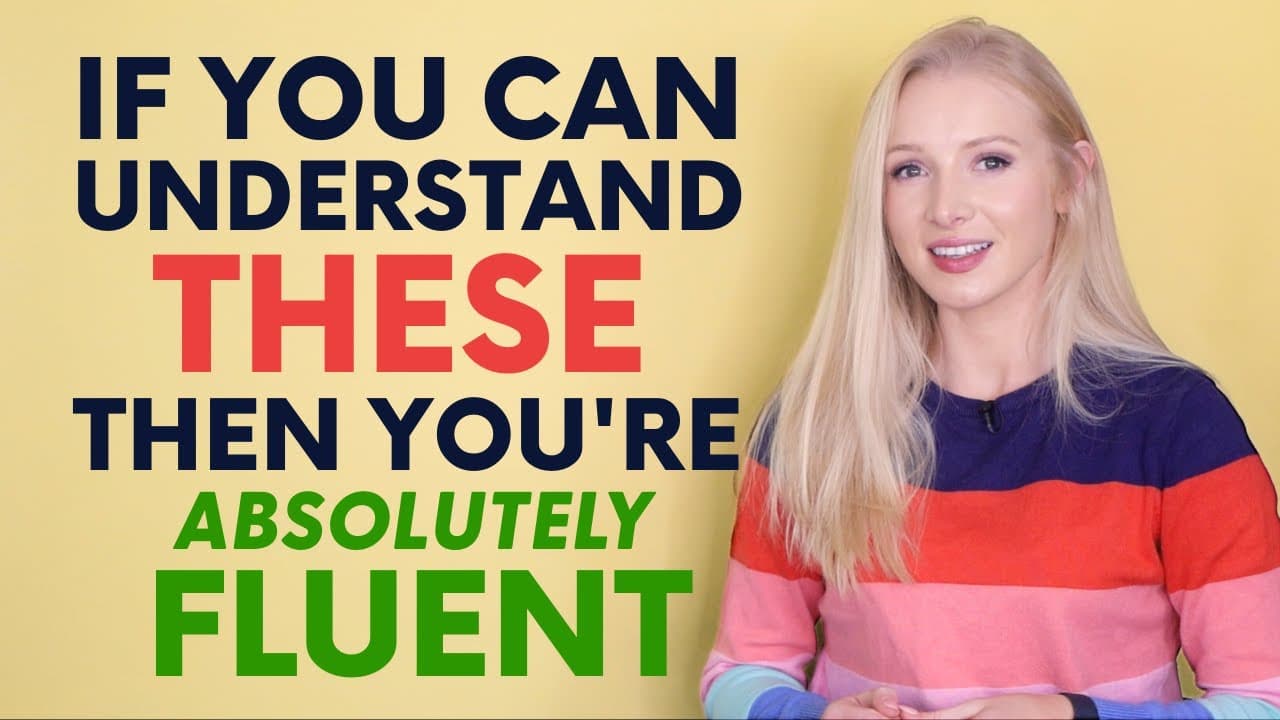
Understanding jokes, puns, and wordplay is essential for advanced fluency in English. These elements highlight the flexibility of language and are key to grasping cultural nuances. Familiarity with homophones, homographs, and homonyms enables deeper comprehension and connection in conversations.
Transcript
- Hello, lovely students and welcome back to English with Lucy. I've got a really fun lesson for you today because we're going to delve or dive into the world of jokes. This is a really important part of British culture. It's how we connect and follow social cues. We're going to talk about play on words, puns, all that good stuff. Now, I know that ... Read More
Key Insights
- 🃏 Jokes and wordplay are an important part of British culture and language fluency.
- 🔑 Puns rely on the multiple meanings of words and similar-sounding words.
- 🙊 Homophones, homographs, and homonyms can cause confusion in spoken and written language.
- 🔑 Understanding the flexibility of words and sentences enhances comprehension skills.
- 🎚️ Familiarizing oneself with multiple meanings of words is beneficial at any language level.
- 🃏 Jokes and wordplay help connect and follow social cues in conversations.
- ❓ Homonyms combine characteristics of homophones and homographs.
Install to Summarize YouTube Videos and Get Transcripts
Explore YouTube Video Summarizer or Get YouTube Transcript Extractor
Questions & Answers
Q: Why are jokes and wordplay important for language fluency?
Jokes and wordplay help with understanding multiple meanings of words and nuance, which is crucial for advanced language fluency. They also aid in familiarizing oneself with the flexibility of words and sentences.
Q: What are homophones?
Homophones are words that have the same pronunciation but different meanings, origins, or spellings. Context is important in understanding their intended meaning. For example, pair (two) and pear (fruit) are homophones.
Q: How do homographs differ from homophones?
Homographs have the same spelling but different meanings and may have different pronunciations. Examples include bow (to bend) and bow (decorative knot), and lead (metal) and lead (to guide).
Q: What are homonyms?
Homonyms are words that have the same spelling and pronunciation but different meanings. They can cause confusion in both spoken and written language. Examples include bark (tree covering) and bark (dog sound), and bank (financial institution) and bank (river side).
Key Insights:
- Jokes and wordplay are an important part of British culture and language fluency.
- Puns rely on the multiple meanings of words and similar-sounding words.
- Homophones, homographs, and homonyms can cause confusion in spoken and written language.
- Understanding the flexibility of words and sentences enhances comprehension skills.
- Familiarizing oneself with multiple meanings of words is beneficial at any language level.
- Jokes and wordplay help connect and follow social cues in conversations.
- Homonyms combine characteristics of homophones and homographs.
- Jokes and wordplay require understanding of context for humor to be effective.
Summary & Key Takeaways
-
Jokes and wordplay are important aspects of British culture and language fluency.
-
Puns use multiple meanings of words or similar sounding words for a humorous effect.
-
Homophones, homographs, and homonyms can cause confusion in spoken and written language.
Read in Other Languages (beta)
Share This Summary 📚
Summarize YouTube Videos and Get Video Transcripts with 1-Click
Try YouTube Summary with ChatGPT & Claude or YouTube Transcript Generator
Explore More Summaries from English with Lucy 📚





Summarize YouTube Videos and Get Video Transcripts with 1-Click
Try YouTube Summary with ChatGPT & Claude or YouTube Transcript Generator