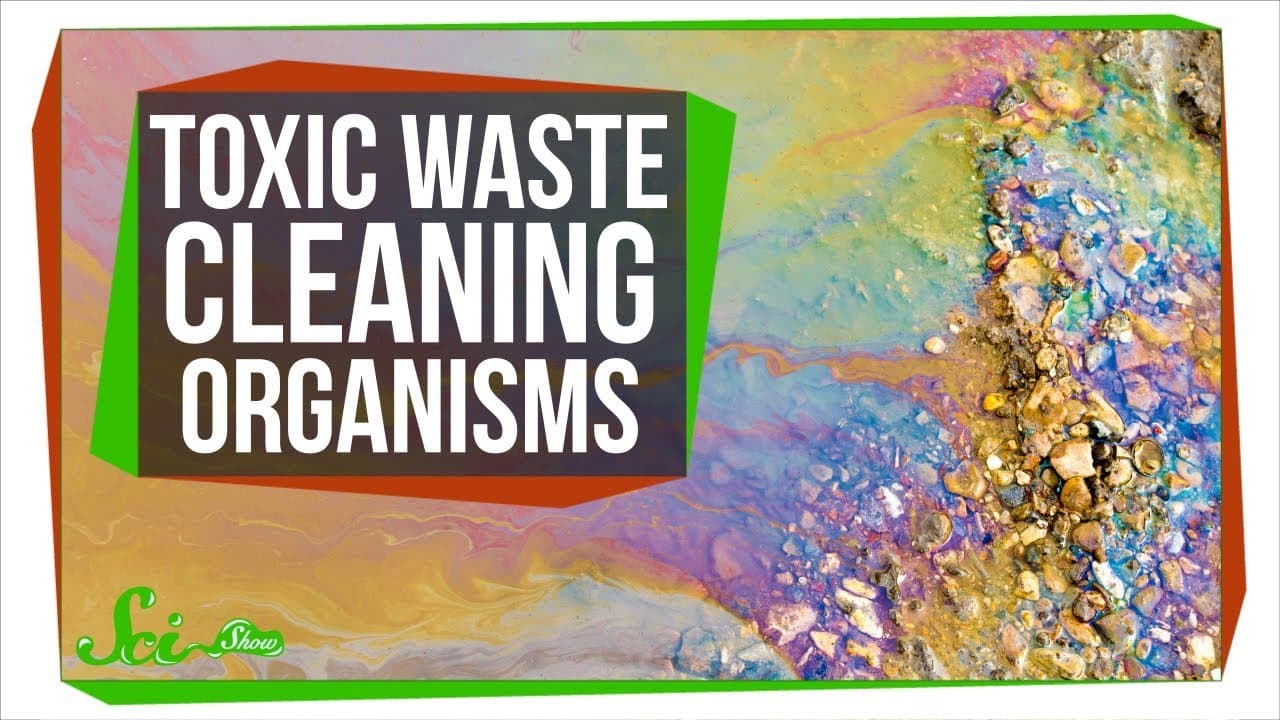
7 Organisms That Can Clean Toxic Waste
TL;DR
Some organisms have the ability to bioremediate pollutants, such as fungi that break down hydrocarbons in oil-contaminated soil, sunflowers that absorb radioactive isotopes, bivalves that filter out chemicals in water, moss that absorbs lead, plants that hyperaccumulate heavy metals, and caterpillars that eat plastic.
Transcript
[♪ INTRO] Humans have done a lot to pollute the world we live in, contaminating soils and water with everything from oil to radioactive waste. Luckily, some parts of nature have evolved to survive this pollution, and might even be able to help us clean up these contaminants. Using living organisms to get rid of toxic waste is called bioremediation... Read More
Key Insights
- 🖐️ Fungi are efficient bioremediators and mycelia play a crucial role in breaking down organic and inorganic materials.
- 🌻 Sunflowers are effective at absorbing radioactive isotopes, making them valuable for cleaning up nuclear contamination.
- 💦 Bivalves contribute to water purification by filtering out chemicals, sediment, and bacteria.
- 🥺 Moss shows promise in lead decontamination due to its ability to absorb and bind lead atoms.
- ❣️ Alpine pennycress is a hyperaccumulator plant species that concentrates heavy metals in its leaves.
- 🌱 Genetic engineering has been used to enhance the bioremediation capabilities of plants such as tobacco.
- 🦣 Wax moth caterpillars have the ability to break down plastic, offering a potential solution for plastic waste.
Install to Summarize YouTube Videos and Get Transcripts
Explore YouTube Video Summarizer or Get YouTube Transcript Extractor
Questions & Answers
Q: How do fungi contribute to bioremediation?
Fungi, particularly mycelia, break down various types of material, including organic and inorganic contaminants, using enzymes and metabolites. This process, known as mycoremediation, can help clean up oil-contaminated soil and other pollutants.
Q: How do sunflowers help with the cleanup of radioactive contamination?
Sunflowers have the ability to absorb and accumulate radioactive isotopes, such as cesium-137 and strontium-90, in their shoots and stems. This makes them effective for removing radioactive contaminants from soil and water.
Q: What role do bivalves play in water purification?
Bivalves, such as clams and mussels, filter out chemicals, sediment, and bacteria from water as they feed on tiny organisms like plankton. This process helps restore ecosystems and improve water quality.
Q: How does moss help with lead decontamination?
Moss, specifically bonfire moss, has the ability to absorb lead from contaminated sites. The exact mechanism is still under investigation, but the compound polygalacturonic acid found in the moss's cell walls is thought to be involved.
Summary & Key Takeaways
-
Fungi, specifically mycelia, can break down organic and inorganic material, including toxic contaminants like oil, using enzymes and metabolites.
-
Sunflowers have the ability to absorb and accumulate radioactive isotopes, making them useful for cleaning up nuclear contamination in soil and water.
-
Bivalves, such as clams and mussels, can filter out chemicals and bacteria from water, contributing to ecosystem restoration and water purification.
-
Moss has shown the potential to absorb lead from contaminated sites, with further research needed to understand the mechanism involved.
-
Alpine pennycress is a hyperaccumulator plant species that can concentrate heavy metals, including cadmium and zinc, in its leaves.
-
Certain plants, like tobacco, have been genetically engineered to break down explosives such as PETN and TNT.
-
Wax moth caterpillars have demonstrated the ability to consume and break down plastic, offering a potential solution for plastic waste.
Read in Other Languages (beta)
Share This Summary 📚
Summarize YouTube Videos and Get Video Transcripts with 1-Click
Try YouTube Summary with ChatGPT & Claude or YouTube Transcript Generator
Explore More Summaries from SciShow 📚


Summarize YouTube Videos and Get Video Transcripts with 1-Click
Try YouTube Summary with ChatGPT & Claude or YouTube Transcript Generator