Has The Gulf's Mega Finance Experiment Now Failed?
TL;DR
Gulf's oil wealth is unsustainable; diversification needed for future.
Transcript
In the last four decades, the Persian Gulf has evolved from a region of mostly small fishing villages and nomadic groups to the global centre of petrodollar fuelled excess. Cities like Dubai, Abu Dhabi, Doha and Riyadh have sprung up seemingly out of nowhere with the promise that they have something of real value to add to the global economy beyond... Read More
Key Insights
- The Persian Gulf has transformed from small fishing villages to global business hubs fueled by oil wealth, but this model is unsustainable as oil reserves dwindle.
- Mega projects like Saudi Arabia's NEOM and Dubai's ambitious developments face challenges due to their reliance on oil money and are not sustainable long-term solutions.
- The Gulf states' economic diversification efforts face hurdles as they try to emulate advanced economies without having the foundational advantages those economies possess.
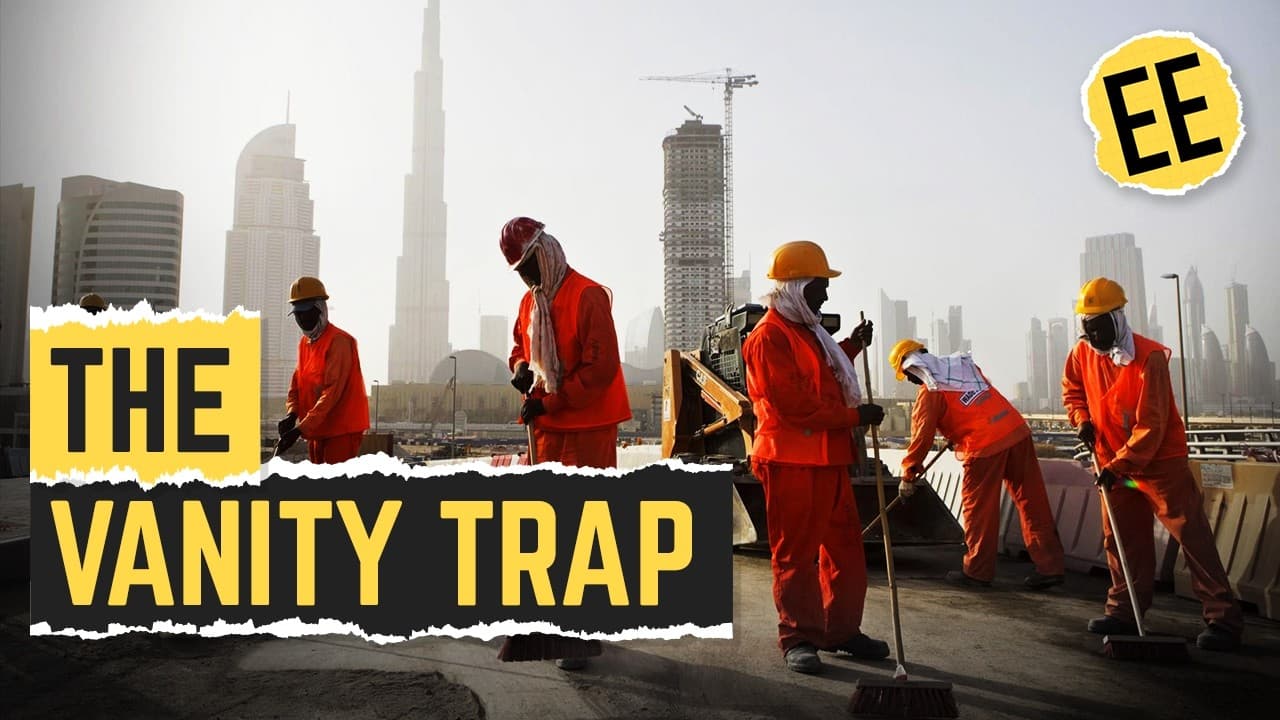
- The kafala system in the Gulf countries raises significant human rights concerns, with migrant workers facing poor working conditions and lack of rights, impacting the region's reputation.
- Countries like Qatar and Bahrain are attempting to diversify through initiatives like Qatar National Vision 2030 and Bahrain's focus on banking and tourism, but face challenges in implementation.
- The UAE is investing in technology and education to prepare for a post-oil economy, but lacks competitive advantages over established global centers like Silicon Valley.
- Saudi Arabia's investment in companies like Lucid Motors highlights the challenges of creating a viable automotive industry in the Gulf, as these ventures are struggling financially.
- The Gulf states could ensure future prosperity by creating transparent sovereign wealth funds to invest internationally, but face ideological barriers and pride in maintaining their current economic model.
Install to Summarize YouTube Videos and Get Transcripts
Explore YouTube Video Summarizer or Get YouTube Transcript Extractor
Questions & Answers
Q: What has fueled the transformation of the Persian Gulf region?
The transformation of the Persian Gulf region from small fishing villages to global business hubs has been fueled by oil wealth. The discovery and exportation of oil allowed these countries to import everything they needed, leading to rapid economic development and population growth. However, this model is unsustainable as oil reserves are finite.
Q: What are some challenges faced by the Gulf's mega projects?
The Gulf's mega projects, such as Saudi Arabia's NEOM and Dubai's ambitious developments, face challenges due to their reliance on oil money. These projects are not sustainable long-term solutions, as they depend heavily on continuous oil revenue, which is not guaranteed as reserves dwindle. Additionally, these projects often face criticism for being overly ambitious and lacking in practical implementation.
Q: How are the Gulf countries attempting to diversify their economies?
Gulf countries are attempting to diversify their economies by investing in sectors like technology, education, and tourism. Qatar has launched the Qatar National Vision 2030, aiming to transform into an advanced country. Bahrain has focused on banking and tourism, while the UAE is investing in technology and education. However, these efforts face challenges in implementation and lack competitive advantages over established global centers.
Q: What are the human rights concerns associated with the kafala system?
The kafala system in the Gulf countries raises significant human rights concerns, as it gives employers almost total control over migrant workers' employment and immigration status. This system often results in low wages, poor working conditions, and employee abuse. Despite being well-documented, these issues persist, impacting the region's reputation and contributing to social disparities.
Q: What is the significance of Qatar National Vision 2030?
Qatar National Vision 2030 is an initiative aimed at transforming Qatar into an advanced country capable of sustaining its own development and providing a high standard of living for its people. The plan includes developing smart cities like Lusail and focusing on environmental sustainability. However, challenges such as reliance on non-renewable resources and labor rights issues pose significant hurdles to achieving these goals.
Q: How is Bahrain diversifying its economy?
Bahrain is diversifying its economy by investing in banking, tourism, and industrial sectors like aluminum production. The country has signed a free trade agreement with the United States to expand its export base. By 2023, oil's contribution to Bahrain's GDP had declined significantly, indicating progress in economic diversification. However, challenges remain in fully transitioning to a post-oil economy.
Q: What challenges does the UAE face in its diversification efforts?
The UAE faces challenges in its diversification efforts despite investing in technology, education, and renewable energy. The country lacks competitive advantages over established global centers like Silicon Valley. Initiatives to teach coding and support startups are positive, but the UAE must find unique value propositions to attract global businesses and sustain its economy post-oil.
Q: What role do sovereign wealth funds play in the Gulf's future prosperity?
Sovereign wealth funds could play a crucial role in the Gulf's future prosperity by investing internationally for the benefit of their people. These funds can provide financial security and high living standards post-oil. However, current funds are often opaque and used as personal assets by ruling families. Transparent and sustainable investment strategies are needed for long-term success.
Summary & Key Takeaways
-
The Persian Gulf's rapid transformation from small fishing villages to global business hubs has been fueled by oil wealth, but this model is unsustainable as oil reserves dwindle. The region's ambitious mega projects face challenges due to their heavy reliance on oil money, raising questions about long-term viability.
-
Efforts to diversify the Gulf economies are underway, with countries like Qatar and Bahrain leading initiatives like Qatar National Vision 2030 and investments in banking and tourism. However, these countries face significant challenges in implementation and lack competitive advantages over established global centers.
-
The Gulf states' future prosperity could be ensured by creating transparent sovereign wealth funds to invest internationally, but they face ideological barriers and pride in maintaining their current economic model. The region must embrace pragmatic solutions to survive the post-oil era.
Read in Other Languages (beta)
Share This Summary 📚
Summarize YouTube Videos and Get Video Transcripts with 1-Click
Try YouTube Summary with ChatGPT & Claude or YouTube Transcript Generator
Explore More Summaries from Economics Explained 📚

Summarize YouTube Videos and Get Video Transcripts with 1-Click
Try YouTube Summary with ChatGPT & Claude or YouTube Transcript Generator