Malaria | Essentials of Global Health with Richard Skolnik
TL;DR
Malaria is a parasitic disease transmitted by mosquitoes, causing significant health and economic consequences, especially in sub-Saharan Africa. Efforts to address the disease include prompt treatment, preventive measures like bed nets, and the development of vaccines.
Transcript
welcome today we're going to speak about malaria by the time you finish this session you should be able to speak comfortably about the burden of disease related to malaria who is most affected by it the risk factors for malaria the health and economic consequences of malaria and what can be addressed done to address this disease let's start by talk... Read More
Key Insights
- 🦟 Malaria is a parasitic disease transmitted by mosquitoes and is most prevalent in sub-Saharan Africa.
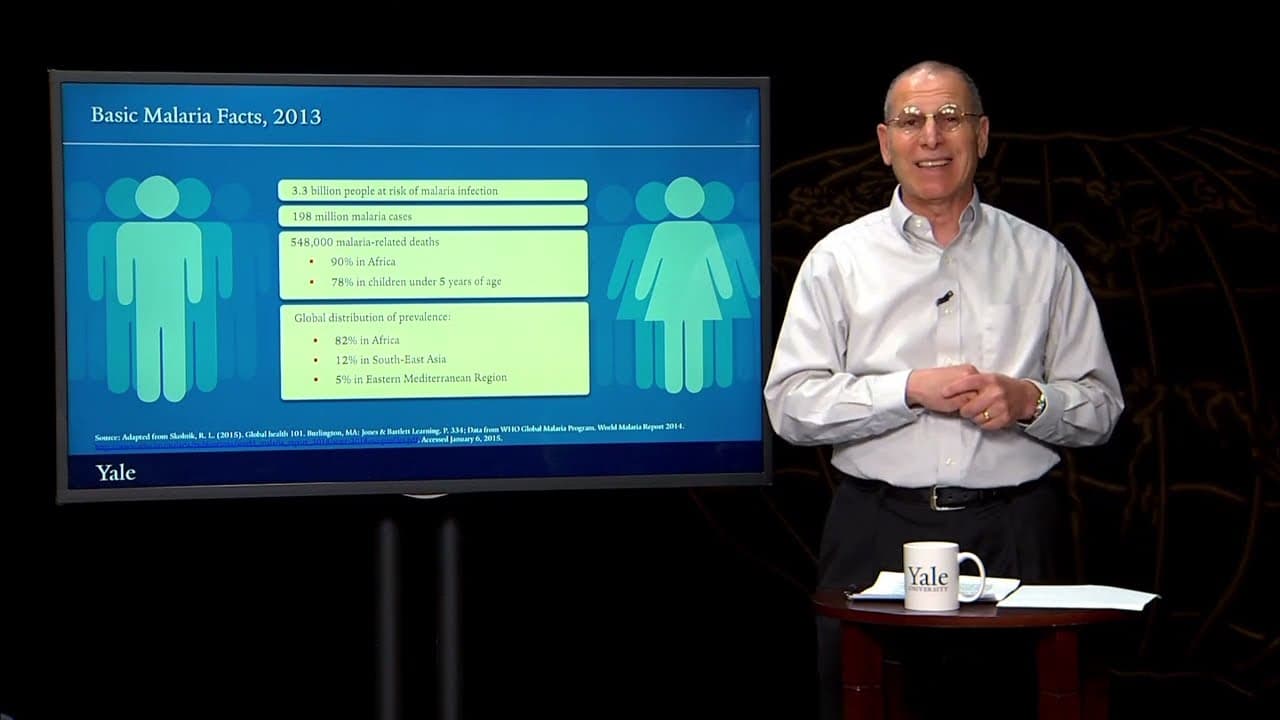
- 💼 The burden of malaria is significant, with almost 200 million cases and 550,000 deaths in 2013.
- 👶 Malaria primarily affects children under five, with 90% of deaths occurring in sub-Saharan Africa.
- 🧑⚕️ Malaria has substantial health and economic consequences, leading to loss of work days, hospital visits, and significant costs.
- 🤩 Key interventions include prompt treatment, preventive measures like bed nets, and efforts to develop vaccines.
- 🪡 There is a need to address drug resistance and continue developing effective anti-malarial drugs.
- 🖐️ The private sector plays a crucial role in malaria treatment, and collaboration is needed to ensure standardized and appropriate treatment.
Install to Summarize YouTube Videos and Get Transcripts
Explore YouTube Video Summarizer or Get YouTube Transcript Extractor
Questions & Answers
Q: How is malaria transmitted?
Malaria is transmitted through the bite of a female anopheles mosquito that carries the parasite. The mosquito becomes infected by biting someone with malaria and then passes it on to the next person it bites.
Q: Which population is most affected by malaria?
Malaria affects primarily people living in malaria-endemic areas, with sub-Saharan Africa having the highest burden. Children under five are particularly vulnerable, accounting for almost 80% of malaria deaths.
Q: What are the health consequences of malaria in pregnancy?
Pregnant women with malaria are at high risk of adverse outcomes, including low birth weight, spontaneous abortion, stillbirth, premature delivery, and severe anemia in both the mother and baby.
Q: What are the economic consequences of malaria?
Malaria has significant economic consequences, with individuals experiencing multiple bouts of illness per year and losing work days. The indirect costs of lost work and wages often exceed the direct cost of treatment. It also impacts healthcare systems and economies in malaria-endemic countries.
Q: Are there effective vaccines against malaria?
Currently, there is no approved or widely available malaria vaccine. However, significant progress has been made in vaccine development, and efforts are underway to develop a safe, effective, and affordable vaccine.
Summary & Key Takeaways
-
Malaria is a parasitic disease transmitted through mosquito bites and is most prevalent in sub-Saharan Africa.
-
In 2013, there were almost 200 million cases of malaria and around 550,000 deaths, with 90% of deaths occurring in sub-Saharan Africa and 80% in children under five.
-
Malaria has substantial health and economic consequences, causing loss of work days, hospital visits, and costing billions of dollars annually.
Read in Other Languages (beta)
Share This Summary 📚
Summarize YouTube Videos and Get Video Transcripts with 1-Click
Try YouTube Summary with ChatGPT & Claude or YouTube Transcript Generator
Explore More Summaries from YaleCourses 📚






Summarize YouTube Videos and Get Video Transcripts with 1-Click
Try YouTube Summary with ChatGPT & Claude or YouTube Transcript Generator