How Do Modular Arithmetic and ISBNs Enhance Error Correction?
TL;DR
Modular arithmetic, particularly with prime numbers like 11, significantly improves error correction codes. By weighting digits based on their positions in sequences such as ISBNs, this method enhances data reliability and enables effective error detection and correction.
Transcript
yes we've done a lot of stuff about error correction in the past but it's been in a fairly crude way you might remember we did a cube with two good codes on and some correction points around it and all that it was fine we had like majority voting you know the the the correct things you could have received either three zeros or three ones so you get... Read More
Key Insights
- 🖤 Error correction in the past lacked sophistication and did not consider the position of digits in the code.
- 👨💻 Modular arithmetic with prime numbers provides a mathematical structure for more powerful error correction codes.
- ➗ The concept of inverses allows for division within a finite field, enabling reliable division in modular arithmetic.
- ✊ Prime numbers, including powers of two, have special properties that make them useful in error correction and data reliability.
- 🦻 Assigning weights to digits based on their position can aid in error detection and correction.
- 👨💻 Modular arithmetic with prime numbers is used in various applications, such as Reed-Solomon codes and QR codes.
- ♻️ Using modular arithmetic with prime numbers can significantly improve data reliability in error-prone environments.
Install to Summarize YouTube Videos and Get Transcripts
Explore YouTube Video Summarizer or Get YouTube Transcript Extractor
Questions & Answers
Q: How has error correction been done in the past?
Error correction in the past has typically involved majority voting to determine the correct value, but it did not take into account the position of the ones in the code.
Q: How does modular arithmetic with prime numbers improve error correction?
Modular arithmetic with prime numbers provides a mathematical structure that allows for more powerful error correction codes. By assigning weights to digits based on their position and using the concept of remainders, errors can be detected and corrected.
Q: Can division be reliably performed in modular arithmetic?
In modular arithmetic, division can be performed reliably if the base is a prime number. Finding the inverse of a number allows for meaningful division within a finite field.
Q: How is error correction applied in ISBNs?
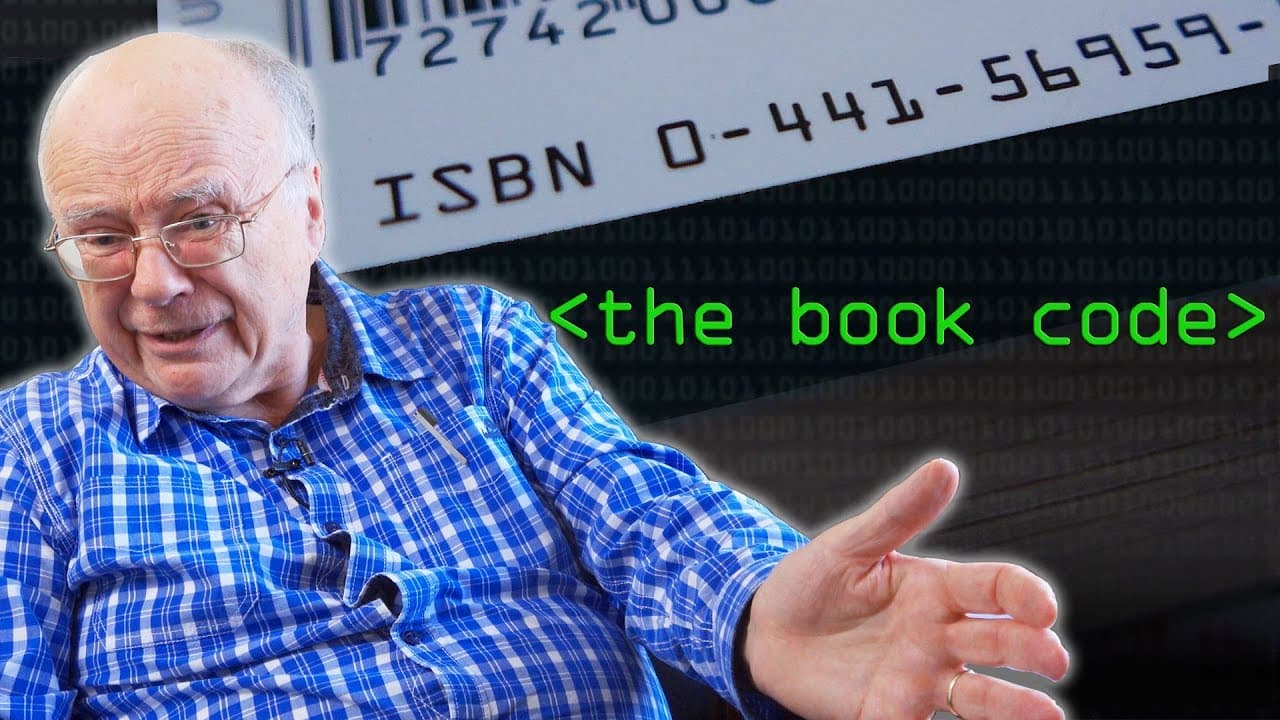
ISBNs use modular arithmetic with the prime number 11. The position and weight of digits in the ISBN are used to detect and potentially correct errors. If the weighted sum of the digits modulo 11 is 0, the ISBN is considered correct.
Summary & Key Takeaways
-
Error correction in the past has been fairly crude, with majority voting determining the correct value without considering the position of the ones in the code.
-
Using modular arithmetic with prime numbers, such as the example of dividing by 11 in international standard book numbers (ISBNs), can provide more powerful error correction codes.
-
In modular arithmetic, finding the inverse of a number allows for division within a finite field, and this technique can be applied to improve error correction and data reliability.
Read in Other Languages (beta)
Share This Summary 📚
Summarize YouTube Videos and Get Video Transcripts with 1-Click
Try YouTube Summary with ChatGPT & Claude or YouTube Transcript Generator
Explore More Summaries from Computerphile 📚




Summarize YouTube Videos and Get Video Transcripts with 1-Click
Try YouTube Summary with ChatGPT & Claude or YouTube Transcript Generator