Thyroid gland hormones (T3, T4) & defects | Chemical Co-ordination | Class 11 Biology | Khan Academy
TL;DR
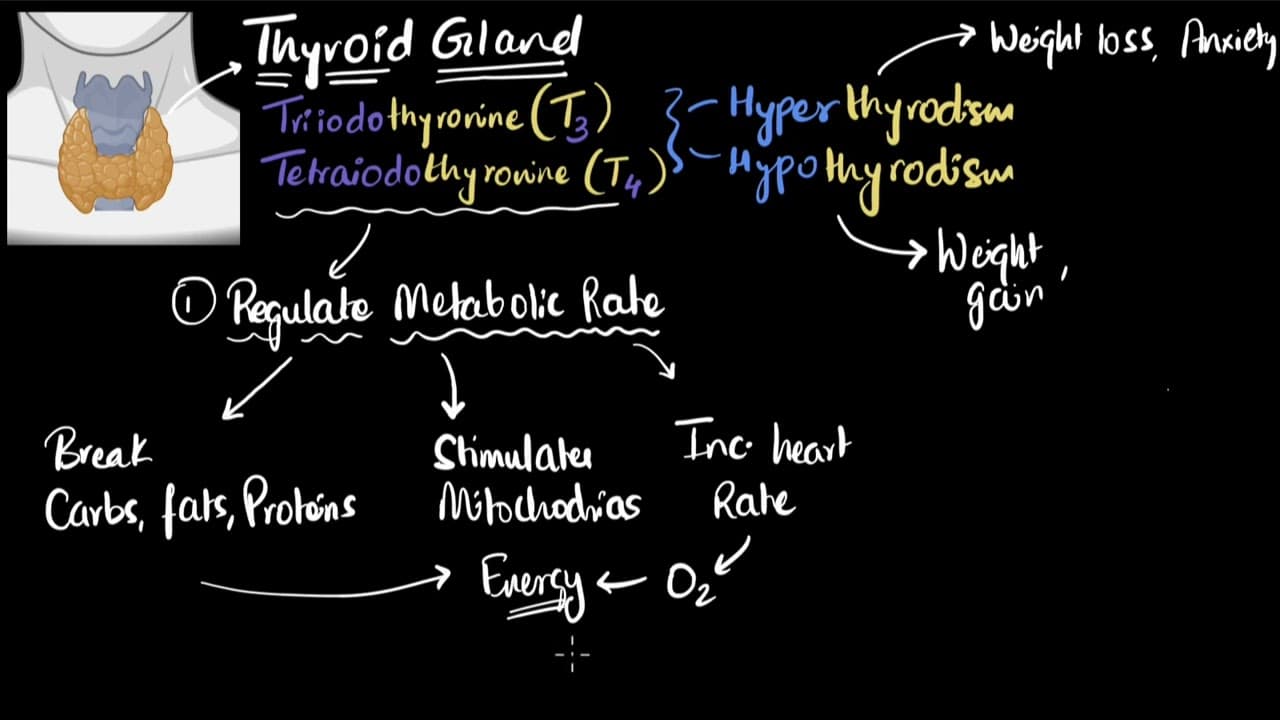
The thyroid gland releases two important hormones that regulate metabolic rate, affecting weight, energy levels, and overall health.
Transcript
you probably know that Tyler gland has something to do with weight weight gain and obesity but what exactly well let's find out in this video so your thyroid gland is a small butterfly shaped gland which is found in your neck region and it releases two very important hormones we call them as Tri iodothyronine which is shortly called as T3 it basica... Read More
Key Insights
- ☠️ The thyroid gland produces T3 and T4 hormones that regulate metabolic rate, impacting weight management.
- 🏋️ Hyperthyroidism leads to weight loss, anxiety, and increased heart rate, while hypothyroidism causes weight gain, fatigue, and depression.
- 🏋️ Understanding thyroid function helps promote sensitivity toward individuals struggling with weight-related issues.
- 🖐️ Thyroid hormones also play a crucial role in the development of infants and children, affecting both physical and mental growth.
- 😣 Hypothyroidism during pregnancy can result in the condition called cretinism, causing severe physical and mental stunting in infants.
Install to Summarize YouTube Videos and Get Transcripts
Explore YouTube Video Summarizer or Get YouTube Transcript Extractor
Questions & Answers
Q: What are the two hormones released by the thyroid gland, and what do they do?
The thyroid gland releases T3 and T4 hormones, which regulate metabolic rate by breaking down carbs, fats, and proteins into energy.
Q: How does the thyroid gland increase metabolic rate?
The thyroid hormones stimulate mitochondria to work more efficiently, converting broken-down food into energy, and increase heart rate to provide extra oxygen for energy production.
Q: What are the consequences of having excessive thyroid hormones?
Hyperthyroidism can lead to weight loss, anxiety, and increased heart rate due to the excessive conversion of food into energy.
Q: How does insufficient thyroid hormone levels affect the body?
Hypothyroidism can cause weight gain, fatigue, and depression because inadequate hormone levels result in less conversion of food into energy and increased food storage.
Key Insights:
- The thyroid gland produces T3 and T4 hormones that regulate metabolic rate, impacting weight management.
- Hyperthyroidism leads to weight loss, anxiety, and increased heart rate, while hypothyroidism causes weight gain, fatigue, and depression.
- Understanding thyroid function helps promote sensitivity toward individuals struggling with weight-related issues.
- Thyroid hormones also play a crucial role in the development of infants and children, affecting both physical and mental growth.
- Hypothyroidism during pregnancy can result in the condition called cretinism, causing severe physical and mental stunting in infants.
- The term "cretinism" has Latin origins and refers to a person who is human despite deformities, highlighting the impact on infant development.
Summary & Key Takeaways
-
The thyroid gland, located in the neck, releases two hormones called T3 and T4, which play a major role in regulating metabolic rate.
-
These hormones help break down carbs, fats, and proteins and stimulate mitochondria to convert them into energy.
-
Hyperthyroidism (excess hormones) can cause weight loss and increased heart rate, while hypothyroidism (insufficient hormones) can lead to weight gain, fatigue, and depression.
Read in Other Languages (beta)
Share This Summary 📚
Summarize YouTube Videos and Get Video Transcripts with 1-Click
Try YouTube Summary with ChatGPT & Claude or YouTube Transcript Generator
Explore More Summaries from Khan Academy India - English 📚



Summarize YouTube Videos and Get Video Transcripts with 1-Click
Try YouTube Summary with ChatGPT & Claude or YouTube Transcript Generator