Teach Your Dog 10 Behaviors with Luring | Rough Collie Dog Training
TL;DR
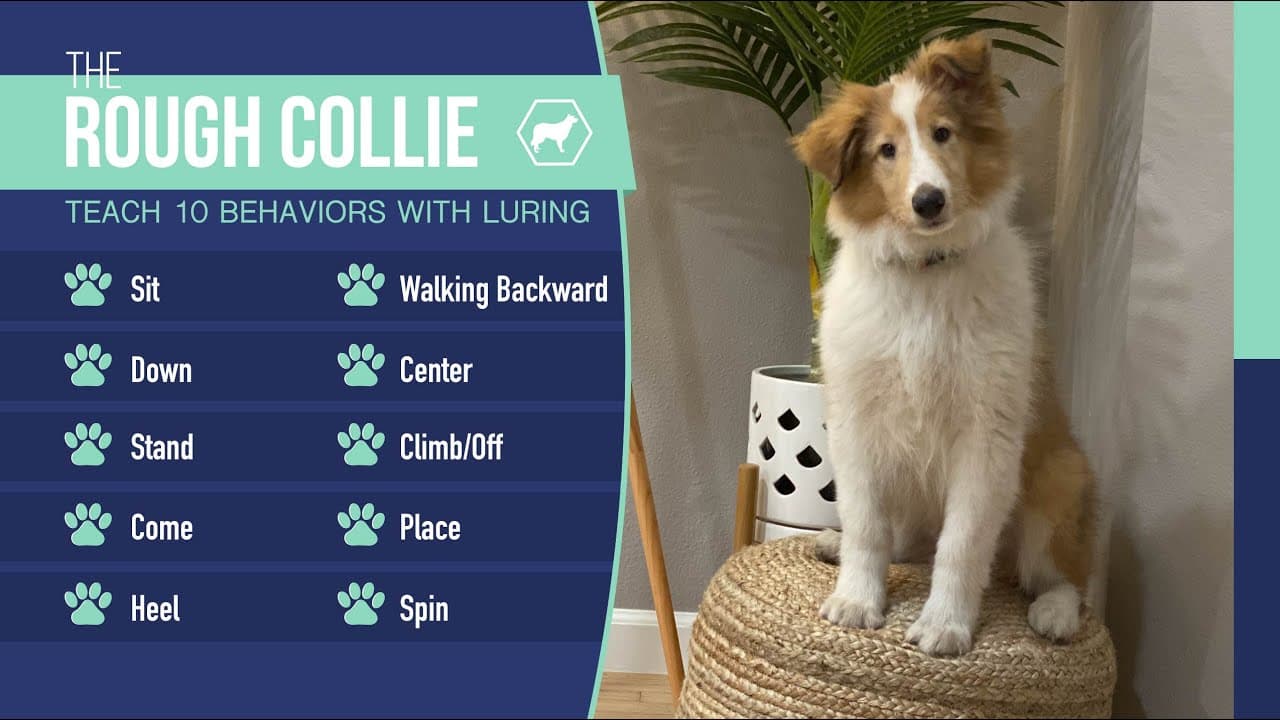
Learn 10 dog behaviors using luring techniques effectively.
Transcript
hey everyone welcome back to another episode we are back again today with little adorable spock and what we're going to be doing is we're going to be showing him oh i'm throwing him on the mic we're going to be showing him the physical cue to get him to perform 10 different behaviors now i'm not going to go into too much detail onto every single on... Read More
Key Insights
- Luring involves using a treat to guide a dog's movements, encouraging them to perform desired behaviors such as sit, down, and heel.
- The sit command is taught by lifting a treat upwards, prompting the dog's rear to lower into a sitting position.
- The down command requires creating a 'cave' with your hand, guiding the dog's muzzle downward to naturally lower their body.
- The stand command can be encouraged by turning your hand to guide the dog's muzzle, prompting them to stand up.
- Heel position is taught by stepping back with the left leg and guiding the dog with the left hand to the correct position.
- The come command is reinforced by using a bowing gesture, which draws the dog to the trainer and encourages a sit.
- The climb command helps with confidence, teaching the dog to climb onto elevated surfaces and then dismount on command.
- The spin and walking backwards commands enhance the dog's agility and obedience, using treats to guide their movements.
Install to Summarize YouTube Videos and Get Transcripts
Explore YouTube Video Summarizer or Get YouTube Transcript Extractor
Questions & Answers
Q: How is the sit command taught using luring?
The sit command is taught by holding a treat close to the dog's nose and slowly lifting it upwards. As the dog follows the treat with their nose, their rear naturally lowers into a sitting position. Once the dog sits, the trainer marks the behavior with a verbal cue like 'yes' and rewards the dog with the treat.
Q: What is the purpose of the 'cave' hand gesture in the down command?
The 'cave' hand gesture is used in the down command to guide the dog's muzzle downward. By cupping the hand and creating a cave-like shape, the trainer encourages the dog to place their muzzle into the hand, which naturally brings the dog's body into a lying down position. This gesture helps the dog understand the desired behavior.
Q: How does the trainer encourage the dog to stand using luring?
To teach the stand command, the trainer uses a treat to guide the dog's muzzle. By turning the hand holding the treat, the dog is encouraged to move around and position their muzzle inside the trainer's hand, prompting the dog to stand up. If needed, the trainer may assist by gently lifting the dog's rear to reinforce the behavior.
Q: What technique is used to teach the heel position?
The heel position is taught by stepping back with the left leg and using the left hand to guide the dog into position next to the trainer's left side. The trainer marks and rewards the dog once they are in the correct position. This technique helps the dog learn to walk beside the trainer and is useful for loose leash walking.
Q: How is the come command reinforced with luring?
The come command is reinforced by using a bowing gesture to draw the dog towards the trainer. As the dog approaches, the trainer lifts their hand to encourage the dog to sit. This is known as a backwards follow exercise, where the trainer walks backwards, rewarding the dog for following closely and sitting when prompted.
Q: What is the climb command, and how is it taught?
The climb command involves teaching the dog to climb onto an elevated surface and then dismount on command. The trainer uses a treat to guide the dog onto the surface, marking and rewarding the behavior. This exercise builds the dog's confidence and can be paired with the off command to teach them to dismount safely.
Q: How are spin and walking backwards commands introduced?
The spin command is taught by using a treat to guide the dog in a circular motion, encouraging them to spin in place. The trainer rewards the dog for completing the spin. Walking backwards is introduced by closing the hands and moving towards the dog, prompting them to step backwards. The trainer marks and rewards each step taken.
Q: Why is it important to use physical cues before verbal commands?
Using physical cues before verbal commands is important because it helps the dog understand the desired behavior through clear, consistent guidance. Once the dog reliably performs the behavior with the physical cue, the trainer can introduce a verbal command. This sequence ensures that the dog associates the correct action with the command, leading to better obedience.
Summary & Key Takeaways
-
This video demonstrates how to teach dogs 10 different behaviors using the luring technique, which involves guiding the dog with treats to encourage specific actions. The trainer emphasizes the importance of creating predictable patterns and rewarding the dog at the right moment to reinforce the behavior.
-
The trainer covers commands such as sit, down, stand, heel, and come, explaining the physical cues used to guide the dog into each position. Luring helps the dog understand the desired behavior before associating it with a verbal command, ensuring consistency and clarity.
-
Additional behaviors like climb, spin, and walking backwards are also introduced, showcasing the versatility of luring in teaching complex actions. The trainer highlights the importance of patience and consistency, encouraging viewers to enjoy the training process with their dogs.
Read in Other Languages (beta)
Share This Summary 📚
Summarize YouTube Videos and Get Video Transcripts with 1-Click
Try YouTube Summary with ChatGPT & Claude or YouTube Transcript Generator
Explore More Summaries from Nate Schoemer 📚


Summarize YouTube Videos and Get Video Transcripts with 1-Click
Try YouTube Summary with ChatGPT & Claude or YouTube Transcript Generator