What Will the Future of AI Look Like With Continuous Learning?
TL;DR
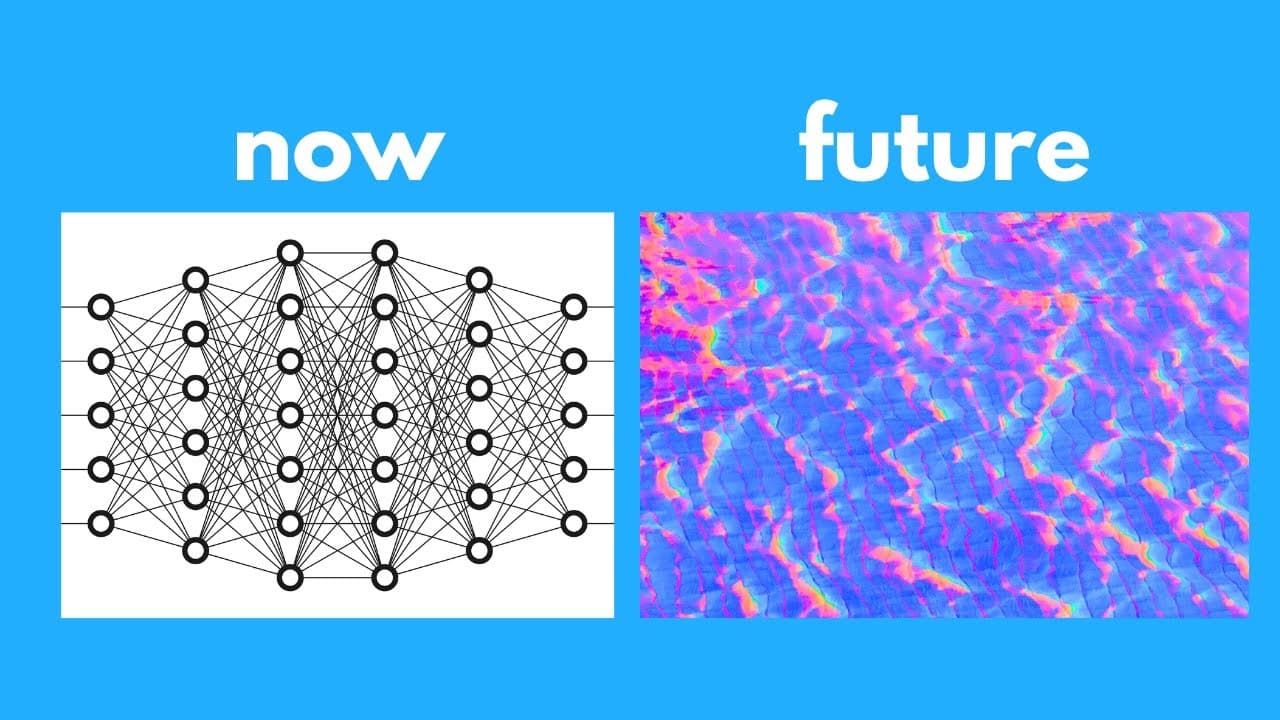
The future of AI will focus on systems that can learn continuously, unlike current models that are fixed after training. Liquid and spiking neural networks aim to mimic the adaptability of the human brain, allowing for real-time learning and improved efficiency. However, these new architectures present challenges in design, training, and require specialized hardware.
Transcript
AI as we know it today is actually quite dumb yes this includes chat GPT stable diffusion Sora and all the other state-of-the-art models that we have right now they're still very incapable and inefficient and the future generation of AI will look very different from what we have now so in this video I'm going to explain why the current generation i... Read More
Key Insights
- 🏣 Current AI models struggle with fixed capabilities post-training, highlighting the need for adaptive evolution in AI technology.
- 🫨 The next generation of AI focuses on liquid and spiking networks, aiming to achieve fluidity and adaptability akin to human intelligence.
- 👻 Liquid neural networks function efficiently by utilizing a reservoir layer that allows ongoing learning without retraining entire models.
- ❓ Energy inefficiency in current AI training processes poses a significant sustainability challenge that future advancements must address.
- 🥺 Spiking neural networks mimic neural communication in the human brain, potentially leading to more natural and efficient information processing.
- 🫗 Researchers emphasize that liquid neural networks excel in temporal data processing, opening avenues for real-time applications in various fields.
- 🖤 The lack of established frameworks for emergent AI technologies may hinder their widespread implementation and research advancement.
Install to Summarize YouTube Videos and Get Transcripts
Explore YouTube Video Summarizer or Get YouTube Transcript Extractor
Questions & Answers
Q: Why are current AI models considered "dumb" according to the video?
The term "dumb" reflects that current AI models, such as ChatGPT and Stable Diffusion, are fixed once trained; they cannot learn or improve over time. This limitation renders them less flexible compared to human intelligence, which has the capacity for continuous learning and adaptation.
Q: What is the primary mechanism that allows current AI models to operate efficiently?
Current AI models use neural networks, which consist of nodes organized in layers that process information by adjusting weights and biases. Once trained, these weights become fixed, meaning the AI cannot learn from new data unless a new model is retrained, stifling ongoing adaptation.
Q: How do liquid neural networks differ from traditional neural networks?
Liquid neural networks introduce a dynamic reservoir layer that can adapt and change in response to new data, allowing them to learn incrementally. Unlike traditional networks, where all connections and weights are fixed after training, liquid networks aim to mimic the brain's neuroplasticity, enabling continuous learning.
Q: What are some real-world applications of liquid neural networks mentioned in the content?
Liquid neural networks can be employed in various domains, such as autonomous robots that adapt to new tasks, self-driving cars that improve navigation in dynamic environments, healthcare devices for real-time monitoring, and smart city management systems that optimize traffic flow based on real-time data.
Q: What advantages do spiking neural networks have over traditional models?
Spiking neural networks are more energy efficient because they activate only when necessary, mimicking how biological neurons work. This selective activation leads to reduced energy consumption and enables real-time processing of temporal data, which is beneficial for applications requiring adaptive learning.
Q: What limitations do liquid and spiking neural networks face?
These novel neural network architectures are still in early research stages, presenting challenges such as complex design, difficulties in training algorithms, and fewer standardized frameworks compared to traditional networks. Also, they may not outperform established methods in non-temporal tasks, necessitating further development and experimentation.
Q: What does neuroplasticity mean in the context of AI development?
Neuroplasticity, inspired by human brain functionality, refers to the ability to reorganize and form new connections based on experience and learning. In AI, this concept is applied to future models like liquid neural networks that aim to achieve similar flexibility to adapt and learn from ongoing experiences, contrasting with the rigidity of current models.
Q: How does energy consumption of current AI compare to the human brain?
Current AI models like GPT-4 require vast amounts of energy for training, with estimates suggesting that GPT-4 might need around 234,000 times more energy in a year than the human brain, which operates efficiently on approximately 175 kilowatt hours annually. This stark contrast highlights the inefficiency of today's AI in energy use.
Summary & Key Takeaways
-
Current AI models, including ChatGPT and Stable Diffusion, are based on static neural networks and cannot learn beyond their training, making them limited and inefficient.
-
The next generation of AI, including liquid and spiking neural networks, aims to mimic human brain adaptability, allowing for continuous learning and better efficiency.
-
While these new architectures present exciting possibilities, they also come with challenges, including complexity in design, training difficulties, and the need for specialized hardware.
Read in Other Languages (beta)
Share This Summary 📚
Summarize YouTube Videos and Get Video Transcripts with 1-Click
Try YouTube Summary with ChatGPT & Claude or YouTube Transcript Generator
Explore More Summaries from AI Search 📚




Summarize YouTube Videos and Get Video Transcripts with 1-Click
Try YouTube Summary with ChatGPT & Claude or YouTube Transcript Generator