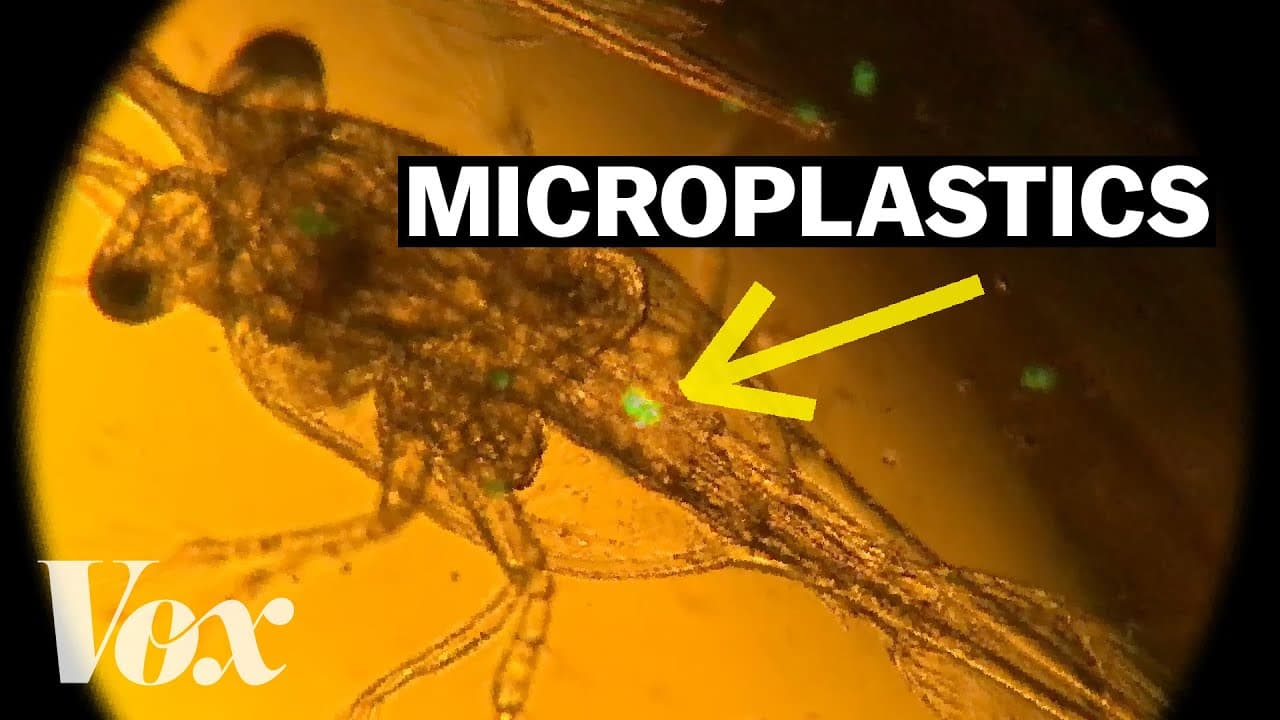
Why these plankton are eating plastic
TL;DR
Microfibers from clothes are a major ocean pollutant.
Transcript
And those bright green specks inside their bodies are showing us what they’re eating. It’s not food. Those are tiny pieces of... We hear a lot about pollution from single use plastic items, like plastic straws and shopping bags that are clogging marine habitats. Although these large pieces of plastic contribute the most to the overall mass of plast... Read More
Key Insights
- Microplastics are a significant contributor to ocean pollution, primarily originating from synthetic fabrics used in clothing.
- The popularity of synthetic fibers like nylon and polyester has increased due to their cost-effectiveness and comfort, leading to more plastic-based clothing production.
- Microfibers shed during laundry are a major source of microplastics, with acrylic fabrics shedding the most.
- Washing machines lack filters to catch microfibers, allowing them to enter water systems and eventually reach marine habitats.
- Marine organisms, including plankton, consume microfibers, which then travel up the food chain, potentially reaching humans.
- Solutions to reduce microfiber pollution include using washing machine filters, filter bags, and reducing the purchase and washing frequency of synthetic clothes.
- Microfibers have been found in diverse marine environments worldwide, indicating the widespread nature of this pollution problem.
- Efforts to combat microfiber pollution are challenged by the economic appeal of synthetic fabrics and the high cost of effective filtration solutions.
Install to Summarize YouTube Videos and Get Transcripts
Explore YouTube Video Summarizer or Get YouTube Transcript Extractor
Questions & Answers
Q: What are microfibers and how do they contribute to ocean pollution?
Microfibers are tiny strands of plastic that are woven into synthetic fabrics used in clothing. They are a significant contributor to ocean pollution because they are released during laundry and enter water systems. Once in the ocean, they are consumed by marine organisms, which can lead to them entering the food chain and potentially reaching humans.
Q: Why have synthetic fibers become so popular in clothing production?
Synthetic fibers like nylon and polyester have become popular in clothing production due to their cost-effectiveness and comfort. These materials are cheaper to produce than natural fibers and have been widely adopted for athletic and leisure wear. This economic appeal has led to a significant increase in their use, contributing to microfiber pollution.
Q: How do microfibers from clothing reach marine habitats?
Microfibers from clothing reach marine habitats primarily through the laundry process. When synthetic clothes are washed, microfibers are shed and enter the water system. Most washing machines lack filters to catch these particles, allowing them to pass through sewage treatment plants and eventually reach marine environments, where they contribute to pollution.
Q: What impact do microfibers have on marine life and the food chain?
Microfibers impact marine life by being consumed by small organisms like plankton and filter feeders. These organisms ingest the microfibers, which then travel up the food chain as predators consume them. This can lead to microfibers eventually reaching humans, posing potential health risks when consuming seafood contaminated with plastic particles.
Q: What solutions are proposed to reduce microfiber pollution?
Proposed solutions to reduce microfiber pollution include adding filters to washing machines to catch microfibers, using filter bags during laundry, and reducing the purchase and washing frequency of synthetic clothing. These measures aim to prevent microfibers from entering water systems and reaching marine habitats, but cost and practicality remain challenges.
Q: Why is switching to non-synthetic clothing materials not a feasible solution?
Switching to non-synthetic clothing materials is not feasible primarily due to economic reasons. Synthetic fabrics are significantly cheaper to produce than natural fibers, making them more accessible and affordable for consumers. This cost advantage has driven their widespread use, despite the environmental impact of microfiber pollution.
Q: How widespread is microfiber pollution in marine environments?
Microfiber pollution is widespread in marine environments, with concentrations found in diverse locations such as coastal beaches in South Africa, the Great Lakes of North America, rivers in Britain, and deep oceanic trenches near Russia. This indicates the global scale of the issue and the pervasive nature of microfiber contamination.
Q: What role does consumer behavior play in addressing microfiber pollution?
Consumer behavior plays a crucial role in addressing microfiber pollution. By reducing the purchase and frequency of washing synthetic clothing, individuals can decrease the amount of microfibers released into the environment. Additionally, adopting solutions like washing machine filters and filter bags can help mitigate the impact of microfibers on marine habitats.
Summary & Key Takeaways
-
Microfibers from synthetic clothing are a major source of ocean pollution. These tiny plastic particles are released during laundry and make their way through water systems to marine habitats, where they are consumed by plankton and other organisms, eventually reaching humans through the food chain.
-
Synthetic fibers like nylon and polyester have become popular due to their affordability and comfort, leading to increased production and pollution. While solutions like washing machine filters exist, they are costly, making it challenging to reduce microfiber pollution effectively.
-
Marine environments worldwide are affected by microfibers, highlighting the global scale of the issue. Reducing synthetic clothing consumption and washing frequency, alongside technological solutions, can help mitigate microfiber pollution.
Read in Other Languages (beta)
Share This Summary 📚
Summarize YouTube Videos and Get Video Transcripts with 1-Click
Try YouTube Summary with ChatGPT & Claude or YouTube Transcript Generator
Explore More Summaries from Vox 📚




Summarize YouTube Videos and Get Video Transcripts with 1-Click
Try YouTube Summary with ChatGPT & Claude or YouTube Transcript Generator