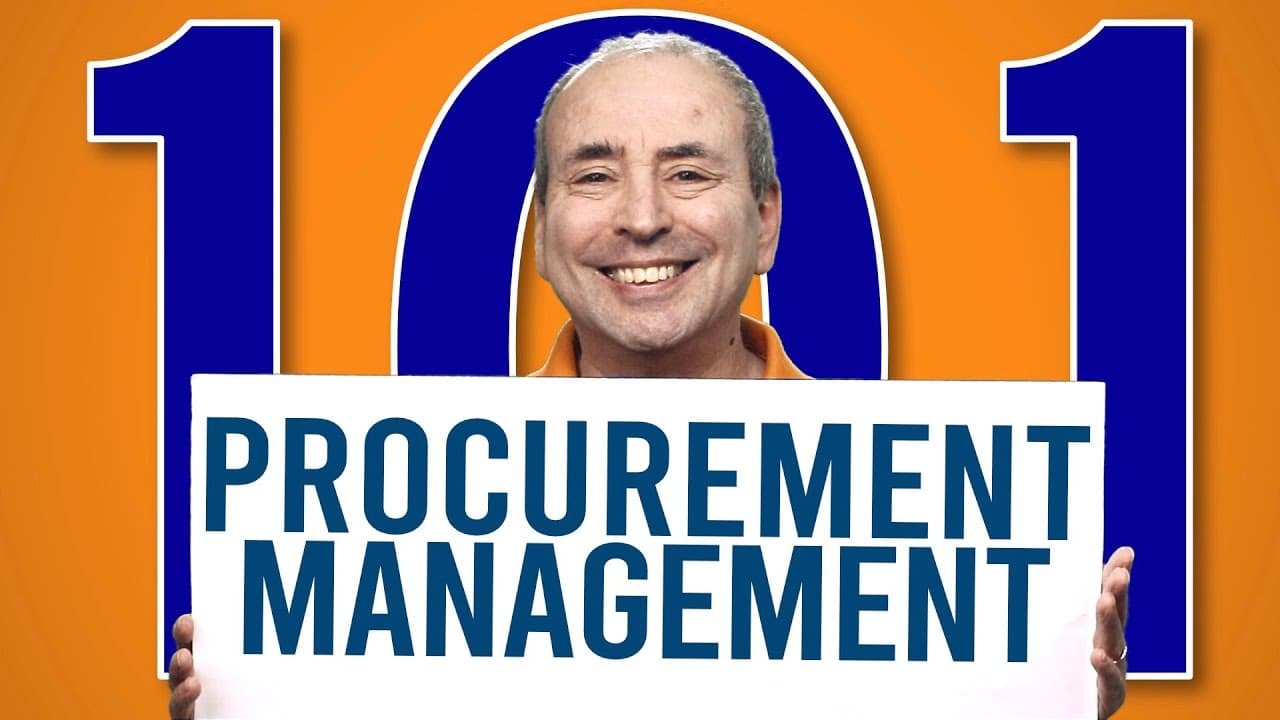
Procurement Management 101 - A Comprehensive Primer
TL;DR
Project procurement management is the process of acquiring goods and services from external providers to supplement a project team's capabilities.
Transcript
at some point on a large project you will need someone else or someone else's goods and services to supplement the capabilities of your own team but how do you make sure you get exactly what you want and that you get good value well the answer is procurement management so what is Project procurement project procurement is the process by which we ac... Read More
Key Insights
- 👋 Project procurement involves acquiring goods and services from external providers.
- ✳️ There are various types of procurement contracts, each with its own advantages and risks.
- 😚 Procurement management follows a four-step process: planning, procuring, monitoring and controlling, and closing.
- 🇨🇫 Public sector procurement may have additional regulations and legal constraints.
- 🔒 Procurement processes can be as rigorous and transparent in the private sector as in the public sector.
- 📽️ Proper procurement planning is essential for successful project implementation.
- ❓ Ongoing monitoring and controlling of procurement contracts ensure performance and quality standards are met.
Install to Summarize YouTube Videos and Get Transcripts
Explore YouTube Video Summarizer or Get YouTube Transcript Extractor
Questions & Answers
Q: What is project procurement management?
Project procurement management is the process of acquiring goods and services from external providers to enhance a project team's capabilities.
Q: What are the different types of procurement contracts?
The common types of procurement contracts include fixed price, fixed price with incentives, unit cost, target cost, cost plus, and time and materials contracts.
Q: What is the role of procurement planning?
Procurement planning involves creating a plan that outlines the procurement process, contract types, legal considerations, quality standards, team responsibilities, cost estimates, and other relevant details.
Q: How does market testing fit into the procurement process?
Market testing is the step where the project team finds the most suitable supplier through a competitive procurement process. This involves gathering requirements, documenting them, and conducting a tender process.
Q: What is involved in monitoring and controlling procurement?
Monitoring and controlling procurement includes activities such as administering the contract, monitoring performance against quality standards and KPIs, managing contract variations, and processing changes with the supplier.
Q: What are the closing tasks in procurement management?
Closing tasks include ensuring contract performance criteria have been met, conducting formal handovers, addressing outstanding issues, finalizing payments and invoices, archiving documents, and carrying out a lessons learned review.
Summary & Key Takeaways
-
Project procurement involves acquiring goods and services from third-party providers outside the project team.
-
There are different types of contracts that govern project procurement, including fixed price, fixed price with incentives, unit cost, target cost, cost plus, and time and materials contracts.
-
Procurement management follows a four-step process: planning, procuring, monitoring and controlling, and closing.
Read in Other Languages (beta)
Share This Summary 📚
Summarize YouTube Videos and Get Video Transcripts with 1-Click
Try YouTube Summary with ChatGPT & Claude or YouTube Transcript Generator
Explore More Summaries from Online PM Courses - Mike Clayton 📚
Summarize YouTube Videos and Get Video Transcripts with 1-Click
Try YouTube Summary with ChatGPT & Claude or YouTube Transcript Generator