Introduction to Interrupts - Computer Organization and Architecture
TL;DR
This content discusses IO instructions in computer systems, including their purpose and how they differ from memory and register reference instructions.
Transcript
hello everybody in this session let us understand the final category of the instructions that is io instructions in the previous sessions we had a look at the memory reference instructions register reference instructions in which the operands could be collected either from memory locations or from the processor's registers now let us have a look at... Read More
Key Insights
- 💻 IO instructions are used to transfer data between input/output devices and the main memory in a computer system.
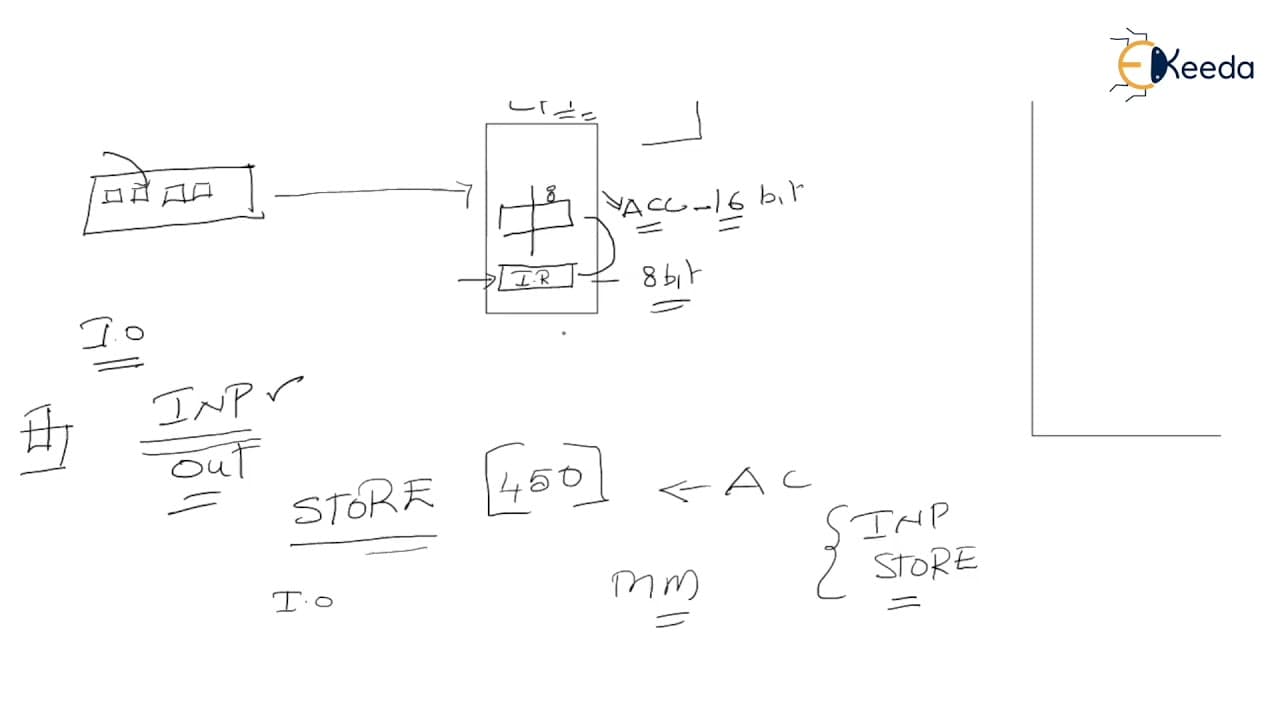
- 🔠 Input characters are transferred from the input register to the accumulator using the inp instruction, and then to the main memory using the store instruction.
- ®️ Output characters are transferred from the main memory to the accumulator using the load instruction, and then to the output register using the out instruction.
- 🫦 IO instructions are identified by the first four bits of the opcode, which are "1111" for IO instructions.
- 😑 There are also instructions for managing interrupts, such as ion for switching on interrupts and iof for switching off interrupts.
- 👤 CPU performance may be impacted by the time taken for user input, as the CPU needs to watch for flags set by the user. This can result in wasted clock cycles.
- 👻 Interrupts are used to address this issue, allowing the CPU to handle user requests with the highest priority. The CPU suspends the current program, executes the IO instructions, and then resumes the previous program.
Install to Summarize YouTube Videos and Get Transcripts
Explore YouTube Video Summarizer or Get YouTube Transcript Extractor
Questions & Answers
Q: What is the difference between IO instructions, memory reference instructions, and register reference instructions?
IO instructions are used for transferring data between input/output devices and the main memory, while memory reference instructions involve collecting operands from the main memory, and register reference instructions involve collecting operands from the processor's registers.
Q: How are IO instructions identified in the instruction set?
IO instructions are identified by the first four bits of the opcode, which are "1111" for IO instructions.
Q: What happens when an input character is generated from a keyboard?
When a key is pressed on a keyboard, the generated character is transferred to the input register and then to the accumulator in the CPU using the inp instruction. It is then stored in the main memory using the store instruction.
Q: How is output generated from the computer system?
Output is generated by transferring a character from the main memory to the accumulator using the load instruction, and then from the accumulator to the output register using the out instruction. The character is then transferred from the output register to the output device.
Summary & Key Takeaways
-
IO instructions are used to transfer data between input/output devices and the main memory in a computer system.
-
When an IO instruction is executed, the operands are collected directly from the main memory.
-
There are different types of IO instructions, including input (inp) and output (out) instructions, as well as instructions for managing interrupts.
Read in Other Languages (beta)
Share This Summary 📚
Summarize YouTube Videos and Get Video Transcripts with 1-Click
Try YouTube Summary with ChatGPT & Claude or YouTube Transcript Generator
Explore More Summaries from Ekeeda 📚






Summarize YouTube Videos and Get Video Transcripts with 1-Click
Try YouTube Summary with ChatGPT & Claude or YouTube Transcript Generator