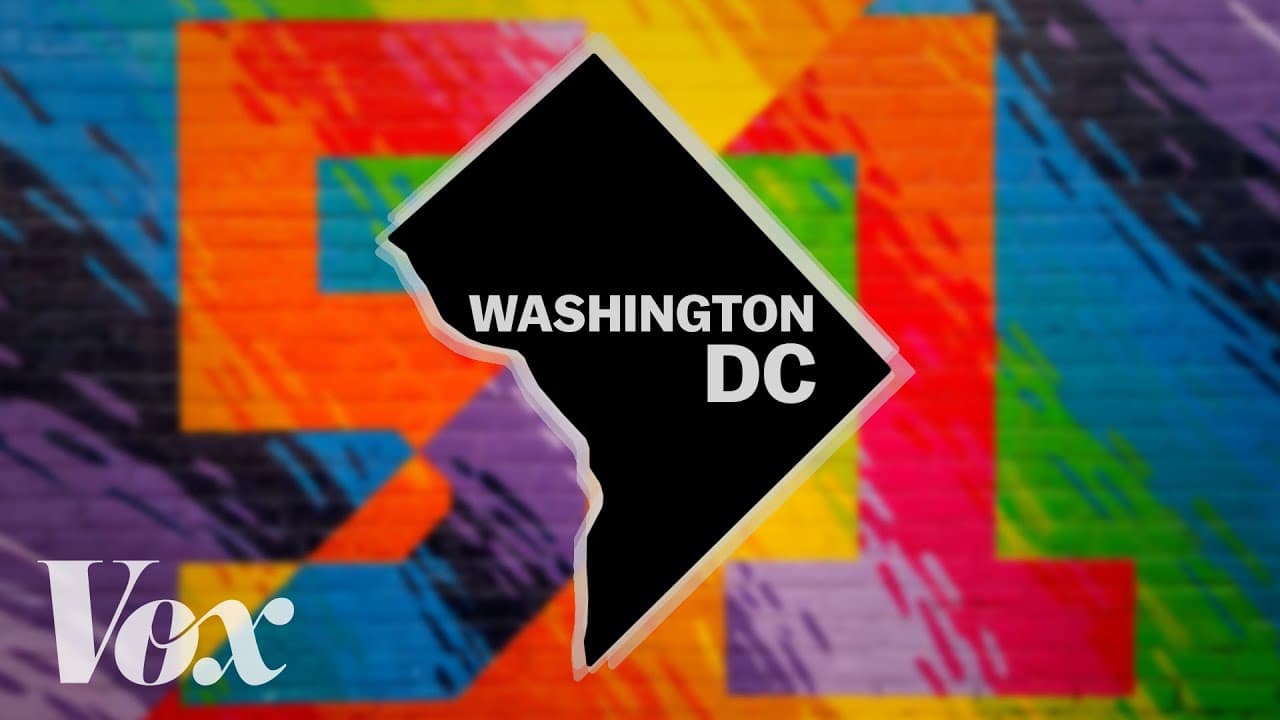
Der Kampf um Amerikas 51. Staat – kurz erklärt
TL;DR
DC seeks statehood but faces political hurdles.
Transcript
On June 26, 2020, the US House of Representatives voted to do something it had never done before. It passed a bill to create the 51st state by giving the US capital, Washington, DC, statehood. Members of the House of Representatives each represent between 500,000 and a million Americans. DC’s 700,000 residents are represented by this woman: Eleanor... Read More
Key Insights
- The US House of Representatives voted in 2020 to grant statehood to Washington, DC, marking a historic moment as it would become the 51st state.
- DC residents pay federal taxes yet lack voting representation in Congress, leading to the slogan 'Taxation without representation' on their license plates.
- Washington, DC's statehood faces opposition primarily from Republicans who fear it would add Democratic seats in Congress, altering the political balance.
- Historically, new states were often added in pairs to maintain political balance, such as Missouri and Maine, or Hawaii and Alaska.
- DC residents have limited autonomy as Congress controls its budget, often overruling local laws on controversial issues like gun laws and marijuana legalization.
- The 2020 vote for DC statehood was symbolic, as the Republican-controlled Senate and President Trump opposed the measure.
- The district has a larger population than some states and would be called the Douglass Commonwealth if granted statehood.
- The push for DC statehood is also about achieving equality and autonomy for its residents, who have faced historical injustices.
Install to Summarize YouTube Videos and Get Transcripts
Explore YouTube Video Summarizer or Get YouTube Transcript Extractor
Questions & Answers
Q: Why is Washington, DC seeking statehood?
Washington, DC is seeking statehood to gain voting representation in Congress and full autonomy over local governance. Despite paying federal taxes, DC residents lack voting rights in Congress, which they find unjust. Statehood would provide them with representation and control over their budget and local laws.
Q: What obstacles does DC face in becoming a state?
DC faces significant political obstacles in becoming a state, primarily from Republicans who oppose the move due to concerns about shifting the balance of power in Congress. Statehood would likely add Democratic seats, altering the current political landscape, which is why it has faced resistance.
Q: How does DC's population compare to other states?
DC's population is larger than some existing states, such as Wyoming and Vermont. If granted statehood, the new state, to be called the Douglass Commonwealth, would have a population comparable to several smaller states, justifying its push for representation and statehood.
Q: What historical precedents affect DC's statehood bid?
Historically, new states were added in pairs to maintain political balance, such as Missouri and Maine or Hawaii and Alaska. This precedent complicates DC's bid for statehood, as there is no current Republican-leaning territory ready to be paired with it, making the political implications significant.
Q: How does Congress currently control DC?
Congress exercises significant control over DC by managing its budget and often overruling local laws. This lack of autonomy is a major reason residents push for statehood, as they seek the ability to govern themselves without interference from federal legislators who do not represent their interests.
Q: What symbolic actions have been taken towards DC statehood?
The 2020 vote by the US House of Representatives for DC statehood was largely symbolic, as it faced certain rejection by the Republican-controlled Senate and President Trump. However, it marked a historic moment, reflecting growing support and raising awareness about the issue of DC's representation.
Q: What are the arguments against DC becoming a state?
Arguments against DC's statehood include its original designation as a neutral federal district and its lack of industries like manufacturing and mining. Opponents, mainly Republicans, also argue that statehood would disrupt the political balance by adding Democratic seats in Congress.
Q: What impact does DC's lack of statehood have on its residents?
DC's lack of statehood impacts its residents by denying them voting representation in Congress and limiting their local government's autonomy. This results in Congress frequently overriding local decisions on controversial issues, contributing to a sense of disenfranchisement and fueling the statehood movement.
Summary & Key Takeaways
-
In 2020, the US House of Representatives made a historic move by voting for Washington, DC, to become the 51st state. This decision highlights ongoing debates over representation and taxation for DC residents, who pay federal taxes but lack voting rights in Congress.
-
DC's potential statehood faces significant political opposition, mainly from Republicans concerned about shifting the balance of power in Congress. Historically, new states were added in pairs to maintain political equilibrium, a strategy that complicates DC's path to statehood.
-
The push for statehood is driven by DC residents' desire for autonomy and representation. The district's status as a federal territory limits its local government's power, leading to conflicts over issues like gun control and marijuana legalization.
Read in Other Languages (beta)
Share This Summary 📚
Summarize YouTube Videos and Get Video Transcripts with 1-Click
Try YouTube Summary with ChatGPT & Claude or YouTube Transcript Generator
Explore More Summaries from Vox 📚




Summarize YouTube Videos and Get Video Transcripts with 1-Click
Try YouTube Summary with ChatGPT & Claude or YouTube Transcript Generator