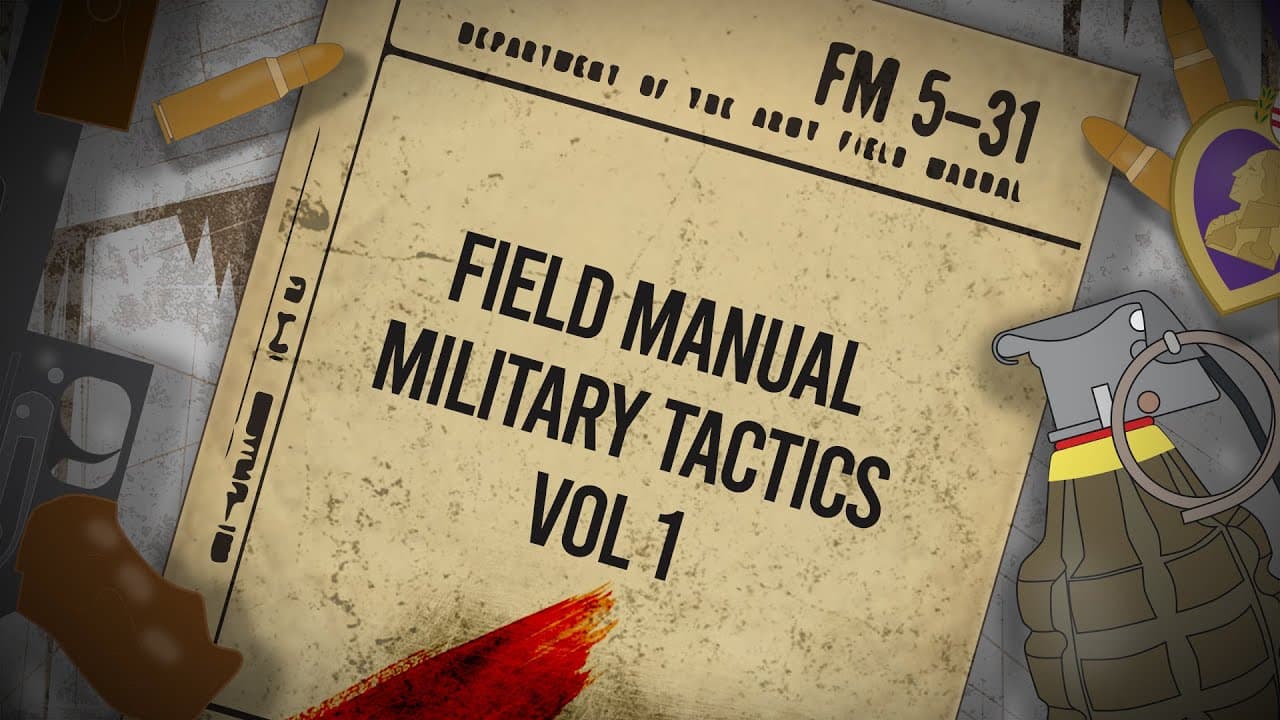
Field Manual Military Tactics vol 1
TL;DR
This content explores various military tactics used from the 15th to the 20th century, including the salvo, creeping barrage, hull down position, and kamikaze attacks.
Transcript
salvo military tactic 15th to the 20th century a salvo is a military term that stands for the simultaneous firing of several guns as opposed to gunfire where all guns fire independently once an order is given volley is a term similar to salvo but the two are distinguishable as volley fire is a term related to small arms and infantry the salvo tacti... Read More
Key Insights
- 🏑 The salvo tactic was used by naval and field artillery to achieve maximum firepower and prevent enemy retaliation.
- ❓ The development of battleships in the 19th and 20th century further enhanced the salvo tactic's effectiveness.
- 📔 The creeping barrage tactic was utilized in World War I to provide cover for infantry advancing towards enemy trenches.
- ❤️🔥 The hull down position tactic reduced the vulnerability of tanks by exposing only the turret to enemy fire.
- 🚤 Kamikaze attacks had maritime alternatives including explosive speed boats, kamikaze torpedoes, submarines, and frogmen.
- 🛄 These tactics aimed to maximize damage and disruption to enemy forces and were used in both offensive and defensive operations.
- ✌️ While these tactics had some successes, they ultimately proved insufficient in bringing decisive victory.
Install to Summarize YouTube Videos and Get Transcripts
Explore YouTube Video Summarizer or Get YouTube Transcript Extractor
Questions & Answers
Q: How did the salvo tactic evolve with the development of battleships?
With the development of battleships in the 19th and 20th century, the salvo tactic became more powerful as battleships had multiple turrets with multiple guns that could concentrate fire in various directions.
Q: What were the variations of the salvo tactic?
Variations of the salvo tactic included broadside, half salvo or split salvo, double salvo, bracket salvo, and latter salvo. These variations allowed for simultaneous fire, reloading, determining target range, and targeting enemy ships or coastal fortifications.
Q: What was the purpose of the creeping barrage tactic in World War I?
The creeping barrage tactic was used to provide cover for infantry advancing towards enemy trenches by gradually advancing artillery fire and creating explosions and smoke to prevent effective engagement by the enemy.
Q: How did the hull down position tactic work for tanks?
Tanks in a hull down position exposed only the turret to the enemy's line of sight, reducing their silhouette and exposing only areas with strong armor. This allowed them to maintain a clear line of fire while minimizing vulnerability.
Q: What were the maritime alternatives to air kamikaze attacks in World War II?
The maritime alternatives to air kamikaze attacks included explosive speed boats, kamikaze torpedoes, submarines, and kamikaze frogmen. These tactics aimed to sink enemy ships and disrupt enemy operations from the sea.
Summary & Key Takeaways
-
The salvo tactic, used by naval and field artillery, involved the simultaneous firing of several guns to achieve maximum firepower and prevent enemy retaliation.
-
The creeping barrage was an artillery tactic in World War I that involved a gradual advance of artillery fire to provide cover for infantry advancing towards enemy trenches.
-
The hull down position was a tank tactic where the tank commander exposed only the turret of the tank to reduce its silhouette and maintain a clear line of fire.
-
Kamikaze attacks were not limited to air strikes but also included maritime alternatives such as explosive speed boats, kamikaze torpedoes, submarines, and frogmen.
Read in Other Languages (beta)
Share This Summary 📚
Summarize YouTube Videos and Get Video Transcripts with 1-Click
Try YouTube Summary with ChatGPT & Claude or YouTube Transcript Generator
Explore More Summaries from Simple History 📚


Summarize YouTube Videos and Get Video Transcripts with 1-Click
Try YouTube Summary with ChatGPT & Claude or YouTube Transcript Generator